Unwrapping the Dark Side of Yuletide: Inside the Making of the Genre-Bending Holiday Horror-Comedy Christmas at the Kringles

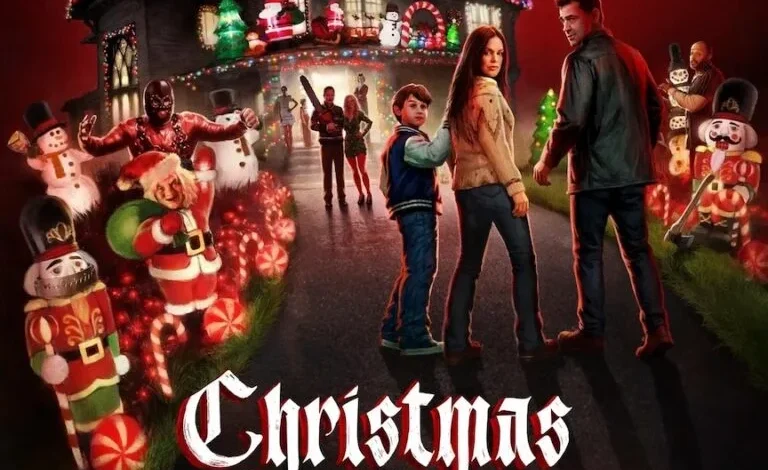
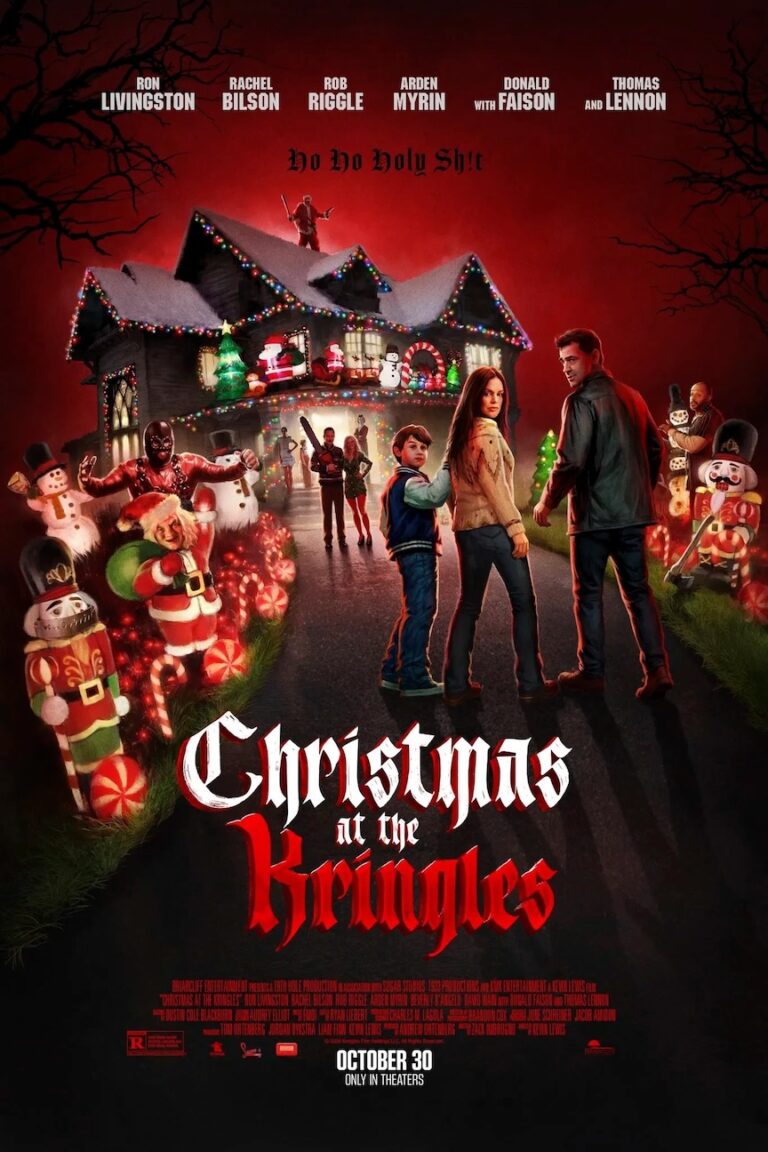
Christmas has long been heralded on screen as a season of familial warmth, redemptive miracles, and commercial cheer. Yet, a burgeoning subgenre within contemporary cinema continues to subvert traditional holiday tropes, trading sugar-plum sweetness for visceral terror and razor-sharp satire. Briarcliff Entertainment’s newest theatrical release, Christmas at the Kringles, pushes this dark envelope to its comedic and bloody limits. Directed by Kevin Lewis from a screenplay penned by Zack Imbrogno, the film lands exclusively in theaters with a high-concept premise: what happens when a suburban family’s dream home becomes the staging ground for a lethal, blood-soaked hostage crisis orchestrated by neighbors whose festive obsession has crossed the line into psychosis.
Starring an ensemble cast featuring Ron Livingston, Rachel Bilson, Thomas Lennon, Arden Myrin, and Rob Riggle, the picture blends the nostalgic aesthetic of 1980s suburban cinema with the high-stakes survival mechanics of a home-invasion thriller. For a cinematic landscape saturated with predictable, feel-good holiday romances, Christmas at the Kringles offers a subversive antidote. Behind the scenes, the production represents a masterclass in collaborative filmmaking, heavy improvisation, and the delicate intersection of comedy and horror.
The Premise and Plot: A Suburban Nightmare in Red and Green
The narrative engine of Christmas at the Kringles kicks into gear when Mark and Julie Severson—portrayed by Ron Livingston and Rachel Bilson, respectively—relocate to a quiet suburban neighborhood alongside their young son, Bobby, played by Jack Jewkes. Eager for a fresh start, the Seversons quickly discover that their idyllic new surroundings harbor an unsettling reality next door.
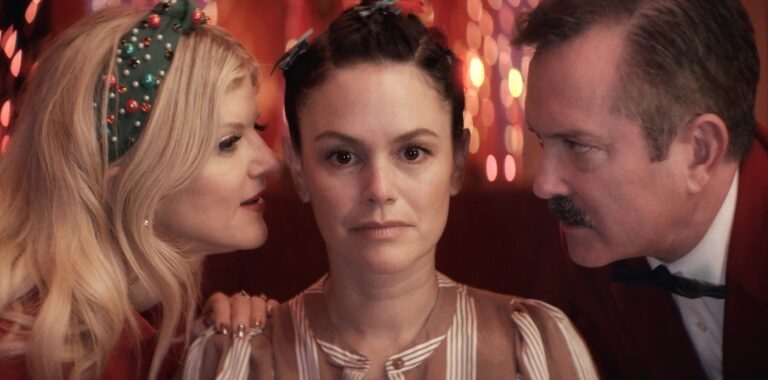
Enter the Kringles: Nick and Carol, brought to life with manic intensity by Thomas Lennon and Arden Myrin. The Kringles are not merely festive enthusiasts; they are radicalized by the holiday spirit, having transformed their residence into a blinding, year-round Yuletide funhouse. What begins as overbearing neighborly enthusiasm quickly curdles into a sinister campaign of psychological coercion and physical entrapment. The Kringles are determined to assimilate the Seversons into their obsessive lifestyle—by any means necessary.
Enter Rob Riggle as "Drunk Santa," a character who defies easy categorization. Simultaneously morose and heroic, possessing a questionable moral compass yet a fiercely protective core, Drunk Santa emerges as a reluctant savior. Armed with holiday grit, a passable Santa beard, and an unexpected proficiency in hand-to-hand combat, he becomes Mark Severson’s primary ally in the fight to extract his family from the Kringle compound.
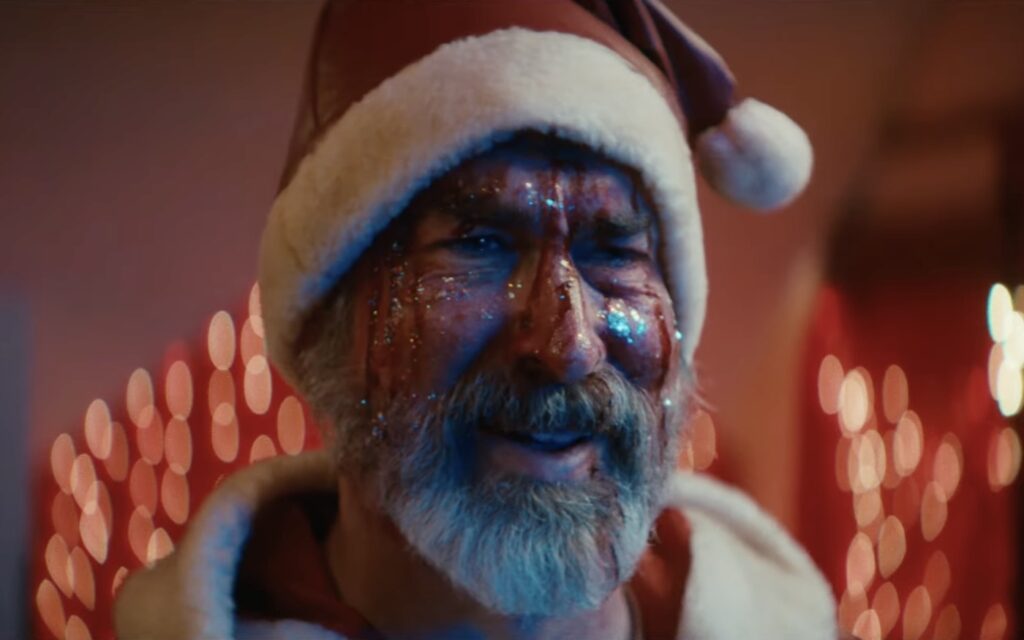
According to the filmmakers and cast, the resulting feature is an intentional hybrid of genres. As Riggle succinctly describes it, the film operates on a three-pronged formula: “It’s a holiday movie, it’s a horror movie and it’s a comedy. Put it all together and you get Christmas at the Kringles.”
Authenticity on Set: Transforming West Adams into a Yuletide Fortress
Production design plays an integral role in establishing the claustrophobic, sensory-overload atmosphere of the film. Rather than relying on the controlled environment of a Hollywood soundstage, the production team secured a historic residential property in the West Adams district of Los Angeles to serve as the primary Kringle homestead.
Arden Myrin recalls the immersive nature of the month-long shoot with vivid enthusiasm. As a self-described fan of winter weather and holiday pageantry, stepping onto the heavily decorated set felt like entering an alternate reality. The crew blacked out the home’s windows to maintain continuous lighting control, draping every square inch of the interior in tinsel, blinking lights, and seasonal iconography. This practical approach grounded the actors’ performances, providing a tactile, hyper-saturated environment that amplified the mounting dread of the narrative.
This commitment to physical space extended to the action sequences. Both Riggle and Myrin embraced the physical demands of their roles, executing stunts and fight choreography that elevated the picture beyond a standard dark comedy into the realm of action-driven horror. Myrin, a self-declared aficionado of high-octane blockbusters like the Mission: Impossible and Fast & Furious franchises, relished the opportunity to engage in physical altercations on screen—despite walking away with an accidental, non-intentional punch to the nose courtesy of Rachel Bilson’s stunt double.
The Art of Improvisation: Building the Kringle Lore
One of the defining characteristics of Christmas at the Kringles is its loose, organic script execution. Director Kevin Lewis fostered an environment of creative freedom, allowing his seasoned comedic cast to heavily shape their characters through ad-libbing and collaborative world-building.
Myrin estimates that approximately 80 percent of the dialogue and interactions between her and Thomas Lennon were entirely improvised. This unscripted spontaneity infused the film with a chaotic, unpredictable energy. Key narrative details—such as the characters’ purported roots in Tampa, Florida, their bizarre fixation on braiding Rachel Bilson’s hair and decorating her head with holiday bows, and the backstory of Mama K. Kringle (played by Beverly D’Angelo), who harbors delusions of European aristocracy despite hailing from Panama City, Florida—all originated from on-set improvisation.
Riggle experienced a similar level of creative autonomy with his portrayal of Drunk Santa. Zack Imbrogno’s script provided a flexible framework, leaving the character’s precise background, motivations, and moral alignment intentionally ambiguous.
“I liked the character because it’s hard to get a fix on him,” Riggle notes. “He’s got a bad attitude, but he’s got a good heart. He’s potentially supernatural, and at the same time very mortal. In a weird way, that makes you limitless in your choices. It’s more of an open palette than you normally get.”
Blending Comedy and Horror: A Parallel Highway
For both lead actors, transitioning into the horror-comedy space represents a calculated expansion of their professional repertoires. Riggle is widely recognized for his broad comedic output across television and film, including memorable runs on The Daily Show, Saturday Night Live, and Modern Family, alongside silver-screen hits like The Hangover, Step Brothers, and My Big Fat Greek Wedding 2. However, his recent venture into genre cinema—including appearances in psychological thrillers and monster features like Don’t Move—signals a deliberate effort to diversify his filmography.
Myrin’s extensive resume balances television credits (such as her recurring role on Insatiable) with genre-bending features like Satanic Panic and Onyx the Fortuitous and the Talisman of Souls. Drawing a parallel between her early days working with Jordan Peele on MADtv and her current trajectory, Myrin asserts that comedy and horror share identical structural demands.
“I feel like comedy and horror go well together,” Myrin observes. “They’re on parallel lanes of the highway, and you have to be very committed to both. Everything’s a little bit heightened, but you can’t wink to the camera and be a good comedian. You have to play it straight, and I feel the same way about horror.”
This shared philosophy underpins the tonal balance of Christmas at the Kringles. By treating the absurd premise with absolute sincerity, the cast anchors the carnage in genuine emotional stakes, allowing the dark humor to land without sacrificing the tension required of a home-invasion thriller.
Industry Context and the Evolution of Holiday Horror
The release of Christmas at the Kringles arrives during a period of sustained commercial viability for subversive holiday-themed genre films. Over the past decade, studios and independent distributors have increasingly leaned into counter-programming traditional family holiday fare with violent, satirical, or horror-centric alternatives. Films such as Bad Santa, Krampus, Violent Night, and Terrifier 3 have demonstrated that audiences possess a voracious appetite for content that strips away the saccharine veneer of December traditions in favor of cathartic, transgressive thrills.
By pairing recognizable comedic veterans with intense physical action and practical horror effects, Briarcliff Entertainment positions Christmas at the Kringles to capture both horror enthusiasts and fans of dark studio comedies. The film’s theatrical-first distribution strategy further underscores confidence in the title’s ability to drive communal viewing experiences during the pre-holiday box-office window.
As for the future of holiday-themed subversions, the cast is already speculating on unchartered territory. When asked which celebratory milestone deserves the dark-comedy treatment next, Myrin offered a prompt pitch: “Easter would be really fun. We’ve never seen that, right? Like, an Easter egg hunt gone awry. That would be great!”
For now, audiences can witness the collision of domestic trauma and festive zeal as Christmas at the Kringles premieres exclusively in theaters nationwide.
Related posts: