The entertainment and comic book industries are in deep mourning following the passing of legendary actor Sir Patrick Stewart at the age of 86. Renowned across generations for his defining roles in classical theater, blockbuster science fiction, and superhero cinema, Stewart left an indelible mark on popular culture. As news of his death spread, creators, publishers, and fans from the comic book community took to digital platforms and media outlets to share tributes, personal anecdotes, and reflections on a career that bridged high-art theatrical performance with mainstream nerd culture.

The announcement has prompted an outpouring of grief globally, particularly within the speculative fiction and comic book realms, where Stewart was not merely an adapted icon, but an active, enthusiastic participant in the culture. His family has requested that, in lieu of flowers, memorial contributions be directed toward the Johns Hopkins Alzheimer’s Disease Research Center Fund and the Alzheimer’s Foundation of America Caregiver Resources, highlighting a personal cause close to the actor and his loved ones in his later years.
A Monumental Life in Theatre and Screen
Sir Patrick Stewart’s journey to becoming a global icon was decades in the making. Long before commanding the bridge of the USS Enterprise or leading the mutant resistance as Professor Charles Xavier, Stewart was a master of the classical stage. In the 1960s, he established himself as a formidable presence in British theater, performing regularly in London and Stratford-upon-Avon alongside contemporaries who would similarly shape the landscape of British acting, such as Sir Ben Kingsley and Ian Richardson.
His transition to television and film brought him into the living rooms of millions. From his mesmerizing portrayal of Sejanus in the acclaimed 1976 BBC adaptation of I, Claudius to his star-making turn as Captain Jean-Luc Picard in Star Trek: The Next Generation starting in 1987, Stewart elevated genre television with gravitas and Shakespearean precision. Decades later, he introduced himself to an entirely new demographic of fans by stepping into the yellow-and-black leather suits of the Marvel Universe as Professor X in the X-Men film franchise, beginning in the year 2000.

For comic book professionals who grew up reading about these characters, watching a classically trained Royal Shakespeare Company actor take on superhero iconography was a watershed moment. It legitimized the medium for a broader public and set a gold standard for comic book adaptations that persists to this day.
Connections to the Comic Book Industry

Stewart’s relationship with the comic book and graphic novel community ran deeper than franchise casting. Industry insiders and creators frequently crossed paths with the actor, noting his genuine appreciation for the arts and his deep connection to his fan base.
Recalling encounters at iconic London spots, such as a chance meeting in a Wardour Street pub following a discussion with frequent collaborator and comic writer Warren Ellis, peers noted Stewart’s humility. Even as the face of multi-billion-dollar cinematic universes, Stewart often remarked on the singular dedication of the fans who waited outside stage doors—a loyalty he noted even eclipsed the fervor of Star Trek and X-Men fandoms.
Anecdotes from writers and artists also highlight a fascinating piece of unrealized comic book history: Stewart’s strong desire to portray Spider Jerusalem, the anarchic, chain-smoking protagonist of Warren Ellis and Darick Robertson’s acclaimed cyberpunk comic series Transmetropolitan. Though the television adaptation never materialized, the fact that a Shakespearean actor coveted the role of a gritty, futuristic gonzo journalist speaks volumes about Stewart’s eclectic taste and his affinity for subversive storytelling.
Tributes from Comic Creators

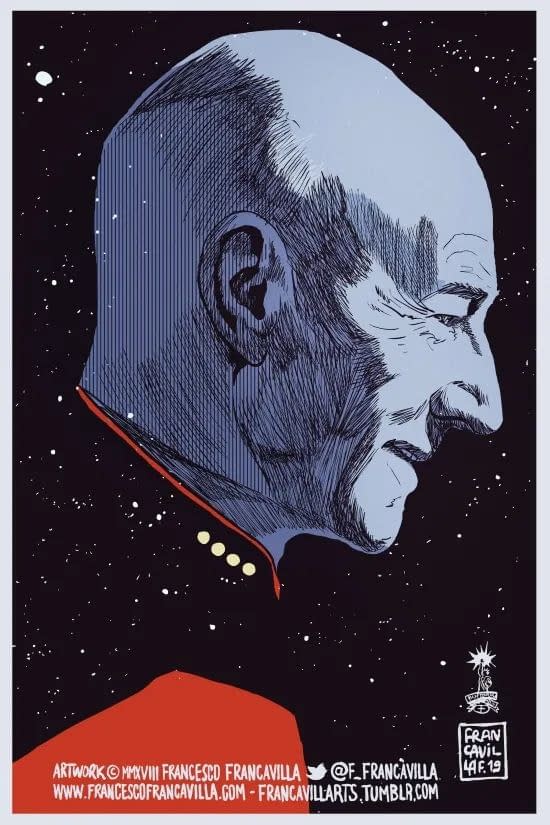
The comic book community reacted swiftly to the news, utilizing art and heartfelt words to honor the fallen actor. Prominent comic book artists and writers shared customized tributes reflecting his most iconic roles. Acclaimed illustrator Francesco Francavilla shared commemorative artwork highlighting Stewart’s profound cultural footprint, serving as a visual focal point for the industry’s collective grief.
Writers and publishers across the spectrum noted how Stewart’s performances shaped their own creative endeavors. By bringing profound emotional depth, moral authority, and intellectual rigor to characters like Professor Charles Xavier and Jean-Luc Picard, Stewart proved that science fiction and comic book narratives could explore complex philosophical and ethical dilemmas. Creators frequently cited his performances as masterclasses in character acting, proving that genre work requires the highest caliber of dramatic skill.

Philanthropic Legacy and Final Wishes
In alignment with the dignity that characterized both his life and his performances, Stewart’s family chose to channel the public’s grief into constructive support for medical research and caregiving. By requesting donations for the Johns Hopkins Alzheimer’s Disease Research Center Fund and the Alzheimer’s Foundation of America Caregiver Resources, the family has brought national attention to the ongoing battle against neurodegenerative diseases.

This gesture resonates deeply within the entertainment and artistic communities, where many veterans of stage and screen face the debilitating realities of cognitive decline later in life. By supporting these specific funds, fans and colleagues can honor Stewart’s memory in a way that directly aids researchers seeking breakthroughs and families navigating the immense challenges of caregiving.
Broader Impact and Cultural Implications
The loss of Sir Patrick Stewart marks the end of an era for both classical acting and modern pop culture. In an era where franchises often overshadow the performers within them, Stewart maintained a rare dual status: he was simultaneously a peerless classical tragedian and a beloved pop-culture deity.
His passing leaves a void in the landscape of speculative fiction. From mentoring generations of mutants on the silver screen to exploring the final frontier of television, Stewart infused every role with a profound sense of humanity. As the comic book and entertainment industries continue to process this monumental loss, the legacy of Sir Patrick Stewart will endure—not only through the expansive catalog of his recorded performances, but through the enduring inspiration he provided to the writers, artists, and fans who continue to tell stories of heroism, empathy, and intellectual curiosity.