Ryu Murakami, Acclaimed Japanese Novelist and Master of Psychological Horror, Dies at 74


Ryu Murakami, one of modern Japan’s most influential literary figures and a foundational voice in the global expansion of psychological horror, passed away at his home on October 17, 2026, at the age of 74. Confirmed by his longtime publisher, Gentosha, the author’s death marks the end of a prolific five-decade career that fundamentally reshaped contemporary fiction, bridging the gap between high literary art and visceral, unsettling genre exploration.
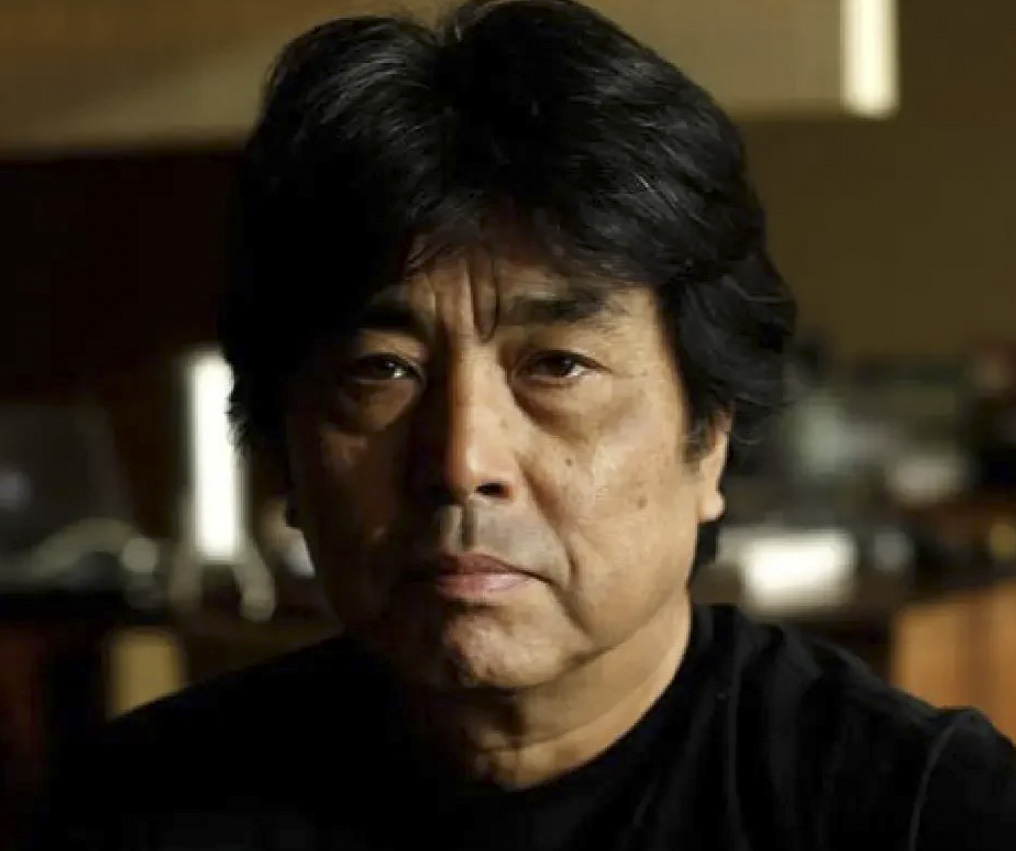
While international news outlets received word of his passing late in October, the specific cause of death has not been made public, in accordance with the wishes of his family and representatives. Murakami’s death represents a profound loss for the international literary community, arriving just months after the passing of Koji Suzuki, the author of Ring, in May 2026 at the age of 68. With the loss of both Murakami and Suzuki within the same year, the literary world bids farewell to two towering architects of the late-20th-century J-horror movement that captivated global audiences.
Early Life and Literary Breakthrough
Born in Sasebo, Nagasaki, in 1952, Murakami emerged onto the Japanese literary scene with a fierce, countercultural voice that challenged the traditional conventions of post-war literature. His literary career erupted in 1976 when, at just 24 years old, he published his semi-autobiographical debut novel, Almost Transparent Blue. The novel—a harrowing, sensory-heavy depiction of alienated youth, drug use, and military-town disillusionment among American soldiers and Japanese teenagers—resonated deeply with a generation navigating rapid modernization and cultural shifts.

Almost Transparent Blue was an immediate sensation. It was awarded both the prestigious Gunzo Prize for New Writers and the coveted Akutagawa Prize, Japan’s highest literary honor for a work of new fiction. The book went on to achieve staggering commercial success, selling approximately 3.5 million copies and instantly establishing Murakami as a formidable young literary rebel.
Rather than resting on the success of his debut, Murakami expanded his thematic scope in 1980 with Coin Locker Babies. The sprawling, ambitious novel traced the lives of two infants abandoned in train station coin lockers and explored themes of societal decay, pollution, and systemic neglect. The work earned him the Noma Literary Prize for New Writers and solidified his reputation as a writer willing to gaze unflinchingly into the darkest margins of human society. Over the next fifty years, Murakami maintained a relentless output, publishing more than forty novels and short story collections that traversed genres, political critique, and psychological excavation.

The Cinematic Legacy of Audition and Global Impact
While Murakami enjoyed immense respect as a mainstream literary novelist, his global cultural footprint was permanently expanded by his 1997 novel Audition. The psychological thriller centers on a middle-aged, widowed film producer who, grieving the loss of his wife, stages a fake multi-person casting call under the guise of producing a feature film to secretly audition women to be his new partner.
In 1999, visionary Japanese filmmaker Takashi Miike adapted Audition into a feature film starring Ryo Ishibashi and Eihi Shiina. Released during the height of the international J-horror export wave ignited by Hideo Nakata’s Ringu, Miike’s adaptation achieved legendary status. However, unlike the supernatural hauntings and curses popularized by other J-horror exports, Murakami’s original story and Miike’s cinematic interpretation kept their terror firmly rooted in the mundane reality of human behavior.

The horror of Audition did not stem from ghosts or demons, but from a quiet, methodical psychological disintegration. Eihi Shiina’s portrayal of Asami Yamazaki—a former ballerina whose submissive exterior masks a deeply traumatized, hyper-violent sadist—became the benchmark against which subsequent depictions of vengeance and "woman scorned" tropes in global horror cinema were measured. Murakami’s ability to articulate the mechanics of violence as an extension of internal psychological leakage solidified his mastery over the genre. As he famously wrote in the novel: "That’s what violence was: emotion leaking out from consciousness into the physical world, linking up with the muscles."
Murakami’s exploration of transgressive themes continued to attract daring filmmakers. His 2005 psychological thriller novel Piercing was adapted into an English-language film in 2018 by director Nicolas Pesce, starring Christopher Abbott and Mia Wasikowska. Furthermore, his critically acclaimed 1997 novel In the Miso Soup—a tense, atmospheric thriller following an American tourist in Tokyo during the New Year festivities—won the prestigious Yomiuri Prize for Fiction, further cementing his literary pedigree.
Industry Response and Official Statements
Following the public announcement of his passing, publishers, critics, and fellow artists flooded media channels with tributes honoring Murakami’s monumental contributions to literature and cinema.
Gentosha, Murakami’s primary publisher for decades, released a formal statement acknowledging his profound impact on generations of readers. "Ryu Murakami possessed a rare, uncompromised vision that forced society to confront its deepest anxieties, alienation, and darkest truths," the publisher noted. "His contributions to Japanese literature extend far beyond commercial sales or awards; he changed the vocabulary of modern fiction. We mourn the loss of a brilliant mind and extend our deepest condolences to his family."

International literary critics and horror historians have similarly emphasized the unique duality of Murakami’s career. Unlike many genre writers who are sidelined by mainstream literary establishments, Murakami moved fluidly between highbrow literary prizes and international cult-horror fandom. His works were translated into numerous languages, cultivating a dedicated global readership that appreciated his stark prose style, sociological acuity, and refusal to offer comfortable resolutions to complex human dilemmas.
Chronology of a Storied Career
- 1952: Ryu Murakami is born in Sasebo, Nagasaki Prefecture, Japan.
- 1976: Publishes his debut novel, Almost Transparent Blue, winning both the Gunzo Prize and the Akutagawa Prize at age 24. The book sells approximately 3.5 million copies.
- 1980: Releases Coin Locker Babies, winning the Noma Literary Prize for New Writers.
- 1997: Publishes the psychological thriller Audition and the critically acclaimed novel In the Miso Soup, which later wins the Yomiuri Prize for Fiction.
- 1999: Takashi Miike releases his cinematic adaptation of Audition, introducing Murakami’s work to a massive international audience during the peak of the J-horror boom.
- 2018: Piercing is adapted into an English-language feature film directed by Nicolas Pesce.
- October 17, 2026: Passes away at his home in Japan at the age of 74.
- Late October 2026: Gentosha publicly announces his passing to international media outlets.
Broader Implications and Cultural Legacy
The passing of Ryu Murakami closes a definitive chapter in contemporary Japanese letters. Alongside contemporaries like Koji Suzuki, Murakami demonstrated that Japanese fiction could capture the anxieties of a hyper-technological, globalized world with startling immediacy and psychological depth.

His influence on contemporary thriller and horror writing is vast. By stripping away the supernatural safety nets common in traditional horror fiction, Murakami exposed the fragility of social constructs and interpersonal relationships, demonstrating that the most terrifying monsters are those shaped by ordinary human trauma and isolation.
As scholars, readers, and filmmakers reflect on his extensive bibliography—spanning over forty works of fiction, essays, and screenplays—Murakami’s legacy remains secure. He leaves behind a body of work that continues to challenge, disturb, and mesmerize, ensuring that his sharp, unblinking gaze into the human psyche will endure for generations to come.