Tyra Banks reflects on the disappointment of Halloween Resurrection and the loss of her iconic death scene

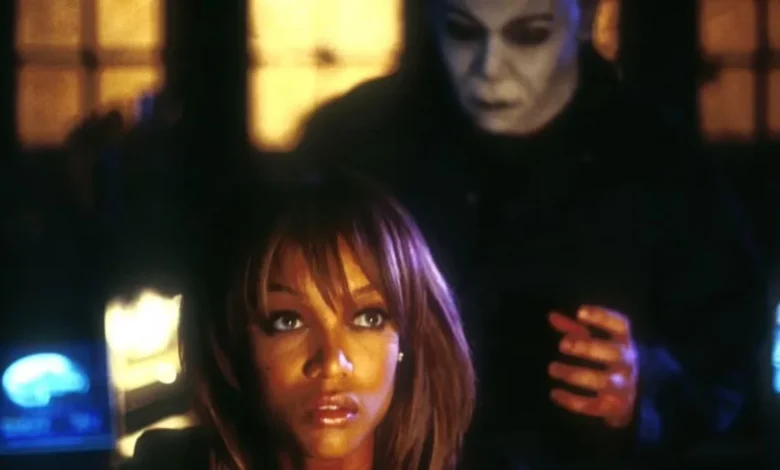
The 2002 slasher film Halloween: Resurrection remains one of the most polarizing entries in the storied horror franchise, and for supermodel-turned-actress Tyra Banks, the experience was profoundly underwhelming. Recently speaking with Entertainment Weekly, Banks candidly addressed her involvement in the project, expressing significant frustration regarding the film’s failure to act as a catalyst for her acting career and the abrupt omission of her character’s death scene from the final theatrical cut. Banks, who played the role of Nora Winston in the film, revealed that she had initially been hesitant to join the production but was persuaded by the prospect of replicating the career success achieved by Josh Hartnett following his appearance in the 1998 installment, Halloween H20: 20 Years Later.
The Strategic Miscalculation of a Career Move
In the early 2000s, Tyra Banks was aggressively pivoting from the fashion runway to Hollywood, seeking roles that would cement her status as a legitimate actress. When the script for Halloween: Resurrection was presented to her, her initial reaction was one of skepticism. Banks noted that she felt the horror genre might not provide the professional elevation she required at that stage of her development. However, her representation utilized the career trajectory of Josh Hartnett—who had successfully transitioned from the Halloween franchise to starring roles in major studio features—as a primary selling point.
The promise of the role was twofold: it was expected to serve as a high-profile entry into the horror canon, and it included what was described as a memorable, "iconic" death sequence. Banks admitted that the expectation of a significant, lasting death scene was a deciding factor in her acceptance of the role. In the final version of the film, however, these expectations were largely unmet. The film did not yield the professional dividends promised, and the specific sequence that Banks believed would secure her place in horror history was excised during the editing process.
The Chronology of the Production and Omission
Halloween: Resurrection, directed by Rick Rosenthal, was released in July 2002. The plot centers on a reality television production team that broadcasts a live feed from the childhood home of Michael Myers. Tyra Banks’ character, Nora, serves as a member of this production team. While the film features the discovery of her body, the actual act of her murder at the hands of Michael Myers was completely removed from the theatrical release.
This decision has been a point of contention among fans and historians of the franchise for over two decades. According to industry reports and retrospective analyses, including those provided by outlets such as JoBlo, the decision to remove the scene was driven by a desire to heighten suspense. By keeping the audience unaware of the exact moment or method of Nora’s death, producers hoped to maintain a sense of mystery for other characters who eventually stumble upon the crime scene.
Despite the theatrical edit, the footage of the sequence does exist. It has been documented in various "workprint" versions of the film that have circulated among collectors and horror enthusiasts. In this deleted material, the scene depicts Michael Myers entering the control room where Nora is stationed, subsequently strangling her with a cord. This confirms that the death was fully conceptualized and filmed, only to be deemed redundant or pacing-ineffective by the editing team.
Comparative Market Performance: H20 vs. Resurrection
The frustration expressed by Banks is contextualized by the broader commercial and critical performance of the eighth installment of the Halloween series. Halloween H20, which served as a soft reboot of the franchise, was a relative success, grossing approximately $64.9 million worldwide. Its reception was generally more favorable, as it brought back Jamie Lee Curtis to reprise her role as Laurie Strode.

Conversely, Halloween: Resurrection struggled significantly. It generated only $37.7 million at the global box office, marking a substantial decline in revenue compared to its predecessor. Beyond the financial shortfall, the film suffered from a critical drubbing. Currently, it maintains a 10% approval rating on the review aggregator Rotten Tomatoes. The consensus among critics at the time focused on the film’s reliance on the then-nascent "reality TV" gimmick, which many felt aged poorly and undermined the atmosphere of terror that defined the earlier entries in the franchise.
The Impact on Professional Aspirations
For an actor like Banks, who was navigating a transition from one high-profile industry to another, the failure of a project like Halloween: Resurrection carries specific professional weight. In her interview, Banks was unequivocal about her lack of fondness for the production. When asked if she looked back on the experience with any sense of nostalgia or satisfaction, she flatly rejected the notion, stating, "Not even a little bit. Like, not even a tiny bit."
The incident serves as a case study in the risks associated with genre acting for stars attempting to branch out. For performers with established public personas, the horror genre can provide a platform for versatility, but it also carries the risk of being associated with projects that may not align with the performer’s long-term professional objectives. In the case of Banks, the absence of the death scene meant that the "iconic" moment she had been promised—the very thing that makes a cameo in a horror film culturally significant—was stripped away, leaving her with a role that offered neither critical acclaim nor a memorable cinematic beat.
The Legacy of Deleted Horror Footage
The case of Tyra Banks and the missing scene in Halloween: Resurrection highlights a recurring theme in horror film history: the tension between the director’s vision and the pacing requirements of the studio. In the horror genre, the "death scene" is the currency of the performer. It is the moment where the actor is the focal point of the film’s narrative stakes.
Historically, deleted scenes have often been used as promotional material or bonus features for DVD and Blu-ray releases. However, when a scene is removed that was explicitly promised to an actor as a career-defining moment, it creates a lingering professional grievance. The documentation of the workprint version of the scene has provided fans with a "what-if" scenario, confirming that the death was indeed filmed with the necessary intensity to be memorable, had it been included.
Broader Industry Implications
The narrative surrounding Halloween: Resurrection remains a cautionary tale for both producers and talent. For talent, the experience reinforces the importance of script analysis and the potential volatility of the editing room, where a performance can be significantly altered or diminished. For the franchise, the failure of the 2002 film eventually led to a period of dormancy, followed by a total re-evaluation of the series’ direction, culminating in the later successful reboot by David Gordon Green.
Ultimately, Tyra Banks’ "beef" with the film is not merely about a missing scene; it is about the disparity between the promise of a project and the reality of its execution. While she has gone on to build a multifaceted career in media, production, and business, the experience of Halloween: Resurrection remains a notable outlier in her filmography—a project that promised a bridge to a new career phase but instead provided only a lesson in the unpredictability of the film industry. Her recent remarks provide a rare, candid glimpse into the behind-the-scenes realities of a franchise that, despite its massive commercial success, has often struggled with internal cohesion and the management of its talent.