Joko Anwar Unleashes Ghost in the Cell: A Masterclass in Indonesian Horror-Comedy and Social Satire

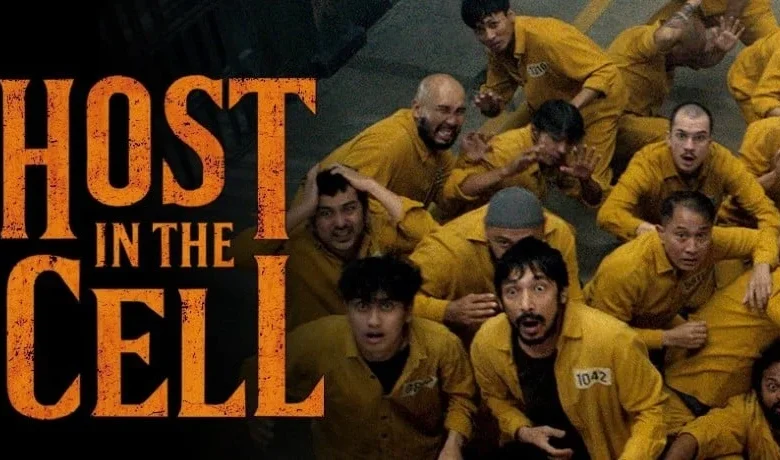
Renowned Indonesian filmmaker Joko Anwar has once again expanded the boundaries of contemporary horror with his latest feature, Ghost in the Cell. Premiering to enthusiastic critical response, the film marks a significant tonal departure for a director internationally celebrated for unrelenting, atmospheric dread in works such as Impetigore and Grave Torture. In Ghost in the Cell, Anwar marries high-concept supernatural terror with deadpan slapstick and biting social commentary, crafting a cinematic experience that challenges conventional genre boundaries while addressing deeply rooted systemic issues within modern Indonesian society.
Main Facts and Narrative Premise
The plot centers on Dimas, portrayed by Endy Arfian, a mild-mannered journalist who finds himself wrongfully imprisoned after being framed for the grisly murder of his superior. According to the narrative, Dimas is accused of mutilating his boss and fixing the corpse to an overhead office fan. Transferred to a high-security Jakartan correctional facility, the physically frail writer initially elicits pity from hardened inmates, most notably a seasoned prisoner named Anggoro, played by Abimana Aryasatya, who reluctantly assumes the role of Dimas’s de facto bodyguard.
However, Dimas carries a terrifying secret: he is bound to a malevolent supernatural entity. The entity thrives on negative emotional energy, specifically drawing sustenance from red auras fueled by anger, frustration, and hostility. When a wave of brutal murders sweeps through Block C—leaving inmates and guards slaughtered and rearranged into grotesque, macabre art installations—the facility is plunged into an emergency lockdown. To survive, Anggoro and his coalition of inmates must suppress their aggression entirely, practicing mindfulness, breathing exercises, dance, and prayer to avoid generating the volatile emotional triggers that attract the entity.
Chronology and Production Background
Joko Anwar’s transition into horror-comedy represents a calculated evolution in a career already distinguished by critical and commercial success across Southeast Asia. Development on Ghost in the Cell began following the international festival circuit runs of Anwar’s previous heavy horror projects, where the filmmaker expressed a desire to experiment with audience pacing and emotional juxtaposition.
Principal photography took place on a meticulously constructed prison set in West Java, designed to evoke the claustrophobic and decaying infrastructure of overcrowded correctional facilities. Cinematographer Ical Tanjung utilized dynamic, wide-angle tracking shots to capture the chaotic choreography of prison life contrasted against the sterile, horrifying precision of the supernatural attacks. Special effects supervisor Magistus Miftah orchestrated a hybrid approach to the film’s gore, relying heavily on practical creature effects and physical prosthetics, with digital augmentation utilized selectively—most notably during a complex, fully choreographed tango sequence resulting in a digital disintegration.
Cast and Character Dynamics
The chemistry between the principal cast anchors the film’s precarious tonal balancing act. Abimana Aryasatya delivers a grounded performance as Anggoro, a man whose criminal background contrasts sharply with an emerging moral compass. Endy Arfian conveys the perpetual terror of a civilian thrust into a hyper-violent environment.
Supporting performances emphasize exaggerated reactions designed to heighten the absurdist humor. Hardened criminals, accustomed to settling disputes with lethal force, are forced into humiliating displays of pacifism. Sequences featuring inmates engaging in synchronized dance routines or forced meditation inside locked cells provide persistent comedic relief, serving as a direct counterweight to the extreme brutality unfolding elsewhere in the facility.
Supporting Data and Technical Execution
Ghost in the Cell features a high volume of practical special effects, distinguishing it within modern horror cinema. Industry estimates place the film’s visual effects budget at a moderate level for Southeast Asian cinema, prioritizing tactile, physical horror over CGI saturation.
The film’s violence draws explicit comparisons to extreme American slasher subgenres, specifically referencing works such as House of 1000 Corpses and contemporary splatter films. Victims are frequently posed in theatrical, architectural arrangements mimicking classical motifs, ranging from Lady Justice to the Crucifixion, integrated directly into prison infrastructure such as plumbing fixtures and industrial burners. Despite the graphic nature of the content, Ical Tanjung’s cinematography maintains clear, unbroken framing, refusing to shy away from the elaborate anatomical staging executed by the antagonist.
Broader Impact, Themes, and Socio-Political Implications
Beneath its veneer of genre thrills and slapstick comedy, Ghost in the Cell functions as a pointed critique of systemic corruption and socio-economic disparity within Indonesia. The narrative explicitly connects Dimas’s imprisonment to his journalistic investigations into illegal nickel mining operations in Borneo, where environmental degradation and corporate malfeasance resulted in preventable fatalities.
The prison environment serves as a microcosm of societal stratification. While low-level offenders and political dissidents occupy the harsh general population blocks—referred to within the facility as the "Judgment Field"—wealthy white-collar criminals reside in luxury quarters, insulated from the consequences of their actions by institutional bribery. By uniting these disparate factions against a common supernatural threat and an oppressive bureaucratic structure, the film advocates for cross-class solidarity and religious tolerance.
Industry analysts note that Anwar’s ability to weave political dissent into mainstream commercial entertainment reflects a growing trend among Indonesian auteurs utilizing genre cinema to circumvent traditional censorship or political sensitivities. By employing humor as a disarming agent, the film delivers subversive commentary on state oversight, journalistic integrity, and the commodification of justice.
Critical Reception and Industry Outlook
Initial screenings of Ghost in the Cell have drawn widespread acclaim from genre critics, who highlight its seamless integration of disparate emotional registers. Reviewers have praised the film’s refusal to compromise on either its comedic timing or its commitment to uncompromised practical gore.
As international distribution expands following its domestic theatrical run, Ghost in the Cell is expected to further cement Joko Anwar’s status as a leading voice in global horror cinema. The film demonstrates that high-concept genre fare can successfully accommodate complex socio-political critiques without sacrificing audience engagement, setting a new benchmark for horror-comedy production across the region.