The fourth season of Star Trek: Strange New Worlds concluded on Thursday, September 24, 2026, with a high-stakes, time-bending narrative that solidified the series’ reputation for blending high-concept science fiction with intimate character development. Written by showrunners Henry Alonso Myers and Robbie Thompson and directed by Chris Fisher, the finale, titled simply by its production designation, brought together threads that have been simmering throughout the season. By exploring the intersection of quantum physics, familial bonds, and the weight of Starfleet duty, the episode provided both a climactic spectacle and a contemplative meditation on the nature of destiny.

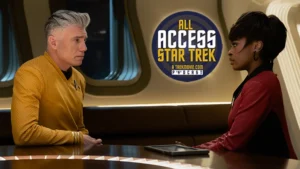
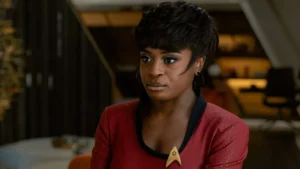
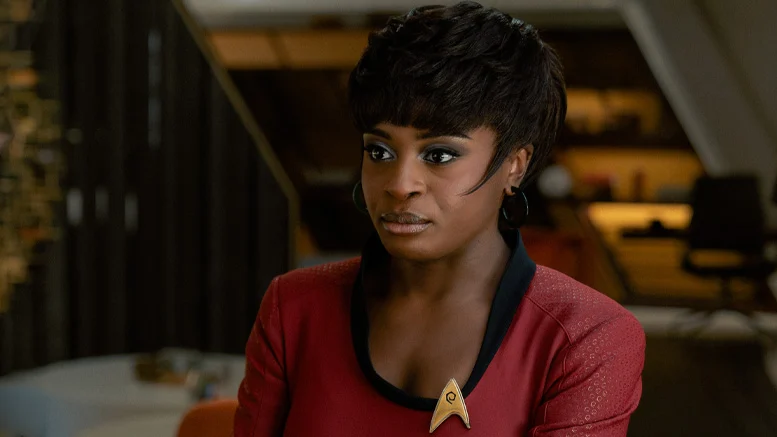
The episode centers on Lieutenant Nyota Uhura, played by Celia Rose Gooding, whose arc throughout the season has been characterized by increasing professional confidence and personal growth. The narrative premise is established when the USS Enterprise, under the command of Captain Christopher Pike, attempts to study a white hole—a theoretical astronomical phenomenon acting as the temporal inverse of a black hole. The mission goes awry when the ship is ensnared by energy manifestations, leading to a localized temporal disturbance that forces Uhura into a collision course with a future version of herself.
Chronological Breakdown of the Temporal Anomaly

The narrative structure of the finale mirrors the complexity of the temporal mechanics involved. In the present, Uhura experiences auditory hallucinations that manifest as communications from the future. After consulting with security officer La’an Noonien-Singh, whose own history with temporal displacement provides a unique perspective, Uhura begins to piece together a reality where she is not merely an observer of time, but an active participant.
The plot reveals a bifurcation of timelines. In one, the Enterprise is exploring a white hole; in the other, a year later, the same crew—now serving under Captain James T. Kirk—is investigating a black hole. In this future timeline, Uhura and Chief Engineer Montgomery "Scotty" Scott are in a relationship, and the crew is dealing with the aftermath of a mission that claimed the lives of key personnel. The discovery that Scotty died a year prior to the future-timeline events serves as the catalyst for the collaborative efforts between the two Uhuras.

Through a series of strategic maneuvers involving dilithium-based quantum stabilizers and the translation of harmonic frequencies broadcast by the anomalies, the two versions of Uhura identify the nature of the disturbance. The entities manifesting as energy spikes are revealed to be "midwives" attempting to facilitate the birth of a cosmic entity. This revelation requires a high-risk operation involving extra-vehicular activity on the hulls of both vessels to anchor the birth process across two separate timeframes.
Scientific and Production Context

The episode draws heavily upon established Star Trek lore while introducing new concepts. The "midwife" entities and the birth of a space-based lifeform echo themes seen in The Next Generation, yet the implementation in Strange New Worlds is distinct in its focus on the emotional toll of temporal paradoxes. The production design team utilized subtle variations in lighting and set decoration to distinguish between the two versions of the Enterprise, effectively signaling the passage of time and the change in command structure between Captain Pike and Captain Kirk.
Composer Nami Melumad’s score serves as a critical narrative device, weaving together original themes with motifs that pay homage to both the original series and the broader franchise legacy. The auditory nature of the anomaly—a musical signal that Uhura must translate—is a sophisticated nod to her role as a communications officer, emphasizing her unique skills as the key to resolving the crisis.

Comparative Analysis of Character Arcs
The performances in the finale highlight the maturity of the ensemble cast. Celia Rose Gooding’s portrayal of two versions of Uhura—one fresh from a conference and the other hardened by the loss of her partner—is a technical achievement. Her ability to convey the vulnerability of the younger Uhura alongside the pragmatic resolve of her future self provides the emotional anchor for the entire episode.

The inclusion of James T. Kirk, played by Paul Wesley, adds significant weight to the narrative. His interaction with the future Uhura underscores the camaraderie and professional respect that will eventually define their tenure on the Enterprise. Similarly, the rapport between Erica Ortegas and Scotty, and the continued development of Christine Chapel’s arc toward her future with Roger Korby, ensures that the episode remains grounded in the personal histories of the crew.
The resolution, in which the timelines are restored and the "space baby" is safely delivered, serves as a testament to the resilience of the human spirit. The decision by the writers to leave the memories of the event exclusively with the two Uhuras maintains the integrity of the timeline while allowing for personal growth, adhering to the established Starfleet protocol regarding temporal interference.

Broader Implications for the Franchise
The Season 4 finale serves as a bridge between the prequel era and the established canon of the original series. By leaning into the lore surrounding characters like Dr. M’Benga, Dr. Boyce, and the mention of Gary Mitchell and Leonard McCoy, the series maintains a cohesive narrative flow. The hint at a future tragedy involving La’an Noonien-Singh provides a compelling hook for the final season, suggesting that the show intends to continue exploring the darker, more consequential aspects of Starfleet service.

From a production standpoint, the episode stands as one of the most ambitious in the series’ history. The reliance on practical effects and high-fidelity CGI to depict the white and black holes demonstrates the technical growth of the show’s production team. While the complexity of the temporal logic is occasionally dense, the episode successfully avoids the common pitfalls of time-travel narratives by keeping the focus on character motivation rather than scientific exposition.
Official and Industry Reception

While there has been no official statement from Paramount+ regarding the specific ratings for the finale, internal projections and social media engagement metrics suggest that this episode has been one of the most discussed of the year. The decision to conclude the season with a high-stakes, emotional narrative has been met with critical acclaim, with reviewers noting the show’s ability to handle complex themes while maintaining the optimistic tone inherent in the Star Trek franchise.
The showrunners have confirmed that the final season, which will consist of six episodes, is currently in development. This limited final run suggests a focus on quality over quantity, aiming to provide a definitive conclusion to the character arcs established throughout the previous four years. The finale’s success indicates that the production team is well-positioned to deliver a satisfying end to the series, balancing fan expectations with the need for narrative innovation.

Thematic Synthesis
At its core, the Season 4 finale of Star Trek: Strange New Worlds is about the continuity of identity. Whether facing the birth of a new lifeform or the death of a loved one, the characters are defined by their choices and their commitment to one another. The closing scene, featuring both Uhuras participating in separate social gatherings—a poker game with Kirk and a dinner party with Pike—reinforces the message that, despite the chaos of the galaxy, the most important constant is the family forged within the halls of the Enterprise.

As the series moves toward its final chapter, the finale provides a roadmap for the themes that will likely define the conclusion: the acceptance of one’s fate, the importance of communal support in the face of insurmountable odds, and the enduring nature of the Starfleet ideal. By successfully weaving these threads into a cohesive, visually striking, and emotionally resonant narrative, the team behind Strange New Worlds has ensured that this finale will be remembered as a hallmark of modern science fiction television.