Resident Evil box office performance signals a massive resurgence for the horror franchise under director Zach Cregger

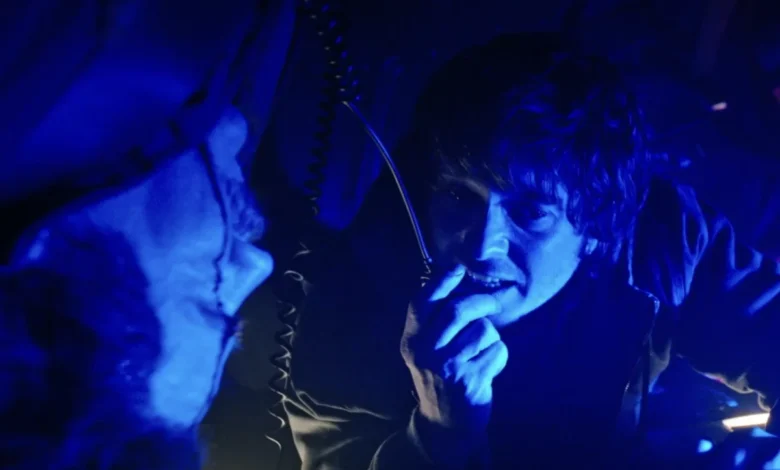
The latest iteration of the Resident Evil film franchise, helmed by filmmaker Zach Cregger and produced by Sony Pictures, has demonstrated significant commercial momentum in its first two weeks of theatrical release. With global box office receipts currently estimated at $196 million, the production is rapidly approaching the $200 million milestone. This performance is particularly notable given that the film has yet to debut in two of the franchise’s most historically lucrative international markets: China and Japan.
A Strong Global Opening and Sustained Momentum
The film’s theatrical run began with a robust global opening of $108.3 million, a figure bolstered by a franchise-best domestic debut of $60 million in North American theaters. This initial success signaled a strong consumer appetite for the reboot, defying earlier industry projections that had suggested more modest returns.
Entering its second weekend, the production maintained a steady pace despite the natural deceleration common in the horror genre. The film generated an additional $27 million internationally across 65 markets. While this represents a 45% decline from its opening weekend—a standard performance trajectory for high-profile genre films—the cumulative international total has reached $93 million. When combined with the domestic performance, the total worldwide gross of $196 million places the project in a favorable position as it prepares for its late-year international rollout.
The Significance of the Chinese and Japanese Markets
The upcoming releases in China and Japan are widely viewed by industry analysts as the next major catalysts for the film’s total box office potential. Historically, the Resident Evil franchise has enjoyed an outsized influence in these territories.
Data from Box Office Mojo regarding the 2016 installment, Resident Evil: The Final Chapter, underscores the importance of these regions. That film earned $159.5 million in China and $36.5 million in Japan. To put these figures into perspective, those two markets alone accounted for approximately 63% of that film’s total $312.2 million global haul.
While market dynamics have shifted significantly since 2016—due to changes in theater attendance habits, the rise of domestic Chinese cinema, and evolving regulatory environments for international films—the historical precedent suggests a substantial revenue floor for the franchise. The reboot’s release in China is scheduled for October 5, followed by a Japanese premiere on October 9. If the film captures even a fraction of the enthusiasm seen in previous iterations, the global total could see a significant upward revision by the end of the fourth quarter.
Contextualizing the Franchise Comeback
The Resident Evil film series, based on the Capcom video game franchise, has long been a staple of the horror-action hybrid genre. Following the conclusion of the Milla Jovovich-led series in 2017, Sony Pictures sought a creative pivot to revitalize the intellectual property for a modern audience. The selection of Zach Cregger, known for his ability to blend suspense with high-concept narrative structures, signaled a strategic shift toward a more atmospheric and perhaps critically grounded approach.
The chronology of the franchise’s evolution is marked by several distinct eras:

- 2002–2016: The Paul W.S. Anderson-directed era, which established the franchise as a reliable global performer, particularly in non-domestic markets.
- 2017–2021: A period of transition featuring lower-budget projects and attempts to align more closely with the game lore.
- 2026: The current reboot, which appears to have successfully recalibrated the brand, balancing the established action-horror aesthetic with contemporary cinematic expectations.
Economic and Industry Implications
The commercial success of the current Resident Evil project provides several key insights into the current state of the global box office. First, it highlights the enduring value of established intellectual property. Despite the saturation of the horror market, audiences remain drawn to recognizable franchises when the creative direction is perceived as fresh or elevated.
Second, the film’s domestic performance serves as a case study for "front-loading" tentpole releases. By securing a $60 million domestic opening, the production built enough cultural capital to sustain international interest throughout the following weeks. This strategy allows the film to maintain relevance while it waits for staggered international release dates, a practice that has become increasingly common in a post-pandemic global distribution model.
Finally, the reliance on overseas markets for the majority of the franchise’s profitability confirms that Resident Evil remains a truly global product. Unlike many domestic-heavy blockbusters, the Resident Evil brand is uniquely positioned to capitalize on international box office trends, where the action-heavy, visual-effects-driven style of the films often translates well across language barriers.
Analytical Outlook and Future Projections
Industry experts suggest that the current $196 million figure is merely the baseline. If the film achieves even moderate success in China and Japan, it is highly likely to exceed the lifetime gross of several of its predecessors.
However, analysts remain cautious about the long-term sustainability of theatrical revenue. The impact of the "second weekend drop-off" must be monitored, particularly as competition for premium large format (PLF) screens intensifies in the coming weeks. Furthermore, the film will face increased competition from autumn-scheduled releases, which could limit its longevity in multiplexes.
Despite these variables, the general consensus among industry analysts is one of cautious optimism. The film has already cleared the primary hurdle of achieving profitability and securing a firm foothold in the global marketplace. Whether this performance will lead to a new series of sequels remains a matter of speculation, but the financial metrics currently point to a successful resuscitation of the brand.
As the film moves into the October window, the focus will shift from its domestic performance to its ability to resonate with Asian audiences. Should it hit the projected revenue marks in Beijing and Tokyo, Sony Pictures will have a highly successful property on its hands, one that could redefine the expectations for mid-budget horror-action hybrids in the coming years.
For now, the metrics confirm a trend that few in the industry were willing to predict: Resident Evil has successfully transitioned from a legacy franchise into a modern box office powerhouse, with its greatest potential gains still lying ahead in the international markets. The coming weeks will ultimately determine whether this resurgence represents a brief spike in interest or the beginning of a sustained, long-term commercial cycle for the series.
Related posts: