The Complex Legacy of Blade Runner 2049: Why a Box Office Flop Remains a Defining Sci-Fi Masterpiece Ahead of the Blade Runner 2099 Premiere

The intersection of critical acclaim and commercial failure is a well-documented phenomenon within the entertainment industry, particularly regarding high-concept genre cinema. Throughout cinematic history, numerous ambitious feature films have struggled to capture a mainstream audience during their initial theatrical windows, only to achieve enduring status as cult classics or critical masterpieces through home media and streaming platforms. This dynamic is acutely visible in the science fiction genre, where sprawling world-building and deliberate pacing often clash with the immediate commercial demands of the box office. Denis Villeneuve’s 2017 feature, Blade Runner 2049, exemplifies this paradox. Despite failing to recoup its substantial financial investment during its theatrical run, the film has ascended to the upper echelon of 21st-century science fiction. As the intellectual property prepares to expand this November with the release of the Prime Video television series Blade Runner 2049 follows a long line of genre milestones that required time to find their true audience.
Production Chronology and the Shadow of a Classic
The developmental history of Blade Runner 2049 began decades before cameras rolled, burdened by the immense legacy of Ridley Scott’s 1982 original adaptation of Philip K. Dick’s novel, Do Androids Dream of Electric Sheep?. The original film, starring Harrison Ford as the weary detective Rick Deckard, initially experienced a mixed commercial and critical response before establishing itself as a foundational pillar of cyberpunk aesthetics and philosophical science fiction. For years, various attempts to construct a sequel stalled due to creative differences, rights issues, and the daunting prospect of matching the visual and thematic weight of Scott’s neo-noir vision.
In 2015, Denis Villeneuve—fresh off the critical success of Sicario and Arrival—signed on to direct, working from a screenplay penned by original co-writer Hampton Fancher and Michael Green. Principal photography commenced in July 2016, utilizing the legendary Roger Deakins as director of photography, a collaboration that would ultimately yield an Academy Award for Best Cinematography. Anticipation steadily mounted as promotional trailers revealed a faithful yet distinct expansion of the dystopian Los Angeles setting. However, the legacy of the original property proved to be both a marketing asset and a narrative constraint, setting expectations for a specific type of cinematic experience that would ultimately test the patience of casual moviegoers.
Financial Performance and Box Office Realities
The primary metric by which Blade Runner 2049 was deemed a commercial failure lies in the stark mathematics of studio financing and exhibition economics. Produced by Alcon Entertainment in association with Sony Pictures and Warner Bros., the film carried an estimated net production budget ranging between $150 million and $185 million. Industry standards dictate that a major tentpole release must generate approximately double its production budget in global ticket sales to account for global marketing campaigns, distribution fees, and theatrical revenue splits. Consequently, financial analysts estimated that the film required a global gross of roughly $400 million merely to break even.

Upon its release in October 2017, the film debuted domestically to $32.7 million, falling short of pre-release tracking expectations. By the end of its global theatrical run, Blade Runner 2049 amassed approximately $276 million worldwide. While these figures represent a substantial absolute sum, the shortfall against the film’s total financial expenditure resulted in significant write-downs for Alcon Entertainment and its financing partners. Industry analysts pointed to several compounding factors for the underperformance: a runtime approaching three hours which limited daily showtimes, a deliberate and unhurried narrative pace that defied traditional blockbuster formulas, and the inherent difficulty of marketing a cerebral, R-rated sequel to a 35-year-old cult classic to younger demographics.
Critical Reception and Narrative Framework
While commercial metrics spelled financial trouble, the critical reception presented an entirely contrasting narrative. Review aggregation platforms recorded overwhelmingly positive assessments, praising the film’s thematic depth, uncompromising artistic vision, and technical execution. Critics lauded Villeneuve and Deakins for crafting a visually arresting landscape that honored the rain-slicked, neon-drenched aesthetic of the original while introducing sweeping, monochromatic desert vistas in a ruined Las Vegas.
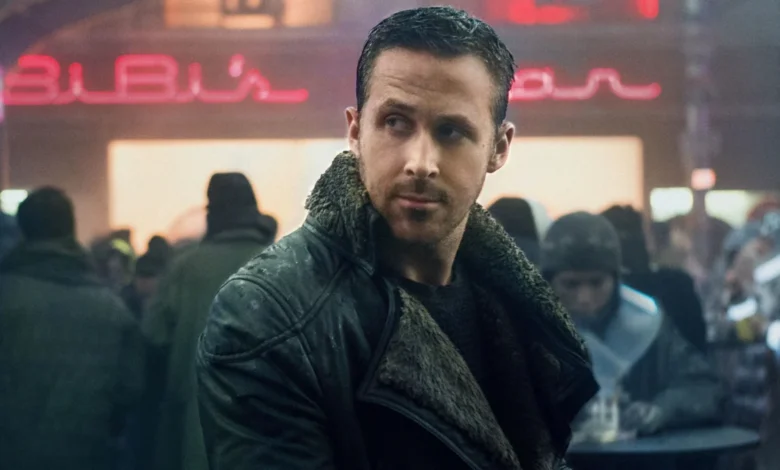
The narrative itself centers on K (portrayed by Ryan Gosling), an advanced synthetic human known as a Replicant who works as a Blade Runner for the Los Angeles Police Department, tasked with retiring older, non-compliant models. While executing an assignment, K discovers physical evidence that a female Replicant previously gave birth—a biological impossibility under the established rules of the fictional universe. This revelation triggers a sprawling investigation that forces K to question his own identity, leading him to a retired Rick Deckard, who has been in hiding for decades. Rather than relying on kinetic action sequences, the screenplay prioritizes philosophical inquiries regarding consciousness, artificial life, and the definition of humanity, creating a deliberate slow-burn atmosphere that resonated deeply with critics and core science fiction enthusiasts.
Expansion to Television: The Arrival of Blade Runner 2099
Nearly a decade after Villeneuve’s film entered the cultural lexicon, Amazon MGM Studios is set to further the franchise lore with the upcoming Prime Video limited series, Blade Runner 2099. Set half a century after the events of the 2017 film, the television project promises a dramatic inversion of the franchise’s traditional socioeconomic hierarchy. Initial promotional materials and executive summaries indicate that the narrative will explore a world where synthetic Replicants have risen to positions of power, actively oppressing human populations in a thematic mirror of the historical exploitation depicted in the preceding stories.
The series boasts a high-profile cast, including Academy Award winner Michelle Yeoh and Hunter Schafer. Production announcements have emphasized the scale and ambition of the television project, positioning it as a prestige entry designed to rival feature film production values.

Narrative Continuity and Viewing Recommendations
As the premiere date for Blade Runner 2099 approaches, discussions have emerged among fans and critics regarding whether viewers need to immerse themselves in the cinematic history before engaging with the new television narrative. Cast members, including Michelle Yeoh, have noted in promotional interviews that the series is designed to function as an accessible entry point focused primarily on the immediate character dynamics between the central figures.
Despite assurances of narrative autonomy, industry observers and continuity specialists argue that experiencing Blade Runner 2049—and ideally Ridley Scott’s 1982 original—remains essential for fully appreciating the thematic weight of the universe. The central conflict of synthetic autonomy, the corporate machinations of entities like the Wallace Corporation, and the profound societal shifts catalyzed by the revelations at the conclusion of the 2017 film provide crucial subtext for the power dynamics explored in the 2099 era.
Ultimately, the trajectory of the Blade Runner franchise illustrates a unique economic reality in modern media: commercial setbacks in theaters do not preclude enduring cultural relevance. As Blade Runner 2049 continues to find new audiences through streaming platforms, its transition from a high-profile box office disappointment to an acknowledged genre classic underscores the enduring value of uncompromising cinematic craftsmanship.
Related posts: