Two Decades Later: How NBC’s Heroes Defined 2000s Television and Paved the Way for Modern Superhero Culture

Two decades have passed since the landscape of television was permanently altered by the arrival of a serialized science fiction drama that relied on an unheralded ensemble cast, a modest premise, and one of the most effective marketing taglines in broadcast history. On September 25, 2006, NBC premiered Heroes, an original creation by writer and executive producer Tim Kring that debuted during an era when the modern cinematic and television superhero industrial complex did not yet exist.
Long before the advent of the Marvel Cinematic Universe, the extensive Arrowverse on The CW, or high-budget streaming adaptations on Disney+ and Max, prime-time television was largely dominated by procedural crime dramas, reality television, and supernatural procedurals like Lost, Medium, and Supernatural. Comic book adaptations on the small screen were rare anomalies, limited primarily to 1960s camp classics like Batman, 1970s staples like The Incredible Hulk and Wonder Woman, and Saturday morning animated series.
Heroes shattered these genre boundaries by presenting a grounded, serialized narrative about ordinary people across the globe discovering they possessed extraordinary abilities. Debuting with the pilot episode "Genesis," the series commanded an astounding 14.1 million viewers upon its initial broadcast, establishing itself as an immediate cultural phenomenon. Yet, despite its monumental launch and a universally acclaimed inaugural season, the trajectory of the series serves as a cautionary tale within the television industry regarding narrative momentum, audience expectations, and the rapid descent of a prestige property.
The Genesis of a Phenomenon: Pre-Marvel Landscape and Production Background
In the mid-2000s, NBC was actively searching for its next breakout prestige drama to fill the impending void left by long-running hits. Tim Kring pitched Heroes as an epic, novelistic story told in volumes rather than traditional episodic formats, drawing heavy inspiration from American comic books and global interconnected storytelling.
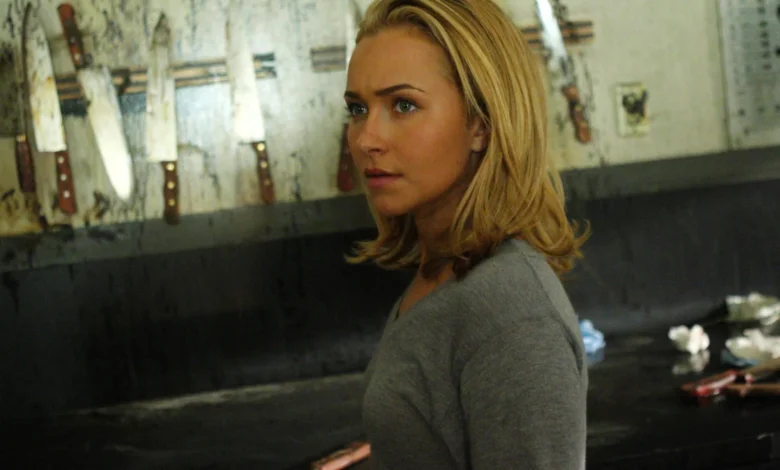
The core conceit of the series followed ordinary individuals from diverse walks of life who independently realized their biology was shifting. The ensemble cast featured Hayden Panettiere as Claire Bennet, an invincible cheerleader from Odessa, Texas; Milo Ventimiglia as Peter Petrelli, a hospice nurse with empathetic powers; Masi Oka as Hiro Nakamura, a Tokyo office worker capable of space-time manipulation; Sendhil Ramamurthy as Mohinder Suresh, a geneticist tracking his late father’s research; Ali Larter as Niki Sanders, a struggling mother battling a dangerous alternate personality; Greg Grunberg as Matt Parkman, a police officer who could hear thoughts; and Zachary Quinto as Gabriel Gray, a mild-mannered watchmaker who would transform into the terrifying, power-stealing serial killer known as Sylar.

Crucially, the studio did not rely on pre-existing intellectual property or established Hollywood A-listers to drive ratings. Instead, NBC greenlit the ambitious project based strictly on the strength of its high-concept pitch and an aggressive marketing campaign. The network flooded billboards, transit systems, and television screens with a single, cryptic phrase that would soon enter the cultural lexicon: "Save the cheerleader, save the world."
The Power and Peril of a Central Tagline
The marketing phrase "Save the cheerleader, save the world" stands as one of the most successful promotional hooks in television history, driving initial curiosity and sustaining water-cooler discussions across offices and university campuses. However, the phrase also created an intricate narrative trap for the writers’ room.
Throughout the early weeks of the broadcast, viewers tuned in week after week waiting to hear the phrase uttered on screen. The quote did not actually manifest in the dialogue until the fifth episode, titled "Hiros." By that juncture, audiences had formed a deep emotional attachment to Claire Bennet, whose regenerative cellular structure rendered her immune to permanent physical harm.
The premise established by the psychic visions of Hiro Nakamura indicated that Claire’s death would serve as the catalyst for a nuclear cataclysm that would devastate New York City. This high-stakes countdown formed the narrative backbone of Volume 1: Genesis. Yet, as the first season reached its climax, the structural mechanics of the plot began to reveal cracks that would ultimately undermine the long-term viability of the series.
Chronology of Ratings and the Rapid Decline
The trajectory of Heroes offers a striking case study in audience retention and alienation. While the first season maintained a steady, devoted audience averaging over 14 million viewers, the cracks began to show almost immediately following the resolution of the initial storyline.
- September 2006: The series premiere, "Genesis," airs to 14.1 million viewers, instantly establishing NBC’s new tentpole property.
- May 2007: The Season 1 finale resolves the immediate nuclear threat through a climactic confrontation, though critics note lingering narrative loose ends regarding the broader mythology of the Company and the ultimate fate of Sylar.
- September 2007: Season 2 premieres to an all-time series high of 16.97 million viewers, buoyed by massive anticipation. However, the momentum is abruptly halted due to the 2007–2008 Writers Guild of America strike, which forced NBC to truncate the season from a planned 24 episodes to just 11.
- 2008–2009: Season 3 introduces shifting timelines, complex conspiracies, and a revolving door of new characters, causing average viewership to plummet below 10 million, with individual episodes dropping near the 6-million mark.
- February 2010: The fourth and final season concludes with the series finale, "Brave New World," bringing in a meager 4.41 million viewers as NBC quietly cancels the struggling sci-fi drama.
Industry analysts and television historians frequently cite the Writers Guild strike of 2007 as a catastrophic blow to the momentum of Season 2, which attempted to introduce a viral pandemic plotline known as the "Shanti Virus." However, internal creative missteps—specifically the decision to repeatedly resurrect primary antagonists like Sylar rather than allow characters to permanently evolve or exit—accelerated viewer fatigue.

Narrative Disconnect and the Payoff Problem
The structural decline of Heroes is frequently traced back to a fundamental disconnect between its viral marketing promises and its actual narrative execution. The foundational tagline implied a direct causal relationship: preserving the life of Claire Bennet would actively avert the global apocalypse.
However, the Season 1 finale complicated this premise in a manner that left a segment of the audience feeling manipulated. While saving Claire prevented Sylar from absorbing her regenerative abilities—thereby ensuring he could eventually be physically defeated—her survival did not directly stop the bomb from detonating. Instead, the apocalypse was averted through a sacrificial maneuver by Peter Petrelli and his brother Nathan, who flew into the upper atmosphere before detonating.
Because the marketing campaign had hyper-focused on the cheerleader as the literal linchpin of human survival, the actual mechanics of the climax felt disconnected from the emotional buildup. As subsequent seasons introduced increasingly convoluted mythologies involving secret government agencies, loss of powers, formula injections, and carnival-themed cabals, the grounded, human-scale stakes of the first season evaporated.
Legacy and Broader Impact on the Television Landscape
Despite its turbulent later years and abrupt cancellation in 2010, the cultural footprint of Heroes remains indelible. The series demonstrated to major television networks that serialized, high-concept speculative fiction could command massive mainstream audiences on broadcast television.
Furthermore, the show pioneered transmedia storytelling techniques long before streaming platforms dominated the market. NBC released extensive webisodes, interactive graphic novels, and hidden digital clues embedded within broadcast frames, encouraging fans to engage with the mythology across multiple digital platforms simultaneously. This multi-platform approach laid foundational practices utilized extensively by subsequent genre properties.
Two decades after its debut, the first season of Heroes is frequently re-evaluated by critics and fans alike as a masterclass in modern television plotting, introducing archetypes and narrative structures that prefigured the dominant superhero boom of the 2010s. While subsequent seasons serve as a cautionary tale regarding the perils of runaway plotting and network interference, the initial spark of 2006 continues to command respect as a pioneering moment in the evolution of televised speculative fiction.