From Box Office Disappointment to Streaming Resurgence: How Crime 101 Found Its Audience on Prime Video

The contemporary theatrical landscape has undergone seismic shifts over the past several years, testing the limits of audience engagement and traditional box office economics. While occasional outlier hits—such as Curry Barker’s breakout horror sensation Obsession—capture the cultural zeitgeist and shatter post-pandemic attendance records, many high-profile features fail to recoup their investments during their initial theatrical windows. Among the most notable casualties of this cinematic climate is Crime 101, an action-thriller directed by Bart Layton and anchored by an ensemble of recognizable franchise veterans. Despite a substantial budget, favorable critical reception, and heavy star power, the film stumbled commercially upon its theatrical release in February, only to experience a significant second wind months later on Amazon Prime Video.
The Trajectory of a Theatrical Flop
Financed with a reported production budget of $90 million, Crime 101 entered the marketplace with expectations typical of mid-tier studio tentpoles. Distributed by major theatrical partners, the film relied heavily on the star appeal of its principal cast, which included Marvel Cinematic Universe fixtures Chris Hemsworth and Mark Ruffalo, alongside Academy Award winner Halle Berry and rising star Barry Keoghan. However, the film failed to connect with ticket-buyers during its initial theatrical run, pulling in a meager $72.9 million globally. This tally fell well short of the profitability threshold, which typically requires a film to gross roughly two and a half times its production budget once marketing and distribution costs are factored in.
Industry analysts pointed to several factors contributing to the film’s theatrical underperformance. Adult-skewing crime thrillers and mid-budget dramas have struggled consistently in the post-COVID-19 theatrical market, as audiences increasingly reserve theater trips for established intellectual property, spectacle-driven superhero films, or micro-budget horror. Consequently, despite a recognizable premise and recognizable faces, Crime 101 was quickly written off as a box office disappointment, joining a growing ledger of star-studded cinematic releases that failed to convert name recognition into ticket sales.
Transition to Streaming and the Prime Video Bump
Following its brief and financially disappointing theatrical window, Crime 101 transitioned to digital video-on-demand platforms before landing on Amazon Prime Video. Initially, the film mirrored the trajectory of many modern streaming releases: it experienced a brief surge of visibility, capturing the number one spot on the platform’s global daily charts during its premiere weekend. Yet, much like its theatrical run, that initial spike proved fleeting, and the title soon receded into the platform’s vast digital catalog, obscured by newer releases and algorithmic rotation.
However, the modern streaming ecosystem often operates on a delayed gratification model. Data compiled from Prime Video’s weekly viewership metrics revealed an unexpected resurgence for the thriller between September 14 and September 20, over half a year after its initial theatrical debut. During this tracking window, Crime 101 climbed to the tenth most-watched movie globally on the platform. This delayed engagement underscores an emerging trend in the entertainment industry: audiences are increasingly bypassing theatrical releases for non-franchise adult dramas and thrillers, choosing instead to consume them at home as part of their existing subscription packages.
Source Material and Creative Pedigree
Crime 101 is an adaptation of a 2020 crime novella written by Don Winslow, an author renowned for his gritty, meticulously researched explorations of the American underworld, law enforcement, and organized crime. The cinematic adaptation was penned and directed by Bart Layton, a filmmaker whose previous work, including the critically acclaimed documentary The Imposter and the heist-drama American Animals, established his reputation for narrative tension and stylistic sophistication. Despite his critical accolades, Layton had previously lacked a commercial blockbuster of this scale, making Crime 101 a critical stepping stone in his feature-film career.
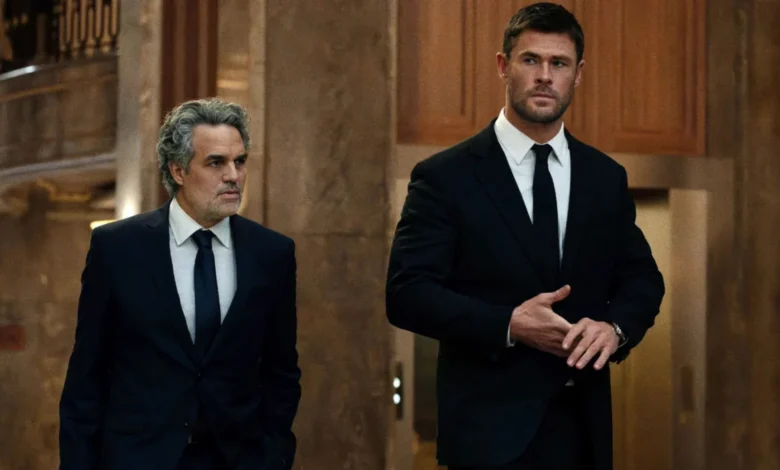
The narrative framework of Crime 101 centers on a high-stakes cat-and-mouse dynamic. Hemsworth stars as an elite jewel thief executing a series of meticulously planned heists along the Pacific Coast Highway, while Ruffalo portrays the dogged, obsessive detective tasked with bringing him to justice. The dynamic shifts with the introduction of Berry, playing an insurance broker whose professional life becomes irrevocably entangled in the criminal enterprise. Keoghan rounds out the core ensemble, contributing to a web of double-crosses and shifting allegiances designed to keep viewers off balance.
The Marvel and Franchise Pedigree Behind the Cast

A significant portion of the marketing campaign for Crime 101 relied on the off-screen history of its principal actors, particularly the dynamic between Hemsworth and Ruffalo. Having previously shared the screen in major franchise entries such as Taika Waititi’s Thor: Ragnarok and the crossover events Avengers: Infinity War and Avengers: Endgame, the actors brought a well-documented on-screen chemistry to the film. Their transition from cosmic superheroes to grounded adversaries provided a natural narrative hook for entertainment journalists and promotional spots alike.
The inclusion of Halle Berry—a veteran of the X-Men franchise—and Barry Keoghan, who recently stepped into the role of the Joker within the DC universe, further reinforced the film’s comic-book adjacent pedigree. Despite these cross-studio associations, the performances earned distinct praise from reviewers who noted the actors successfully shed their franchise baggage to inhabit more grounded, morally ambiguous personas.
Critical Reception Versus Commercial Reality
The commercial failure of Crime 101 stands in stark contrast to its critical reception. Upon its release, the film garnered positive reviews from mainstream critics and audiences alike. On Rotten Tomatoes, the film achieved an 88% approval rating from critics, alongside an 83% positive audience score. Reviewers highlighted Layton’s steady direction, the crisp cinematography capturing the sun-bleached expanses of coastal California, and the palpable tension generated by the opposing leads.
Industry observers have frequently cited Crime 101 as a primary example of the widening disconnect between critical consensus and box office viability. While high review scores historically served as a catalyst for word-of-mouth ticket sales, contemporary moviegoers appear increasingly willing to wait for home-viewing windows, particularly for original narratives that do not require theatrical immersion.
Broader Implications for the Mid-Budget Hollywood Thriller
The financial trajectory of Crime 101 highlights structural changes in how Hollywood studios greenlight, finance, and distribute original motion pictures. As the economics of traditional theatrical distribution continue to favor multi-quadrant franchise properties, original mid-budget thrillers face mounting pressure to find profitability through ancillary markets, including international sales, premium video-on-demand, and long-term streaming licensing deals.
For Amazon MGM Studios, the acquisition and eventual streaming performance of Crime 101 validate the strategy of utilizing theatrical windows not necessarily as immediate profit centers, but as high-profile marketing campaigns to drive subscriber acquisition and retention on Prime Video. While a $72.9 million theatrical gross against a $90 million budget represents a balance-sheet loss on paper, the ongoing viewership metrics on streaming platforms demonstrate that the intellectual property retains residual value.
Looking Ahead for the Principal Talent
As the film enjoys its current resurgence on streaming, its principal creative forces have already shifted focus to upcoming high-profile projects. Chris Hemsworth remains a central figure in major studio franchises, with ongoing speculation regarding his future in the Marvel Cinematic Universe, including upcoming crossover events such as Avengers: Doomsday. Similarly, Mark Ruffalo continues to balance prestige television and feature film roles within the studio system.
Ultimately, Crime 101 serves as a case study in the modern media landscape—illustrating how a film can stumble in one delivery format only to find its rightful audience in another. For viewers who opted to skip the theatrical release in February, the film’s current availability on Prime Video offers an opportunity to reassess a project that, despite its financial hurdles, delivered a polished narrative execution and strong performances from a veteran cast.