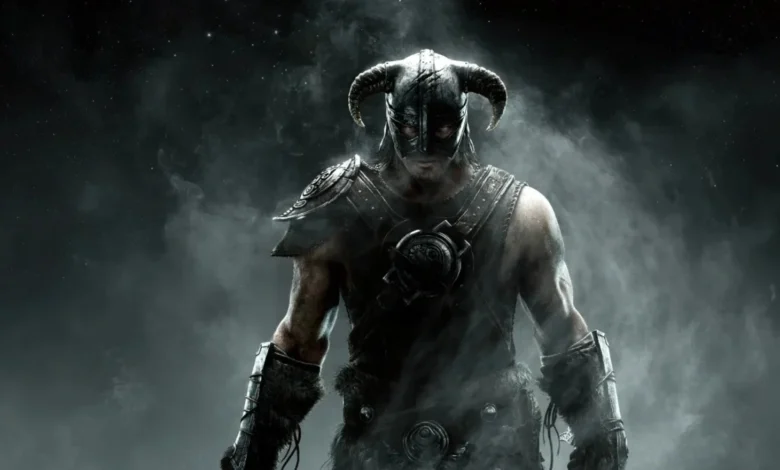
Nearly fifteen years have passed since the initial release of The Elder Scrolls V: Skyrim, a monumental open-world RPG that continues to occupy a prominent space in the gaming industry. While players await further news regarding the long-gestating development of The Elder Scrolls VI at Bethesda Game Studios, new revelations have emerged shedding light on the company’s internal strategy. Notably, Bethesda never seriously entertained the concept of commissioning an external development studio to produce a spin-off title to bridge the generation-spanning gap between mainline entries, a strategy they previously deployed with Obsidian Entertainment’s critically acclaimed Fallout: New Vegas.
This strategic choice highlights the distinct philosophies governing Bethesda’s two flagship intellectual properties. According to insights provided by former lead developer and franchise loremaster Kurt Kuhlmann during an appearance on the FRVR podcast, studio leadership—specifically director Todd Howard—remained fiercely protective of the fantasy franchise, avoiding a precedent that generated unintended friction within the fan base of their post-apocalyptic series.
The Legacy of Fallout: New Vegas and Internal Studio Dynamics
Released in 2010, Fallout: New Vegas was developed by Obsidian Entertainment—a studio comprising many veterans of the original Fallout developer, Black Isle Studios—while Bethesda Game Studios focused its efforts on completing Fallout 4. Built upon the engine and foundational assets of 2008’s Fallout 3, New Vegas introduced a branching narrative, morally complex factions, and deeply reactive world-building that resonated profoundly with the role-playing game community.
However, the critical and commercial success of Obsidian’s project inadvertently created a persistent, sometimes contentious debate within the player base regarding which developer possessed superior design sensibilities. A vocal faction of the community frequently argues that Obsidian’s narrative depth surpasses Bethesda’s environmental storytelling, leading to recurring discussions regarding whether the franchise should permanently reside with the external studio.
According to Kuhlmann, this specific dichotomy heavily influenced executive decisions at Bethesda regarding The Elder Scrolls. Studio director Todd Howard reportedly sought to prevent similar external comparisons and ownership debates from overshadowing the fantasy series. By retaining total internal control over every mainline entry in Tamriel, Bethesda insulated its primary creative vision from competing interpretations by outside developers.
A Chronological Overview of The Elder Scrolls Drought
The absence of a spin-off title leaves the historical timeline of mainline single-player releases remarkably sparse over the past two decades:
- 2002: The Elder Scrolls III: Morrowind launches, revolutionizing open-world PC and console role-playing games.
- 2006: The Elder Scrolls IV: Oblivion debuts, showcasing early seventh-generation graphical fidelity and the pioneering Radiant AI system.
- 2011: The Elder Scrolls V: Skyrim releases on November 11, eventually selling over 60 million copies across multiple hardware generations.
- 2014: The Elder Scrolls Online (ESO) launches, developed by ZeniMax Online Studios, establishing a continuous live-service revenue and content stream for the franchise.
- 2018: Bethesda formally announces The Elder Scrolls VI with a brief teaser trailer at E3.
- 2023: Kurt Kuhlmann departs Bethesda Game Studios after a tenure spanning decades.
- Present Day: The franchise remains in a prolonged hiatus as Bethesda prioritizes the development and post-launch support of Starfield alongside The Elder Scrolls VI.
The Mitigating Role of The Elder Scrolls Online
While the single-player hiatus has extended well beyond standard industry expectations for generational sequels, Kuhlmann noted that the sustained presence of The Elder Scrolls Online alleviated pressure on the development team. Released in 2014 and managed by ZeniMax Online Studios, ESO provided a continuous influx of narrative expansions, lore updates, and a persistent virtual world for fans of the intellectual property.
For a significant segment of the consumer base, ESO effectively redefined the franchise experience. Rather than associating the brand strictly with offline, single-player sandbox adventures, millions of players formed their primary attachment to Tamriel through the multiplayer platform. This ongoing operational output satisfied market demand and averted the critical stagnation that might have otherwise accompanied a decade-plus gap between single-player installments.
Corporate Restructuring and the Modern Xbox Ecosystem
Significant institutional changes have occurred within Bethesda Softworks and its parent organization since Kuhlmann’s departure in 2023. Following Microsoft’s acquisition of ZeniMax Media in 2021, Bethesda operates within Xbox Game Studios, a corporate structure increasingly oriented toward managing high-value, long-lifecycle franchises.

Within this evolving corporate landscape, traditional corporate boundaries between Bethesda and Obsidian have dissolved. Following massive industry-wide restructurings and organizational realignments implemented by Microsoft, Obsidian Entertainment now operates under the same overarching Xbox corporate umbrella. Notably, Obsidian has actively engaged in new projects within the Fallout universe, proving that cross-studio collaboration remains viable under Microsoft’s leadership.
Despite these structural shifts, leadership has maintained a commitment to preserving the distinct creative identities of acquired studios. Jill Braff, president of Bethesda, previously emphasized to staff that Obsidian’s established strengths and creative autonomy will remain fully intact following the corporate integration.
Industry Implications and Future Outlook
The revelation that Bethesda consciously avoided an Obsidian-led spin-off for The Elder Scrolls underscores the unique brand protection strategies utilized by high-profile game directors. While outsourcing development can successfully mitigate production fatigue and extend franchise relevance during protracted development cycles—as demonstrated by Fallout: New Vegas—it introduces branding complexities that can complicate a studio’s unified vision.
As Bethesda Game Studios continues development on The Elder Scrolls VI alongside ongoing updates to its existing catalog, the demand for high-end single-player fantasy remains unprecedented. Whether the future of the franchise will ever encompass external collaborations or spin-off projects under the consolidated Microsoft umbrella remains unconfirmed. For now, Bethesda remains steadfast in its traditional approach: guarding its premier fantasy intellectual property closely, ensuring that every future journey into Tamriel bears the direct, uncompromised imprint of its internal development team.