Star Trek Strange New Worlds Season 4 Episode 10 Review: A Temporal Masterpiece Concludes the Season

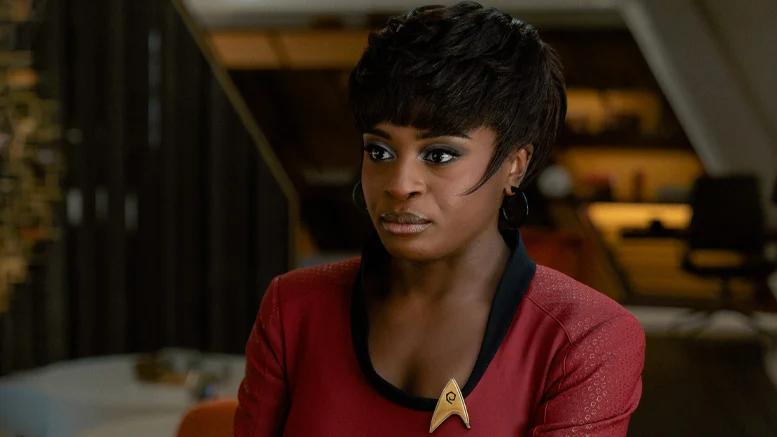
The season four finale of Star Trek: Strange New Worlds, which debuted on September 24, 2026, represents a significant milestone in the franchise’s modern era, blending complex temporal mechanics with deeply personal character development. Written by showrunners Henry Alonso Myers and Robbie Thompson and directed by Chris Fisher, the episode—titled for the purpose of this analysis as a thematic continuation of the classic "Tomorrow is Yesterday" motif—serves as a narrative capstone for a season defined by its willingness to experiment with genre and tone.

Narrative Core and Temporal Mechanics
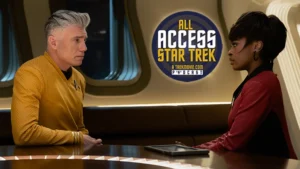
The episode centers on Lieutenant Nyota Uhura, portrayed with exceptional range by Celia Rose Gooding, as she grapples with a reality-bending incident involving a white hole. In the established chronology, the USS Enterprise, under the command of Captain Christopher Pike, approaches the anomaly to test the scientific hypothesis that white holes serve as the inverse counterparts to black holes. The mission quickly turns catastrophic when the ship is ensnared by energy manifestations, leading to a localized temporal disturbance that causes Uhura to phase between timelines.
The narrative reveals that the anomaly is a biological event: a "birthing" process for a sentient cosmic entity. The "midwives"—the beings responsible for this stellar phenomenon—operate outside of traditional linear time. This serves as the catalyst for a narrative structure that sees two versions of Uhura, separated by one year, forced to collaborate across the divide to prevent a timeline collapse that resulted in the death of Chief Engineer Montgomery "Scotty" Scott.

Chronological Breakdown of the Event
The timeline of the episode functions on two distinct planes. In the primary timeline, Uhura experiences the immediate aftermath of the mission failure. Concurrently, a future version of Uhura exists aboard a version of the Enterprise commanded by Captain James T. Kirk, where the fallout of the same anomaly has already taken root.
- The Initial Anomaly: The Enterprise encounters a white hole. During the encounter, Uhura suffers a temporal displacement, hearing transmissions from her future self and witnessing potential future outcomes.
- The Divergence: In the "future" timeline, Scotty is confirmed dead, and the crew’s status is significantly altered. Uhura, now in a relationship with Scotty, discovers the anomaly’s true nature and coordinates with her past self to initiate a corrective sequence.
- The Synchronization: Through the use of a dilithium-based quantum device, the two Uhuras synchronize their actions. This requires the assistance of multiple iterations of Spock and the technical expertise of the still-living Scotty in the past.
- The Resolution: The "midwives" reveal that the anomaly is the birth of a new life form. By deploying specialized drones on the hulls of both Enterprises, the Uhuras successfully facilitate the event, effectively "resetting" the timeline to prevent the initial tragedy.
Supporting Data and Production Context
This finale is particularly notable for its integration of established Star Trek lore with the specific narrative arcs of the Strange New Worlds era. Production elements were meticulously calibrated to distinguish between the two timelines, utilizing subtle lighting shifts and performance nuances to signal to the audience which version of the Enterprise was currently featured.

Composer Nami Melumad provided a score that acted as a bridge between the show’s established musical identity and the legacy sounds of the original 1960s series, further grounding the episode in the broader franchise history. The visual effects team executed a complex sequence involving multiple spacewalks and the representation of both black and white hole anomalies, maintaining a high standard of cinematic quality that has become a hallmark of the series.
Analysis of Character Arcs and Franchise Integration
The episode provides significant growth for the ensemble cast. Lieutenant Uhura’s development from a promising officer to a confident, multi-temporal strategist solidifies her role as the heart of the series. The inclusion of the romance with Scotty—a relationship briefly alluded to in the broader canon—adds emotional stakes to the technical puzzle of the episode.

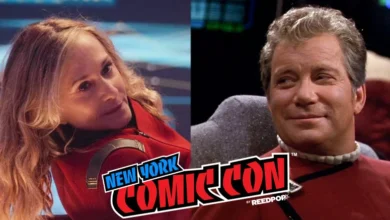
Furthermore, the character of La’an Noonien-Singh, played by Christina Chong, continues to serve as a grounding force, offering counsel based on her own traumatic history with temporal interference. The appearance of James T. Kirk, portrayed by Paul Wesley, provides a glimpse into the leadership style that will eventually define the classic era of Starfleet, contrasting sharply with Captain Pike’s more diplomatic, dinner-party-centric command style.
The inclusion of non-human crew members—including a Bolian, a Tellarite, a Caitian, and the first live-action appearance of a Skorr—reflects a commitment to the diverse, expansive vision of the Federation that the franchise has championed since its inception.

Official Responses and Strategic Implications
While the production team has not released a formal statement detailing the internal creative process, the narrative structure of the finale suggests a strategic approach to long-form storytelling. By resolving the season-long arcs while simultaneously seeding potential future conflicts—such as the vague but ominous references to La’an’s future—the showrunners have maintained momentum for the forthcoming six-episode final season.
The decision to elevate Uhura to the primary protagonist for the season finale, rather than relying solely on Captain Pike, signals a shift in the show’s focus toward the collective growth of the bridge crew. This structural choice allowed for a more intimate exploration of how the crew processes the burden of their future responsibilities, particularly regarding the known tragic destinies of several key characters.

Broader Impact and Future Outlook
The "midwives" entity and the concept of a "space baby" echo themes explored in previous iterations of the franchise, specifically referencing the TNG-era fascination with non-corporeal and quantum-based life forms. By characterizing time as a "companion" rather than an obstacle, the episode avoids the common pitfalls of technobabble-heavy sci-fi, focusing instead on the humanistic elements of the story.
The confirmation of a final, truncated season suggests that the creative team is entering a period of narrative consolidation. The unresolved tension regarding Captain Pike’s inevitable fate, combined with the subtle nods to the eventual marriages and careers of characters like Christine Chapel and Dr. M’Benga, indicates that the series is positioning itself to lead directly into the established events of the 1960s series.

As the franchise moves forward, this episode stands as a testament to the versatility of the prequel format. It demonstrates that the value of such storytelling lies not in the adherence to established events, but in the exploration of the emotional lives of the individuals who lived them. The conclusion, emphasizing the importance of "family" in the face of an uncertain future, provides a poignant, thematic coda that resonates with both long-time fans and new viewers.
In summary, the season four finale of Strange New Worlds successfully balances the requirements of a high-stakes sci-fi conclusion with the intimate character work that has defined the series. By anchoring the narrative in a strong performance by Celia Rose Gooding and maintaining a clear, albeit complex, timeline, the creative team has delivered a compelling piece of television that preserves the optimistic spirit of the Federation while acknowledging the inherent gravity of its history. The groundwork laid here ensures that the final chapter of this iteration of the Enterprise crew will be met with significant audience anticipation.