Half Paves New Ground for Regional Indian Horror and Action Cinema With Supernatural Western Style

The global distribution and domestic consumption of Indian cinema have undergone a radical transformation in recent years, propelled by the rising popularity of regional genre filmmaking that steps outside the traditional Bollywood mainstream. A prime example of this decentralization is the South Indian supernatural action-horror feature Half, directed by Samjad and co-written with Praveen Viswanath. The film introduces international audiences to a contemporary supernatural western aesthetic rarely explored in regional Indian markets. By blending traditional genre tropes with high-octane martial arts choreography supervised by veteran action director Very Tri Yulisman—best known for his work on modern action benchmarks such as The Raid 2 and The Night Comes for Us—Half seeks to carve out a distinct niche for South Indian genre cinema on the global stage.
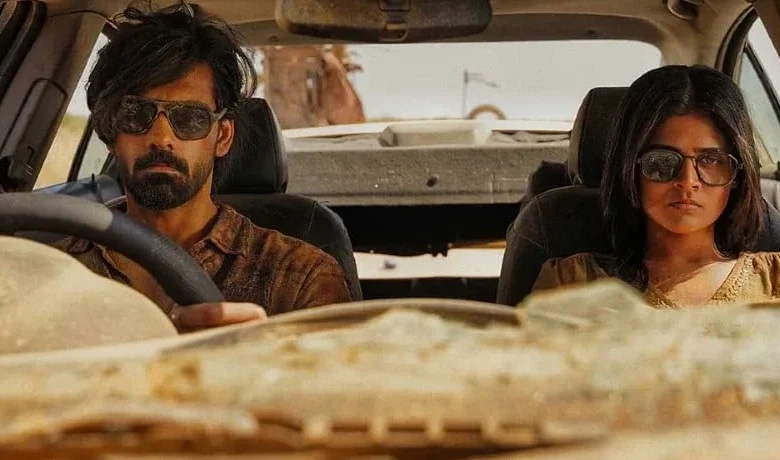
The narrative centers on Ethan, played by Ranjith Sajeev, and Ivy, portrayed by Aiswarya Raj, a pair of half-vampire, half-human siblings bound by a protective familial dynamic. The plot initiates when the siblings embark on a routine road trip, only to be ambushed by a violent faction of scavengers and roadside thugs. Left for dead in the isolated expanses of a deserted highway, the siblings are resurrected by the nocturnal elements, transforming their journey into a relentless campaign of vengeance against the criminal organization led by the underworld kingpin Selli, played by Abbas. Rather than delving deeply into complex vampire mythologies or existential dread, Half utilizes its supernatural premise primarily as a narrative engine to justify an unyielding chain of visceral, stylized combat encounters.
Behind-the-Scenes Craftsmanship and Action Design
The production design and aesthetic identity of Half rely heavily on the integration of environmental combat and professional wrestling-inspired choreography. Very Tri Yulisman brings his extensive martial arts background to the project, tailoring the fight sequences to maximize the unique attributes of the primary cast. Rather than depending exclusively on standard hand-to-hand combat, the choreography incorporates surrounding elements—transforming everyday locations such as pit-stop bars, roadside diners, and underground tournament venues into dynamic arenas of kinetic violence.
A defining stylistic choice of the production is the character of Ivy, who remains mute throughout the film. Her combat sequences are executed to an energetic soundtrack of Indian club hits composed by music director Midhun Mukundan. This juxtaposition of high-energy electronic rhythms with brutal, uncompromised physical violence establishes a distinct sensory signature for the picture. Cinematographer Pappinu captures these encounters with a restless, highly mobile camera, though critics have noted that the frantic pacing occasionally results in a loss of spatial clarity during larger-scale melees.
The performances of the lead actors are anchored by a stoic, unflinching physicality. Sajeev and Raj portray the regenerating duo with a deadpan intensity, utilizing sunglasses and calculated indifference to project a superhero-esque aura amidst the carnage. Supporting performances, particularly Abbas as the antagonistic kingpin Selli, provide a functional counterweight to the unstoppable momentum of the protagonists, though the secondary characters function largely as adversaries designed to showcase the lethal efficiency of the sibling duo.
Chronology and Development of Regional Indian Action Cinema
The release of Half arrives at a critical juncture in the evolution of Indian cinema. Historically, international perception of Indian films was dominated by high-budget Hindi-language Bollywood productions featuring elaborate musical numbers and family-oriented melodramas. However, the commercial and critical success of regional blockbusters—particularly from South India, including the Telugu-language Baahubali and RRR, the Kannada-language KGF series, and the Malayalam-language survival thriller Manjummel Boys—has decentralized the domestic film industry.
Over the past decade, regional film industries in the southern states of Tamil Nadu, Kerala, Karnataka, and Andhra Pradesh/Telangana have increasingly invested in high-concept genre fare, ranging from mythological epics to gritty urban crime thrillers and contemporary action films. The production of Half reflects this strategic pivot toward specialized genre markets capable of capturing both domestic youth demographics and international streaming audiences. By recruiting international stunt talent like Very Tri Yulisman, South Indian productions are deliberately signaling their ambition to compete on the global action stage, utilizing universal physical storytelling to transcend language barriers.
Industry Analysis and Market Implications
From an analytical perspective, Half exemplifies both the strengths and limitations of contemporary action cinema’s streamlined storytelling model. Industry analysts note that while films of this nature succeed in delivering immediate visceral gratification and strong international marketability through action-heavy trailers, they frequently sacrifice narrative depth and character development in favor of pacing and spectacle. The decision to treat vampirism as an incidental plot device rather than a deeply explored mythology highlights a deliberate commercial strategy: prioritizing rapid-fire entertainment over intricate world-building.
Despite these narrative compromises, the film’s arrival underscores broader economic implications for the regional Indian film sector. With the proliferation of global subscription video-on-demand (SVOD) platforms, niche genre films no longer rely solely on traditional domestic theatrical box office returns to achieve profitability. International streaming distribution allows specialized action-horror titles to find targeted audiences worldwide, encouraging producers to take financial risks on unconventional premises, non-traditional casting, and cross-cultural creative collaborations.
Official Responses and Critical Reception
While major trade bodies and formal studio statements regarding Half have focused primarily on its cross-border creative partnership and technical ambitions, early critical reception has established a nuanced consensus. Reviewers have generally praised the film’s unwavering commitment to its core premise, awarding it a respectable 3.5 out of 5 stars. Critics have highlighted the dynamic chemistry between Sajeev and Raj, the inventive deployment of Midhun Mukundan’s soundtrack, and Yulisman’s kinetic stunt coordination as standout elements that elevate the picture above standard B-movie fodder.
Conversely, critical evaluations have consistently pointed out narrative thinness, underdeveloped supporting antagonists, and occasional over-reliance on shaky-cam cinematography during chaotic brawl sequences. Nevertheless, the overarching sentiment within the genre community suggests that Half succeeds precisely because it understands its limitations. Rather than attempting to over-complicate its narrative framework, the production delivers an unpretentious, high-velocity cinematic experience that honors the traditions of modern beat-em-up action while establishing a fresh template for future supernatural ventures originating from regional Indian cinema.
Related posts: