Stephen Colbert, Jimmy Kimmel, Give Captain America’s Shield Back To Mark Gruenwald’s Family

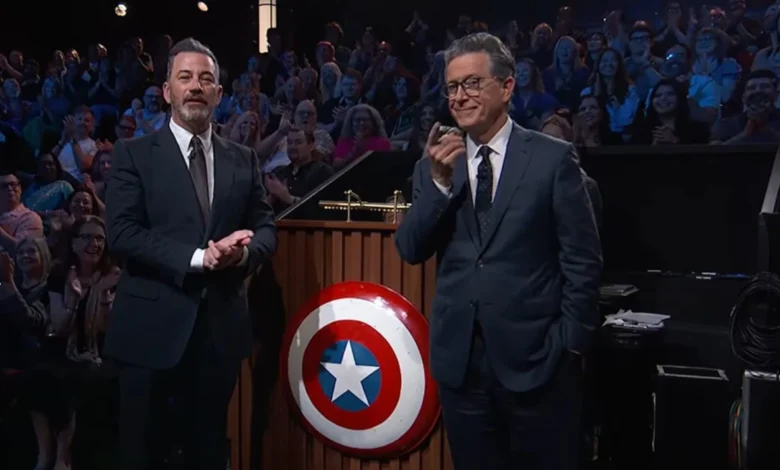
Late-night television history and comic book lore intersected in a notable public exchange when talk show hosts Stephen Colbert and Jimmy Kimmel discussed the provenance of a physical prop that has spent nearly two decades on national television sets: a replica of Captain America’s iconic vibranium shield. However, what began as a nostalgic recounting of late-night television milestones quickly drew public correction from veteran comic book creators, who pointed out that the artifact in question carries a deeply personal history tied to one of Marvel’s most influential creators, the late Mark Gruenwald.
The discussion unfolded during an appearance by Stephen Colbert on The Jimmy Kimmel Show. During the segment, Colbert reflected on the conclusion of his long-running television era and the physical items that accompanied him from the set of The Colbert Report to The Late Show. Colbert recounted that in 2006 or 2007, during Marvel Comics’ landmark Civil War comic book event—in which the character Steve Rogers is famously assassinated—he received formal correspondence from then-Marvel Editor-in-Chief Joe Quesada.

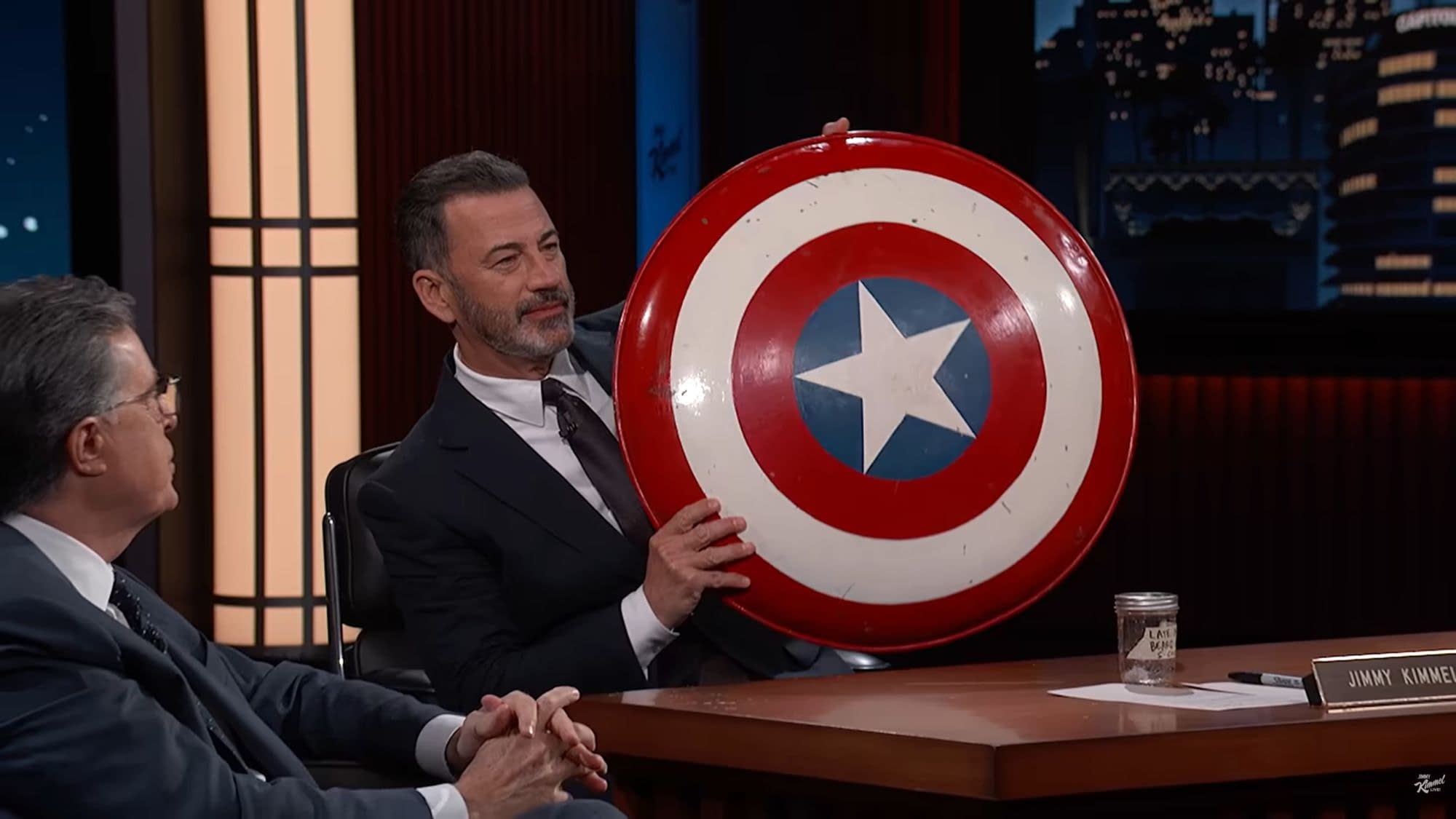
According to Colbert, the letter playfully stated that Marvel had consulted the final testament of Steve Rogers, wherein the fictional hero purportedly declared Colbert the sole individual patriotic enough to wield his signature shield. Along with the letter, Marvel sent a physical Captain America shield that had reportedly hung in the publisher’s offices, which subsequently decorated Colbert’s television set for the next twenty years. Following the conclusion of that chapter of his broadcasting career, Colbert decided to pass the artifact to fellow late-night host Jimmy Kimmel. During the broadcast, Kimmel brought the prop onto the stage, and after a brief comedic exchange, Colbert affirmed that the shield now belonged to Kimmel, prompting plans to permanently display it inside the Jimmy Kimmel studio.
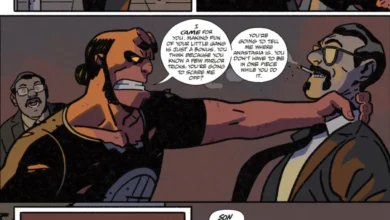
Despite the lighthearted nature of the television segment, comic book industry veterans quickly took to social media to correct the historical narrative surrounding the prop’s origins and ownership. Former Marvel editor and co-creator of Deadpool and The New Warriors, Fabian Nicieza, addressed the public statements made during the broadcast, arguing that the prop was never Marvel’s property to distribute, nor had it resided at Marvel offices since 1960, as Colbert had humorously suggested.
According to Nicieza and corroborated by other industry figures, the shield was handcrafted by writer and editor Mark Gruenwald during the late 1980s or early 1990s. Gruenwald reportedly constructed the item on his own time using his own personal finances, and the prop remained prominently displayed in his office until his untimely passing in 1996. Nicieza emphasized that unless Gruenwald explicitly bequeathed the physical item to the corporate entity of Marvel Comics—an outcome industry peers believe did not occur—the artifact rightfully belonged to, and should have been returned to, his widow, Catherine Gruenwald.
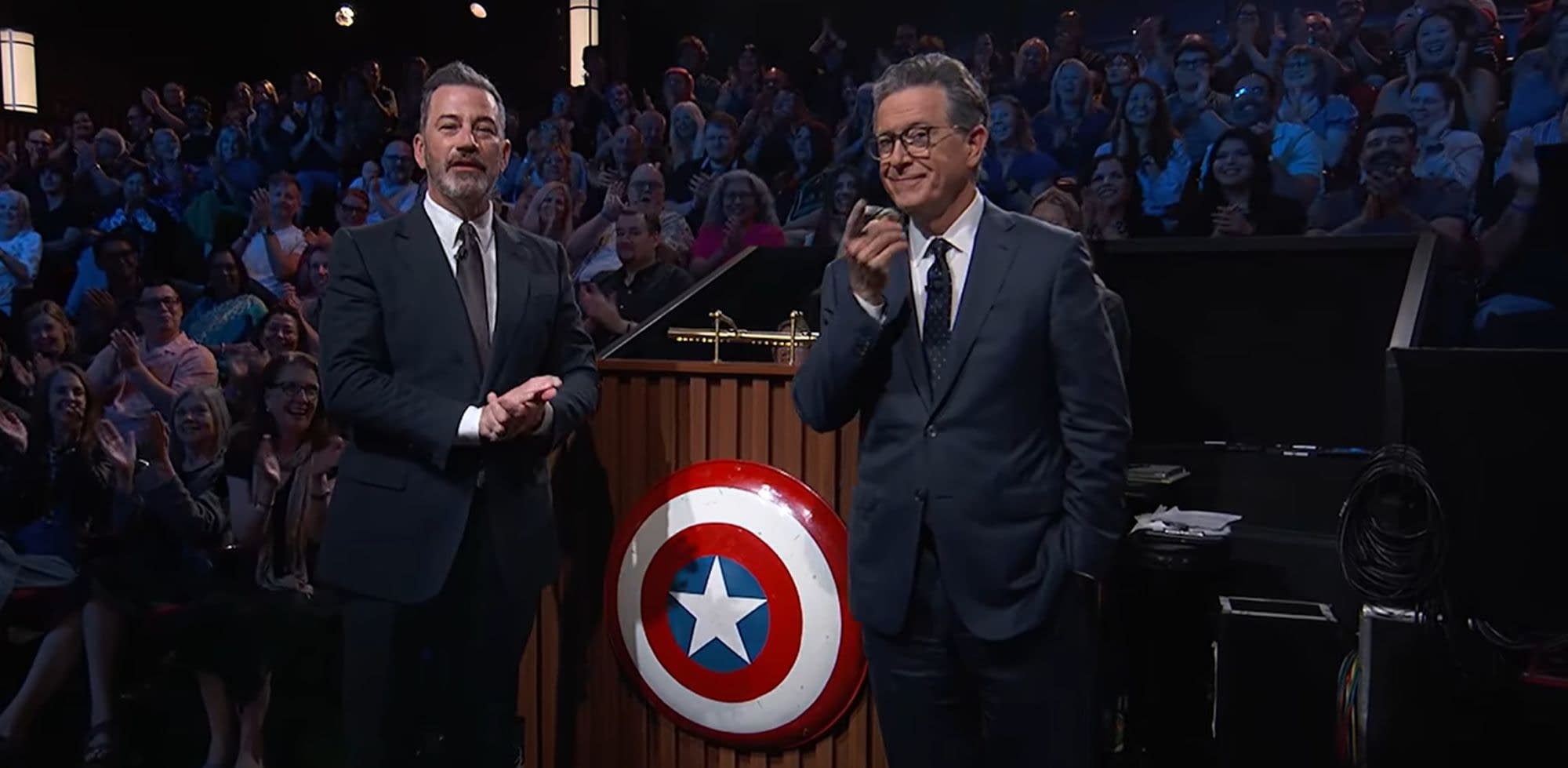
Tom DeFalco, a former Marvel Editor-in-Chief, publicly supported Nicieza’s historical account, confirming the accuracy of the statements regarding the shield’s true provenance. While Nicieza acknowledged that neither Colbert nor Kimmel likely possessed awareness of this background, and noted that Mark Gruenwald likely would have appreciated the pop-culture journey of his creation, the critique highlights ongoing sensitivities surrounding the personal estates and memorabilia of foundational comic book creators.
Mark Gruenwald remains one of the most prolific and defining figures in the modern history of Marvel Comics. Over a career that shaped the publisher’s editorial landscape, Gruenwald authored a definitive, ten-year run on the Captain America monthly series beginning in the 1980s. During his extensive tenure, he significantly expanded the character’s mythos and co-created numerous enduring characters, including Crossbones, Diamondback, and John Walker, who assumed the mantle of U.S. Agent.
Beyond his work with Captain America, Gruenwald’s creative footprint included co-creating Marvel’s inaugural limited series, Marvel Super Hero Contest of Champions, and writing the critically acclaimed twelve-issue maxiseries Squadron Supreme. He also served as the primary architect behind The Official Handbook of the Marvel Universe, establishing the comprehensive continuity encyclopedias for the publisher starting in 1982.
Gruenwald’s influence extends far beyond the printed page into contemporary multimedia adaptations. His visual likeness and conceptual framework served as the direct inspiration for the Time Variance Agency (TVA) and its bureaucratic agents in Marvel Studios’ Loki television series, most notably in the depiction of the character Mobius M. Mobius, portrayed by actor Owen Wilson. Following his sudden death from a heart attack at the age of 43 in 1996, Gruenwald left a lasting legacy within the industry; in accordance with his wishes, a portion of his ashes was famously mixed into the ink used for the original trade paperback printing of Squadron Supreme.
Following Gruenwald’s death, the physical shield he crafted remained within the New York offices of Marvel Comics. Years later, then-Editor-in-Chief Joe Quesada borrowed the item for a promotional appearance on The Colbert Report, initiating a decades-long residency on television sets that ultimately led to its recent transfer to Jimmy Kimmel’s studio.
The public revelation regarding the shield’s true origins has shifted the conversation from a quirky late-night anecdote to a broader discussion regarding the preservation of creator estates and the ethical handling of personal property left behind by industry pioneers. While both Colbert and Kimmel have expressed affection for the piece of pop-culture history, industry advocates and former colleagues have suggested that a proper resolution would involve coordinating with Catherine Gruenwald to return the handmade artifact to the family of its original creator. As public awareness of the shield’s history grows, observers note that the prominent display of the prop in modern television studios may soon prompt a behind-the-scenes effort to restore the item to its rightful historical home.