Netflix announces The New Stanford Prison Experiment amidst ongoing academic controversy regarding the validity of the 1971 study

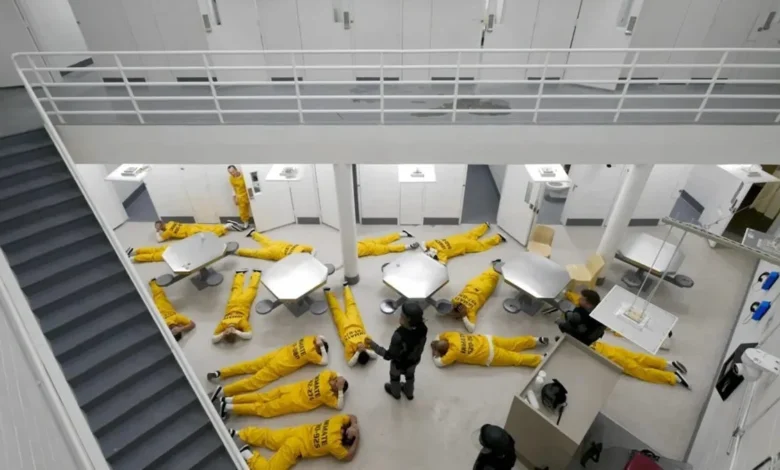
The announcement that Netflix is launching a six-part reality series titled The New Stanford Prison Experiment has reignited a decades-long debate regarding the intersection of entertainment, ethics, and social science. The series, which is scheduled to debut on October 21, attempts to recreate the conditions of the infamous 1971 study conducted by psychologist Philip Zimbardo at Stanford University. By placing thirty participants into a simulated prison environment and assigning them roles as either guards or inmates, the production aims to explore the sociological impact of power dynamics and systemic hierarchy.
Historical Context and the Original 1971 Study
In August 1971, Philip Zimbardo initiated a study intended to last two weeks, involving 24 male college students who were randomly assigned to play the roles of prisoners or guards within a makeshift prison in the basement of Stanford’s Jordan Hall. The study was halted after only six days following reports of psychological distress among participants and increasingly aggressive behavior by the "guards."
For years, the Stanford Prison Experiment (SPE) was cited in textbooks as definitive evidence that situational factors—rather than individual personality traits—determine behavior. It suggested that ordinary people, when placed in positions of unchecked authority, would naturally succumb to abusive tendencies. This conclusion was bolstered by the media and became a cornerstone of psychological literature, influencing everything from military training manuals to criminology courses.
The Scientific Reassessment
In recent years, the legitimacy of the 1971 study has faced rigorous academic scrutiny. Critics and researchers have highlighted significant methodological flaws that render the experiment’s findings unreliable. Key concerns include "demand characteristics," a phenomenon in which participants subconsciously adjust their behavior to align with the perceived expectations of the experimenters.

Archival recordings and interviews with former participants have revealed that Zimbardo and his staff actively coached the guards to be abusive, providing them with specific instructions and psychological prompts to create a "prison-like" atmosphere. Consequently, the study is now widely regarded by the scientific community as a piece of performance art rather than a controlled psychological observation. In 2019, a comprehensive review published in the journal American Psychologist further cemented the consensus that the study was fundamentally compromised by researcher interference, leading many universities to remove it from introductory curricula.
Chronology of the Netflix Production
The decision by Netflix to revisit the experiment has been framed by production leads as a modern-day inquiry into human nature. The production timeline for this project follows a standard unscripted television development cycle:
- Pre-production (2025): Casting directors recruited thirty volunteers, ensuring a cross-section of backgrounds, though the exact selection criteria and psychological screening processes remain proprietary.
- Production (Early 2026): Filming took place in a controlled, decommissioned facility designed to mirror the structural constraints of a correctional institution.
- Post-production (Mid-2026): Editors and producers compiled the footage into six 45-minute episodes, focusing on the shifting power dynamics among the participants.
- Announcement (September 2026): Netflix officially confirmed the series release date, accompanied by a promotional campaign highlighting the "nail-biting" nature of the social experiment.
Official Statements and Industry Perspective
Executive producer Jane Lipsitz has defended the project, framing it as an exploration of contemporary ethical dilemmas. In an official statement provided to media outlets, Lipsitz remarked: "The Stanford Prison Experiment has always fascinated me. Despite its serious ethical flaws, it asked a fundamental question that feels even more relevant today: how does power affect ethical choices? Getting the opportunity to reimagine this social experiment was one of the most intense, exhilarating, and definitely nail-biting experiences we’ve ever had."
However, this perspective is met with skepticism by those who argue that the inherent "demand characteristics" of a reality television environment make a legitimate scientific outcome impossible. Television participants are aware they are being filmed for an audience, a factor that alters behavior far more significantly than the controlled conditions of a laboratory. Critics argue that the show is essentially a performance, where participants may lean into tropes of villainy or victimization to secure screen time, further obfuscating the original research’s already questionable findings.
Sociological Implications and Ethical Risks
The revival of this experiment in a streaming format raises broader questions about the ethics of using psychological trauma—even simulated—as entertainment. While the producers maintain that participants were "willing," the psychological toll of being placed in a high-pressure, hierarchical environment remains a significant concern.

Furthermore, there is a risk that the series may inadvertently normalize or oversimplify the complexities of real-world prisoner abuse. By reducing the systemic issues of incarceration to a "social experiment" on a streaming platform, the production risks trivializing the genuine, documented human rights concerns prevalent in modern correctional facilities. Independent researchers have frequently noted that real-world abuse is rarely a result of simple "power corruption" in a vacuum; it is a complex product of institutional culture, lack of oversight, and socioeconomic factors that a reality show is unlikely to replicate or address with nuance.
Broader Impact on Media and Science
The existence of The New Stanford Prison Experiment serves as a case study in the tension between academic rigor and entertainment value. Media platforms often prioritize high-stakes, conflict-driven narratives to maintain viewer engagement. When these narratives are marketed under the guise of "science" or "social exploration," it risks misinforming the public about how psychology actually works.
As the release date approaches, the academic community continues to voice concerns that the show will reinforce myths about the Stanford Prison Experiment that have taken decades to dismantle. For educators and scientists, the primary fear is that the popularity of the series will overshadow the nuance of legitimate behavioral studies, causing audiences to accept the debunked "power corrupts" narrative as established fact once again.
While the series will undoubtedly generate discourse upon its release, the fundamental disagreement remains: can a televised recreation of a discredited study provide any genuine insight into human behavior, or is it merely an exercise in manufactured conflict? Given the history of the original experiment, the burden of proof rests heavily on the production to demonstrate that it can offer something more substantial than the repetition of a flawed premise. As of now, the scientific consensus suggests that the show is better classified as entertainment than as a legitimate contribution to the field of social psychology.