Shudder’s New Found-Footage Horror Infirmary Marks a Shift Toward Realistic Cinematic Terror


The landscape of modern horror cinema has undergone a significant transformation since the early 2000s, moving away from the saturation of low-budget, handheld aesthetic experiments toward more refined, immersive storytelling. Following the massive commercial success of the Paranormal Activity franchise, the found-footage genre became a staple of independent horror, though it frequently faced criticism for narrative repetition and technical fatigue. However, a new wave of films—exemplified by titles such as Noroi: The Curse, Lake Mungo, and the Spanish-language masterpiece [REC]—demonstrated that the format could still elicit genuine psychological dread. Shudder, the AMC+-backed streaming platform dedicated to the genre, is set to expand upon this resurgence with the upcoming release of Infirmary, a film that utilizes the bodycam aesthetic to heighten its sense of objective, grounded realism.
Premise and Narrative Scope
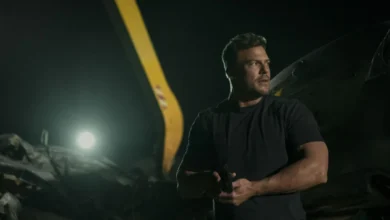
Scheduled for release on October 2, Infirmary centers on the night shift of two security guards tasked with patrolling the grounds of a decommissioned psychiatric facility. The narrative focuses on the dynamic between a rookie guard, played by Paul Syre, and his veteran counterpart, portrayed by Mark Anthony Williams. By employing the bodycam perspective, the film removes the traditional cinematic barriers between the viewer and the subject. The narrative tension is derived from the claustrophobic environments of the hospital—specifically its decaying corridors, damp boiler rooms, and abandoned medical wards—as the protagonists are stalked by an unidentified presence.
The choice of a psychiatric facility as the primary setting taps into a long-standing tradition of institutional horror, a subgenre that leverages real-world anxieties regarding isolation, medical malpractice, and the remnants of past trauma. By grounding the footage in the professional duty of security personnel, Infirmary addresses the common narrative hurdle of found-footage films: why the camera remains active during life-threatening situations. Unlike amateur vloggers, whose continued recording is often perceived as implausible, security guards operating body-worn cameras provide a logical and professional mandate for constant documentation, thereby maintaining the viewer’s suspension of disbelief.
The Evolution of the Bodycam Format
While the bodycam perspective has been utilized in horror previously—most notably in the V/H/S anthology series and the 2020 feature Bodycam—the subgenre has struggled with critical reception and technical execution. The V/H/S series, which debuted in 2012, successfully utilized the format to provide a sense of visceral immediacy, yet it relied on an anthology structure that limited sustained character development. Conversely, standalone features that have attempted the bodycam approach have often been criticized for prioritizing gimmickry over narrative cohesion.

Industry analysts suggest that Infirmary represents a pivot toward a more disciplined application of this technology. By limiting the scope of the perspective to two primary characters in a fixed location, the film aims to achieve a "real-time" experience that mirrors the limitations of actual law enforcement surveillance technology. This approach aligns with broader trends in digital filmmaking where the goal is to reduce the visual "artifice" of the medium, creating a viewing experience that feels less like a directed motion picture and more like an archival record of an unexplained event.
Contextualizing the Shudder Halloween Slate
The release of Infirmary is strategically positioned within Shudder’s broader "Nerdoween" programming block. For streaming platforms, the month of October represents the highest period of audience engagement for the horror genre. Shudder’s 2024 content strategy is designed to balance original productions with a significant expansion of its library offerings, ensuring that the platform caters to both contemporary fans and those interested in the foundational history of horror cinema.
In addition to Infirmary, the streamer has confirmed the release of several original titles, including V/H/S/Mixtape, Breeder, Hallowarrior, and The Cycle. These additions are supplemented by a robust catalog expansion. Notably, Shudder has secured the rights to the Psycho quadrilogy featuring Anthony Perkins, as well as the first three installments of the Insidious franchise and the 1983 anthology Twilight Zone: The Movie. Furthermore, the platform’s earlier acquisition of the complete seven-season run of Tales from the Crypt highlights a commitment to preserving and digitizing cult classics that have historically been difficult to access for the general public.
Technical and Cultural Implications
The industry-wide shift toward high-fidelity found footage reflects a broader change in how audiences consume horror. As visual effects technology becomes more affordable, the "shaky cam" style of the early 2000s is being replaced by stable, high-definition bodycam footage that offers greater clarity and detail. This shift does not necessarily diminish the horror; rather, it makes the threats—whether supernatural or human—more tangible.
From a production standpoint, the use of bodycam technology significantly lowers the overhead for lighting and traditional cinematography, as the internal lighting of the camera itself becomes the primary source of illumination. This minimalist approach allows filmmakers to focus heavily on sound design and spatial geography, which are often the true catalysts for fear in horror environments. The production team behind Infirmary has reportedly leveraged the specific architectural limitations of the filming location to force the audience into tight, narrow perspectives, which is a departure from the wide-angle, sweeping shots common in mainstream theatrical horror.

Market Impact and Audience Reception
The continued investment by platforms like Shudder in the found-footage subgenre suggests that there remains a significant, durable market for these films. Despite the saturation of the market, the audience for "realistic" horror continues to grow. By curating a mix of prestige horror, historical cult classics, and high-concept original features, Shudder is effectively positioning itself as the primary archive for the genre.
Data regarding streaming trends during the Halloween season consistently show that subscribers favor content that offers high "rewatchability" alongside new, experimental films. By launching Infirmary alongside established franchises like Insidious and the Psycho series, the platform mitigates the risk associated with new, experimental content while simultaneously incentivizing subscribers to explore newer titles.
Chronology of Shudder’s Recent Expansion
- Early 2024: Shudder completes the acquisition and digital restoration of the complete Tales from the Crypt television series, a move aimed at capturing the nostalgia market.
- Mid-2024: The platform announces its strategic shift toward more "grounded" horror projects, distancing itself from the purely supernatural and toward subgenres that utilize professional or tactical perspectives.
- September 2024: Pre-release marketing for Infirmary begins, highlighting the technical differences between traditional handheld footage and the professional bodycam footage used in the film.
- October 2, 2024: Official streaming launch of Infirmary, serving as the cornerstone of the platform’s October, or "Nerdoween," programming block.
Future Projections
As Infirmary enters the market, its performance will likely serve as a benchmark for the viability of bodycam horror in the coming year. Should the film find success, it is anticipated that other streaming services and independent production houses will follow suit, potentially leading to a new cycle of professional-perspective horror films.
The integration of such titles into a broader, curated library of classic horror indicates that Shudder is looking to maintain a long-term retention strategy. By providing a "one-stop-shop" for both the history of the genre and its experimental future, the platform is attempting to build a sustainable ecosystem that protects against the volatility of the streaming market. For the average viewer, this means that the found-footage genre, once declared "dead" by critics following the post-Paranormal Activity glut, has instead evolved into a versatile tool for contemporary storytelling, capable of delivering genuine tension through the lens of modern, everyday technology.