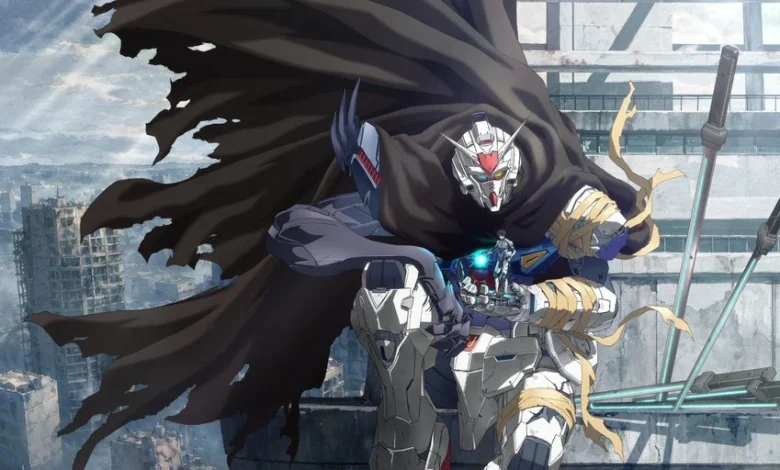
The announcement of the latest installment in the long-standing Mobile Suit Gundam franchise took center stage during the Gundam Showcase 2026 at San Diego Comic-Con, where Bandai Namco Filmworks and Sunrise revealed the ambitious new project. Scheduled for a global premiere in 2027, the series represents a significant shift in the franchise’s narrative trajectory, introducing a standalone universe that diverges from the traditional Universal Century and Cosmic Era timelines. The presentation included a teaser promotional video and a visual featuring the protagonist, Ray Azumi, marking the beginning of a multi-year rollout for what the producers described as a cornerstone of the brand’s 2020s media strategy.
Narrative Framework and World-Building
The premise of the new series introduces a high-concept science fiction setting that blends the franchise’s signature mecha combat with elements of cosmic horror and existential survival. According to the official synopsis provided during the showcase, the story begins with the arrival of an "Autonomous Interstellar Object" from a distant galaxy. This entity provided humanity with three revolutionary technological breakthroughs: Gravity Control, Faster-Than-Light (FTL) Communication, and Cognitive Materialization. These "Three Revelations" initially catalyzed an era of unprecedented solar system expansion, allowing human civilization to flourish beyond the confines of Earth’s atmosphere.
However, the prosperity was short-lived. Within a decade of its discovery, the Object underwent a catastrophic transformation, evolving into an aggressive, self-proliferating ecosystem referred to by humanity as the "Apocalypse." The ensuing conflict saw Earth’s orbital space become a primary battleground. After a three-month stalemate, humanity was forced to abandon the home planet entirely. This event led to the establishment of a new chronological era: After Apocalypse (A.A.). The series is set in A.A. 45, focusing on a generation of humans born in lunar bases and space colonies who have never experienced life on Earth. The story follows Ray Azumi, a young man who awakens on the lunar surface under mysterious circumstances, signaling the start of a journey that will likely explore the origins of the Apocalypse and the potential for human reclamation.
A High-Profile Creative Assembly
The production of the new anime features a "powerhouse" staff list, combining veterans from the mecha genre with innovators in speculative fiction and digital animation. Leading the project as Director and Series Composition lead is Kenji Kamiyama. Kamiyama is widely recognized for his work on Ghost in the Shell: Stand Alone Complex and Eden of the East, titles known for their complex political themes and philosophical depth. His appointment suggests that the new series will lean heavily into the socio-political and scientific implications of the "Three Revelations."
Supporting Kamiyama is SF Setting Supervisor Toh EnJoe, a novelist and scriptwriter with a background in physics. EnJoe previously collaborated on the series composition for the Ghost in the Shell TV series and was a key creative force behind Godzilla Singular Point. His involvement points toward a rigorous approach to the series’ scientific concepts, particularly regarding the mechanics of FTL communication and cognitive materialization.
The mechanical design of the titular Gundam is handled by Eiichi Shimizu, the creator of the Ultraman manga and Linebarrels of Iron. Shimizu’s design philosophy often emphasizes sleek, intricate detailing and a sense of "living" machinery, which aligns with the biological-technological hybrid nature of the "Apocalypse" threat. Original character designs are credited to the artist STATO, with Miyako Takasu—known for her work on Don’t Toy with Me, Miss Nagatoro—serving as Character Designer and Chief Animation Director.
Rounding out the technical staff is composer Gou Shiina, whose recent work on Demon Slayer: Kimetsu no Yaiba has earned international acclaim. Shiina is known for his ability to blend orchestral arrangements with electronic elements, a style that is expected to complement the series’ blend of traditional space opera and futuristic sci-fi.
Production and Studio Strategy
The series will be produced by Sola Animation, a studio that has become a key partner for Bandai Namco in recent years. Sola Animation has previously handled high-profile CGI projects such as Ultraman (Netflix) and Ghost in the Shell: SAC_2045. The choice of studio indicates that the new series may utilize advanced 3D CGI or a hybrid animation style, a departure from the traditional 2D hand-drawn aesthetics of previous mainline Gundam series like The Witch from Mercury.
Bandai Namco Filmworks, the entity formerly known as Sunrise, continues to manage the overarching planning and production. This project is part of a broader cross-media initiative. Specifically, the anime shares its world-building and narrative setting with Gundam Rogue Orbit, an upcoming video game. This integrated approach mirrors the strategy used for Gundam Breaker and Mobile Suit Gundam: Iron-Blooded Orphans, where lore is expanded across multiple platforms simultaneously to maximize audience engagement and merchandise opportunities.
Chronology of the Announcement
The San Diego Comic-Con (SDCC) announcement marks the culmination of a series of cryptic teasers released by Bandai Namco over the preceding six months.
- January 2026: Bandai Namco Filmworks registers trademarks for the "RG XARX" and "Rogue Orbit" titles.
- March 2026: During the AnimeJapan convention, a brief 15-second teaser featuring an unknown star system was shown, though no title was attached.
- May 2026: Official social media accounts for the Gundam franchise began posting countdowns titled "The First Revelation."
- July 2026: The full reveal at SDCC 2026, including the staff, cast, and the 2027 release window.
The decision to hold the main reveal at SDCC rather than a Japanese-centric event like the Shizuoka Hobby Show underscores the franchise’s growing emphasis on the international market. North America has become a vital region for Gundam model kit (Gunpla) sales and streaming viewership, particularly following the success of Mobile Suit Gundam: The Witch from Mercury on global platforms.
Industry Context and Historical Significance
The introduction of the "After Apocalypse" (A.A.) timeline follows a long-standing tradition within the Gundam franchise of creating "Alternate Universes" (AU) to attract new viewers who may be intimidated by the decades-long continuity of the Universal Century (U.C.). Historically, AU series such as Mobile Suit Gundam Wing (After Colony), Mobile Suit Gundam SEED (Cosmic Era), and Mobile Suit Gundam 00 (Anno Domini) have been instrumental in revitalizing the brand for younger generations.
Market analysts note that the "After Apocalypse" setting appears to be a direct response to the current popularity of "post-human" and "survival" themes in global media. By moving the setting to the Moon and space colonies and rendering Earth uninhabitable, the series creates a distinct visual and narrative identity that separates it from the "Earth Federation vs. Zeon" conflicts that defined the franchise’s first thirty years.
Furthermore, the involvement of Takeo Ootsuka as the voice of Ray Azumi is a strategic casting choice. Ootsuka has recently seen a surge in popularity following his lead roles in Oshi no Ko and The Apothecary Diaries. His participation is expected to draw in fans of modern character-driven dramas, bridging the gap between hardcore mecha enthusiasts and general anime viewers.
Implications for the Global Market
The 2027 release window suggests a significant production cycle, likely aimed at ensuring high-fidelity animation and a synchronized global launch. Bandai Namco has stated in recent financial reports that they aim to increase the "overseas sales ratio" of their intellectual properties to 50% or more. A project of this scale, debuted at the world’s largest comic convention, is a primary vehicle for that goal.
The synergy with Gundam Rogue Orbit is also a critical component. The video game industry remains a larger financial driver than the anime industry itself, and by linking the two, Bandai Namco ensures that players of the game are incentivized to watch the series, and vice-versa. This "flywheel" effect has been successfully employed by other major franchises like Cyberpunk 2077 (with Edgerunners) and League of Legends (with Arcane).
Official Responses and Expectations
While official statements from the director Kenji Kamiyama were kept brief during the showcase, he emphasized a desire to "explore the limits of human cognition in the face of an incomprehensible enemy." He noted that while the "Gundam" itself remains a central symbol of human hope and technological prowess, the series would place equal weight on the biological and environmental consequences of humanity’s expansion.
Fans and industry observers have reacted with cautious optimism. The departure from Earth-based conflict is seen as a refreshing change, though some purists have expressed curiosity regarding how the "Cognitive Materialization" aspect will fit into the typically "Real Robot" genre of Gundam. Regardless, the pedigree of the staff—particularly the combination of Kamiyama’s directing and Shiina’s music—has positioned the series as one of the most anticipated anime projects of the late 2020s.
As 2027 approaches, further details regarding the supporting cast, the mechanical specifications of the RG XARX-ZERO unit, and the specific gameplay mechanics of Gundam Rogue Orbit are expected to be released through a series of "Revelation" events hosted both in Tokyo and at international conventions. For now, the "After Apocalypse" era stands as the next major chapter in the evolution of the Mobile Suit Gundam legacy.
Related posts: