Batman: Knightfall, Part One: Knightfall Set for August 2026 Digital Debut, Followed by September Physical Release

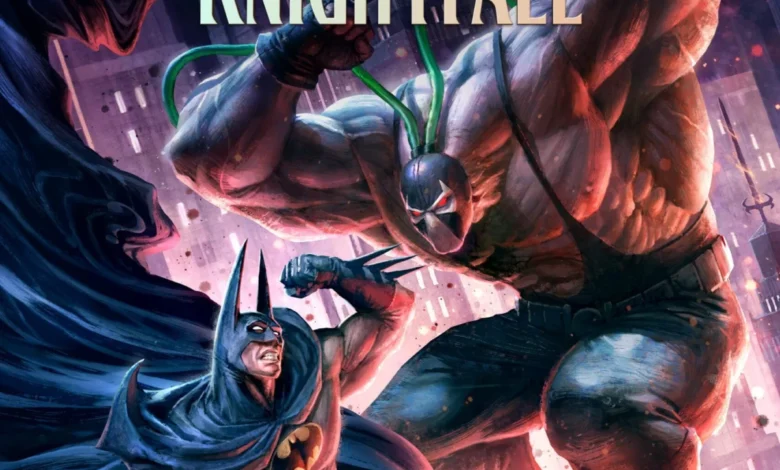
Warner Bros. Home Entertainment, in collaboration with Warner Bros. Animation and DC, has officially announced the highly anticipated animated feature, Batman: Knightfall, Part One: Knightfall, will debut digitally on August 25, 2026. This will be followed by a comprehensive physical media release, including 4K UHD, Blu-ray, and DVD formats, arriving on September 8, 2026. This initial installment marks the beginning of an ambitious three-part animated movie trilogy designed to faithfully adapt the seminal 1990s DC Comics crossover event, Batman: Knightfall, a storyline renowned for its profound impact on the Caped Crusader’s mythos. The announcement has ignited significant discussion among fans and industry observers, particularly given the confirmed R-rating for "strong bloody violence," signaling a mature and uncompromising interpretation of one of Batman’s darkest chapters.
The Genesis of a Groundbreaking Adaptation
The Knightfall saga represents a pivotal moment in Batman’s history, a narrative that explored the limits of Bruce Wayne’s physical and psychological endurance. The decision to adapt this sprawling comic book epic into a multi-part animated feature underscores Warner Bros. Animation’s commitment to delivering faithful and in-depth interpretations of iconic DC storylines. Unlike previous adaptations that often condense complex narratives into single films, the trilogy format for Knightfall promises an unprecedented level of detail and character development, allowing the filmmakers to delve into the nuances of the original comic run without significant cuts or compromises. This approach is particularly crucial for a story as intricate and character-driven as Knightfall, which introduced new heroes and villains, and irrevocably altered the status quo of Gotham City.
The initial announcement details confirm that Batman: Knightfall, Part One: Knightfall will be available on a wide array of participating digital platforms, including prominent services such as Amazon Prime Video, Apple TV, and Fandango, starting August 25, 2026. Two weeks later, on September 8, 2026, physical media enthusiasts will have the opportunity to own the film in various high-definition and standard-definition formats. This staggered release strategy is a common industry practice, allowing for immediate digital access while catering to the enduring market for physical collectibles. The subsequent installments, Batman: Knightfall, Part Two, are slated for release later in 2026, with Batman: Knightfall, Part Three concluding the trilogy in early 2027, establishing a clear and consistent release cadence for the entire saga.
The Creative Vision and Star-Studded Cast
Guiding this ambitious project is director Jeff Wamester, a veteran of DC’s animated features with credits including Justice Society: World War II and Green Lantern: Beware My Power. The screenplay is penned by Jeremy Adams, known for his work on various DC animated films and the Mortal Kombat Legends series, indicating a strong pedigree for adapting action-heavy and character-rich narratives. The production team also features Rick Morales as Supervising Producer, alongside Producers Jim Krieg and Kimberly S. Moreau, with Sam Register and Michael Uslan serving as Executive Producers. This combination of experienced talent suggests a carefully crafted approach to bringing the Knightfall narrative to life.
A significant highlight of the announcement is the impressive voice cast assembled for the trilogy. Anson Mount, celebrated for his portrayal of Captain Christopher Pike in Star Trek: Strange New Worlds, lends his gravitas to the role of Bruce Wayne/Batman. This casting choice is particularly notable, as Mount’s nuanced performances often convey a sense of weariness and profound responsibility, qualities essential for capturing Batman’s state during the Knightfall storyline. Opposite him, Michael Mando, acclaimed for his menacing and complex roles such as Vaas Montenegro in Far Cry 3 and Nacho Varga in Better Call Saul, steps into the formidable shoes of Bane. Mando’s ability to imbue villains with intellectual depth and raw power makes him an ideal choice for the physically and strategically dominant antagonist. Completing the central trio is Pablo Schreiber, known for his intense performances in series like Halo and American Gods, who will voice Jean-Paul Valley/Azrael. Schreiber’s capacity to portray characters grappling with internal conflict and moral ambiguity is crucial for Azrael’s complex arc as he temporarily assumes the mantle of the Bat. The caliber of this voice cast underscores the production’s commitment to delivering a high-quality, impactful narrative.
Delving into the "Knightfall" Saga: A Background Primer
To fully appreciate the significance of this animated adaptation, it is essential to revisit the original Batman: Knightfall comic book event. Published by DC Comics primarily in 1993 and 1994 across various Batman titles, Knightfall was a monumental crossover storyline that captured the imagination of readers and left an indelible mark on Batman’s legacy.
The Pre-Knightfall Landscape: By the early 1990s, Batman had undergone significant evolution since his Golden Age debut. Frank Miller’s Batman: Year One (1987) and The Dark Knight Returns (1986) had redefined the character, emphasizing his grit, psychological complexity, and the grim reality of Gotham. Batman was portrayed as a driven, almost obsessive figure, constantly pushing his physical and mental limits in his unending war on crime. However, this relentless crusade had taken its toll, leaving him perpetually exhausted and often isolated.
The Catalyst: Bane’s Master Plan: The Knightfall saga begins with the introduction of Bane, a new supervillain unlike any Batman had faced before. Originating from the brutal Peña Duro prison on the Caribbean island of Santa Prisca, Bane was a formidable figure, combining immense physical strength—enhanced by a super-steroid called Venom—with a genius-level intellect and a photographic memory. Unlike other villains who sought chaos or wealth, Bane’s sole ambition was to break Batman, not just physically, but psychologically, to prove his own superiority and conquer Gotham’s greatest symbol.
Bane meticulously orchestrated Batman’s downfall. His plan involved systematically freeing every inmate from Arkham Asylum, including Batman’s entire Rogues’ Gallery—the Joker, Scarecrow, Poison Ivy, Riddler, Two-Face, Victor Zsasz, and numerous others. This deluge of supercriminals unleashed upon Gotham forced Batman into a grueling, month-long ordeal, battling his most dangerous foes without rest. Each confrontation chipped away at his reserves, leaving him increasingly fatigued and vulnerable. The special feature "Breaking the Bat: Adapting the Knightfall" will undoubtedly explore this crucial narrative phase, showcasing the filmmakers’ process for capturing the escalating tension and physical toll on Batman.
The Breaking Point: The culmination of Bane’s strategy arrived when a severely weakened Batman finally confronted him. In a brutal, iconic confrontation within the Batcave, Bane overwhelmed the exhausted Dark Knight, ultimately lifting him and snapping his spine over his knee, famously "breaking the Bat." This shocking moment left Bruce Wayne paralyzed and seemingly ended his career as Batman, an unprecedented event in the character’s publication history.
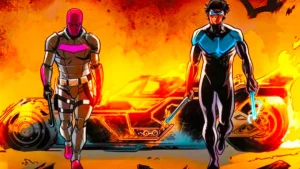
The New Batman: Azrael’s Descent: With Bruce Wayne incapacitated, the question of Batman’s successor became paramount. Reluctantly, Bruce entrusted the mantle to Jean-Paul Valley, also known as Azrael. Valley was a genetically engineered assassin, trained since birth by the ancient, fundamentalist Order of St. Dumas. While initially a capable crimefighter, Azrael’s methods were far more violent and brutal than Bruce’s. As he donned a new, more aggressive Batsuit and adopted increasingly lethal tactics, Jean-Paul began to succumb to his conditioning and a growing mental instability. His tenure as Batman saw him alienate allies like Robin (Tim Drake) and Commissioner Gordon, fundamentally altering the public’s perception of the Caped Crusader. This period of Azrael’s dark reign is a critical component of the Knightfall narrative, exploring themes of identity, vengeance, and the fine line between justice and brutality.
Robin’s Crucial Role: The special feature "Batman Needs a Robin" highlights the vital role of Robin, particularly Tim Drake, during the Knightfall saga. Tim Drake, the third Robin, was not just a sidekick but an astute detective and a moral compass. He was the first to recognize Azrael’s dangerous transformation and remained steadfast in his loyalty to Bruce Wayne, advocating for his return and working to restore the true spirit of Batman. His perspective offers a grounding element amidst the chaos and violence, emphasizing the importance of Batman’s moral code and the necessity of partnership.
The Return of the Bat: Eventually, through intense physical and mental rehabilitation, Bruce Wayne began his arduous journey back to health, eventually reclaiming his identity as Batman and confronting Jean-Paul Valley to restore order to Gotham. The Knightfall saga was a monumental test of Batman’s resolve, his allies’ loyalty, and the very essence of what it means to be the Dark Knight.
The R-Rating: A New Era for Animated Adaptations
The announcement that Batman: Knightfall, Part One: Knightfall will carry an R-rating for "strong bloody violence" is a significant departure for many DC animated features and indicates a commitment to the darker, more visceral aspects of the original comic. While Warner Bros. Animation has produced R-rated films before, such as Justice League Dark and the Mortal Kombat Legends series, an R-rating for a core Batman storyline adaptation signals a willingness to explore mature themes and graphic content without restraint.
This rating is particularly fitting for Knightfall, a story inherently brutal and psychologically taxing. The violence inflicted upon Batman, the chaos unleashed by Arkham’s escapees, and Azrael’s increasingly savage methods demand a more adult treatment to maintain fidelity to the source material. The R-rating allows the filmmakers to depict Bane’s raw power and the severity of Batman’s injuries without compromise, enhancing the narrative’s emotional impact and grim realism. This decision is likely to be met with approval from long-time fans of the comic who have often sought a more mature approach to such pivotal storylines.
Special Features and Thematic Exploration
The included special features offer further insight into the production’s goals. "Breaking the Bat: Adapting the Knightfall" promises a behind-the-scenes look at the creative process, from breaking down the epic story to designing the action and animating the dark saga. This feature will be invaluable for fans interested in the challenges of translating a multi-year comic event into animated form. The second feature, "Batman Needs a Robin," underscores the importance of the Bat-family dynamic, particularly focusing on Tim Drake’s role. This reinforces the idea that Knightfall is not just a story about Batman’s physical defeat, but also about the ecosystem of support and moral guidance that surrounds him.
Chronology of Releases and Market Context
The strategic rollout of the Batman: Knightfall trilogy reflects current trends in content distribution. The digital-first release on August 25, 2026, caters to immediate consumer demand and digital consumption habits. The subsequent physical media release on September 8, 2026, acknowledges the enduring appeal of collecting Blu-ray, 4K UHD, and DVD editions, especially for dedicated fans who value higher audio-visual quality and bonus content.
The broader landscape of DC animated movies has been robust for Warner Bros. Animation. Over the past two decades, their direct-to-video features have consistently delivered critical and commercial success, often praised for their faithful adaptations of beloved comic arcs. Titles like Batman: Under the Red Hood, Justice League: The Flashpoint Paradox, and The Dark Knight Returns Parts 1 & 2 have set a high bar for quality and storytelling. The Knightfall trilogy, with its R-rating and multi-part format, appears poised to join these ranks, representing a significant investment in expanding the animated canon.
The decision to adapt Knightfall now, over three decades after its original publication, speaks to the enduring legacy and continued relevance of the storyline. In an era where superhero narratives frequently explore darker themes and deconstruct established mythologies, Knightfall‘s exploration of Batman’s vulnerability and the question of succession resonates deeply. This adaptation also provides an opportunity to introduce the iconic saga to a new generation of fans who may not be familiar with the original comics.
Broader Implications and Fan Anticipation
The announcement of Batman: Knightfall, Part One: Knightfall has generated considerable buzz within the fan community. For years, Knightfall has been at the top of many fans’ wish lists for an animated adaptation, a testament to its enduring popularity and critical significance. The promise of a three-part series, combined with an R-rating and a top-tier voice cast, suggests that Warner Bros. Animation is taking this project seriously, aiming for a definitive adaptation.
The success of this trilogy could have significant implications for the future of DC’s animated adaptations. A well-received, multi-part Knightfall could pave the way for similar expansive treatments of other major comic events, offering fans deeper, more faithful interpretations than previously possible. It reinforces Warner Bros. Animation’s position as a leading producer of high-quality, adult-oriented animated content within the superhero genre.
As the release dates approach, fans will undoubtedly scrutinize every detail, from the trailer—already released by Warner Bros. Home Entertainment and embedded for viewing—to the package art, hoping for a faithful yet fresh take on this legendary saga. Batman: Knightfall, Part One: Knightfall is set to be a monumental entry in the DC Universe Movies collection, promising a brutal, compelling, and utterly essential chapter in the animated legacy of the Dark Knight.