The recent confirmation by DC Studios co-head Peter Safran regarding the continuity of Clayface across different DC Universe projects has ignited a significant discussion among fans and industry observers. Safran stated that the Clayface featured in the upcoming R-rated body horror film directed by Mike Flanagan, and portrayed by Tom Rhys Harries, is the "same Clayface" previously seen in the animated series Creature Commandos. This assertion, while aiming to solidify a connected DCU, has introduced a layer of complexity and potential confusion, particularly given the differing portrayals and narrative contexts of the character.
The Evolving Nature of Clayface in DC Lore
Since his debut in Detective Comics #40 in 1940, Clayface has been a cornerstone villain for Batman, renowned for his metamorphic abilities that allow him to assume any form and infiltrate any situation. The mantle of Clayface has been adopted by multiple individuals throughout DC’s rich history, each with their own origin story and motivations. This inherent mutability of the character is a defining characteristic, and recent developments suggest that the nascent DCU is leaning into this fluid nature to construct its interconnected narrative.
The initial news of director Mike Flanagan, known for his work in horror and suspense, helming a Clayface film for the DCU was met with considerable enthusiasm. This excitement was not dampened by the prior appearance of the character in James Gunn’s Creature Commandos, an animated series that debuted as part of the DCU’s early slate. However, Peter Safran’s clarification to Entertainment Weekly shifted the focus from mere coincidence to deliberate narrative design. The declaration that the film’s protagonist is the same entity as the one featured in Creature Commandos, albeit appearing at an earlier point in his timeline, has prompted a closer examination of how the DCU intends to navigate its expansive lore and character introductions.
Creature Commandos: A Divergent Debut
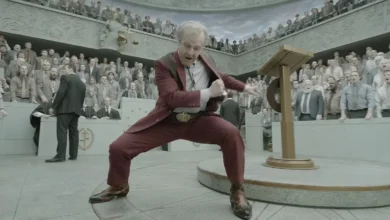
Creature Commandos, penned by DC Studios co-head James Gunn, introduced a team of monsters assembled for clandestine missions akin to the Suicide Squad. The series saw this group tasked with defending a small European nation from the Amazonian villain Circe. During their operations, team leader Rick Flag (voiced by Frank Grillo) grew suspicious of an academic named Aisla MacPherson, an employee of Amanda Waller. His investigation revealed that Clayface (voiced by Alan Tudyk) had been impersonating Professor MacPherson as part of a larger scheme. With assistance from Eric Frankenstein (voiced by David Harbour), Flag ultimately confronted and seemingly defeated Clayface.
The portrayal of Clayface in Creature Commandos presented a character who, in his disguised form as Professor MacPherson, exhibited a somewhat boorish demeanor, engaging in flirtatious behavior with female students and spending his free time engaging in online gaming trash talk. This depiction stands in stark contrast to the characterization teased for Flanagan’s film.
Flanagan’s Clayface: A Descent into Body Horror and Tragedy
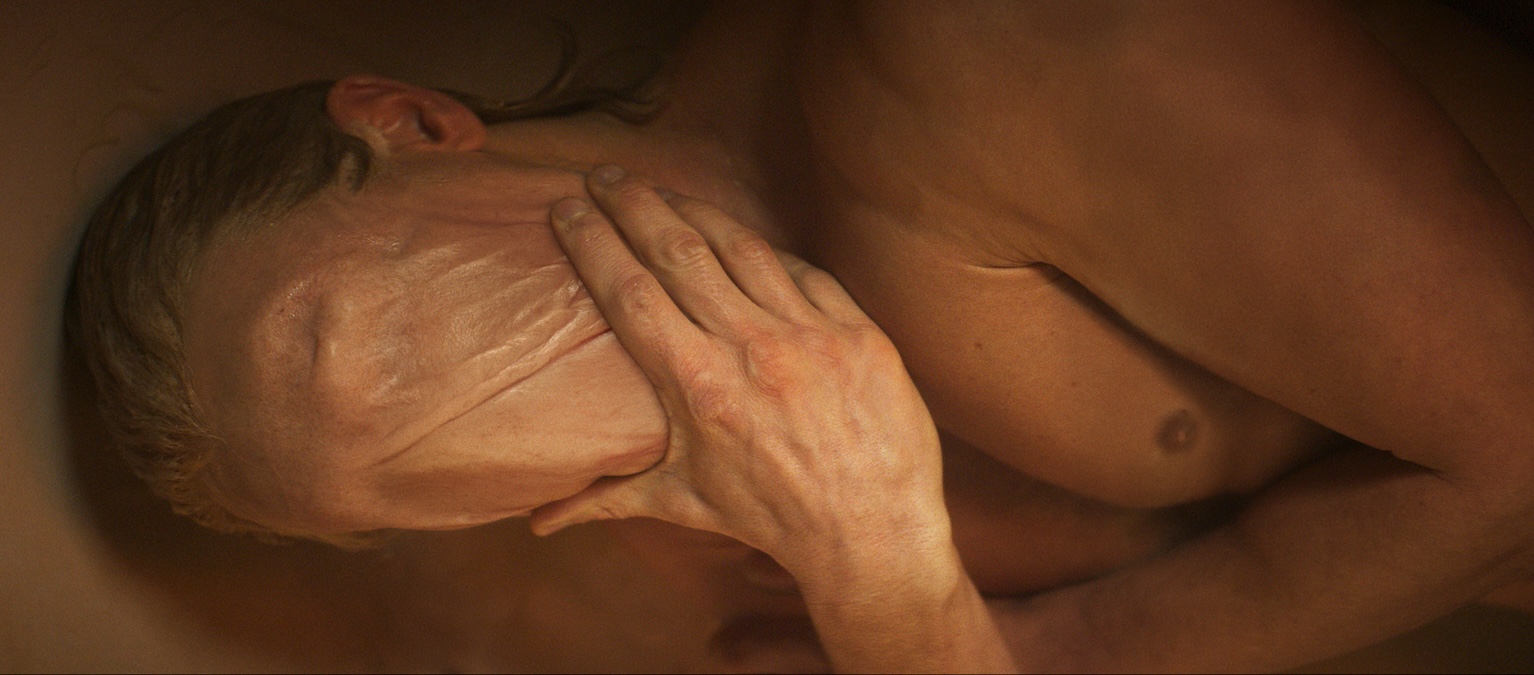
According to Flanagan and director James Watkins, the upcoming Clayface film aims to explore a more tragic and psychologically complex iteration of the character. Inspired by the seminal Batman: The Animated Series episode "Feat of Clay" and Grant Morrison and Dave McKean’s influential graphic novel Arkham Asylum: A Serious House on Serious Earth, the movie is set to focus on Matt Hagen, an aspiring actor. Hagen’s life takes a dark turn when he resorts to an experimental serum to repair the disfigurement inflicted by a vengeful gangster. This serum, however, triggers a profound physical transformation, bestowing upon him extraordinary abilities while simultaneously amplifying his darkest impulses.
Tom Rhys Harries, who plays Matt Hagen in the film, described his character’s journey as a descent into a "real turning point in his career and then, very quickly, at a real turning point in his life." He elaborated, "It’s a horror, but it’s a thriller. It asks, How far would you go to reclaim your life that you’ve built?" This framing positions Hagen as a protagonist grappling with identity, ambition, and the grotesque consequences of his choices, a far cry from the more superficial portrayal in Creature Commandos.
Navigating Multiple Iterations and the Concept of "Amalgamation"
The divergence in characterization between the animated series and the forthcoming film raises pertinent questions about narrative consistency within the DCU. While comic book lore itself features numerous individuals who have assumed the Clayface identity – including the original criminal treasure hunter Matt Hagen, scientist Preston Payne, Payne and Fuller’s son Cassius, and even law enforcement officer Peter Malley – the explicit connection between these distinct portrayals within a single cinematic universe presents a unique challenge.
Director James Watkins has acknowledged that his version of Hagen is an "amalgam," drawing inspiration from various sources across Clayface’s extensive history. "We’ve pinched elements from all over the place," Watkins stated, suggesting a deliberate synthesis rather than a strict adherence to a single comic iteration. This approach, while potentially offering a richer, more nuanced character, also invites scrutiny regarding the decision to link it directly to the Creature Commandos iteration. The question arises: why not opt for a distinct Clayface for the film, thereby avoiding potential confusion and allowing for greater creative freedom without the burden of pre-existing, albeit limited, narrative connections?
The DCU’s Flexible Framework: A Nod to Comic Precedent
Despite the apparent discrepancies, DC Studios leadership, including Safran and Flanagan, appear to be embracing this ambiguity as a strength. The inherent shapeshifting nature of Clayface is being leveraged as a metaphor for the DCU’s own potential for narrative flexibility. In the realm of comic books, characters like Batman and Superman have consistently demonstrated an ability to adapt their personas and the tone of their stories to suit evolving creative visions and audience expectations.
The DCU, under the stewardship of Gunn and Safran, has expressed aspirations to emulate the interconnected universe-building successfully pioneered by Marvel Studios. However, a critical lesson from nearly ninety years of comic book storytelling is the power of adaptability. The capacity for a character to be portrayed as gritty and dark in one narrative and lighthearted and adventurous in another, without fundamentally undermining their core identity, has been a key factor in the enduring appeal of superheroes.
The DCU’s challenge lies in translating this inherent flexibility from the printed page to the screen. The success of this endeavor hinges on its ability to manage diverse interpretations of beloved characters. If the DCU can successfully integrate these varied portrayals, demonstrating that a character can embody different facets of their identity across distinct projects, it could establish a robust and dynamic shared universe.
Implications for the Future of the DCU
The strategic decision to link Flanagan’s Clayface film to Creature Commandos, despite their differing tones, signals a conscious effort by DC Studios to establish a cohesive, albeit complex, continuity. This approach suggests a willingness to embrace the inherent contradictions and multifaceted nature of comic book characters. For audiences, it implies a need to be open to different interpretations and to understand that a single character’s arc may unfold in various ways across different media and points in time.
The success of this strategy will depend on the execution and clear communication from DC Studios. If they can successfully navigate these complexities, showcasing Clayface as a character who can be both a tragic figure in a psychological horror film and a more lighthearted, albeit villainous, presence in an animated ensemble, it could set a precedent for how other characters are introduced and developed within the DCU.
Ultimately, the mutable nature of Clayface makes him an ideal test case for the DCU’s ambitions. His ability to transform and adapt mirrors the very adaptability the cinematic universe needs to thrive in a competitive landscape. The coming years will reveal whether this bold approach to continuity will solidify the DCU’s foundation or lead to a fragmented and confusing narrative landscape. The release of Clayface on October 23, 2026, will be a significant indicator of the direction DC Studios is charting.
Related posts: