Rockstar knows GTA 6 players might ‘reject’ the morality system, but believes it ‘changes what GTA can…


The announcement and subsequent discovery of a formal criminal profile and morality system within Grand Theft Auto 6 have sparked a robust debate among the gaming community and industry analysts. Historically, Rockstar Games’ flagship franchise has been defined by its commitment to sandbox-style freedom, often rewarding players for engaging in maximum destruction with little to no long-term consequence. However, the introduction of a mechanic that tracks player conduct—specifically in relation to civilian casualties and aggressive behavior during missions—marks a pivotal evolution in how the developer approaches narrative agency and character-driven gameplay.
The Evolution of Rockstar’s Design Philosophy
For decades, the Grand Theft Auto series has operated under the ethos of "freedom without consequence." Titles such as GTA: Vice City and GTA 5 famously utilized "Wanted" systems, where the primary objective of avoiding law enforcement was to prolong a session of destruction rather than to minimize it. Players were incentivized to escalate conflict, with the "five-star" wanted level serving as the ultimate badge of honor for long-term survival against overwhelming police force.
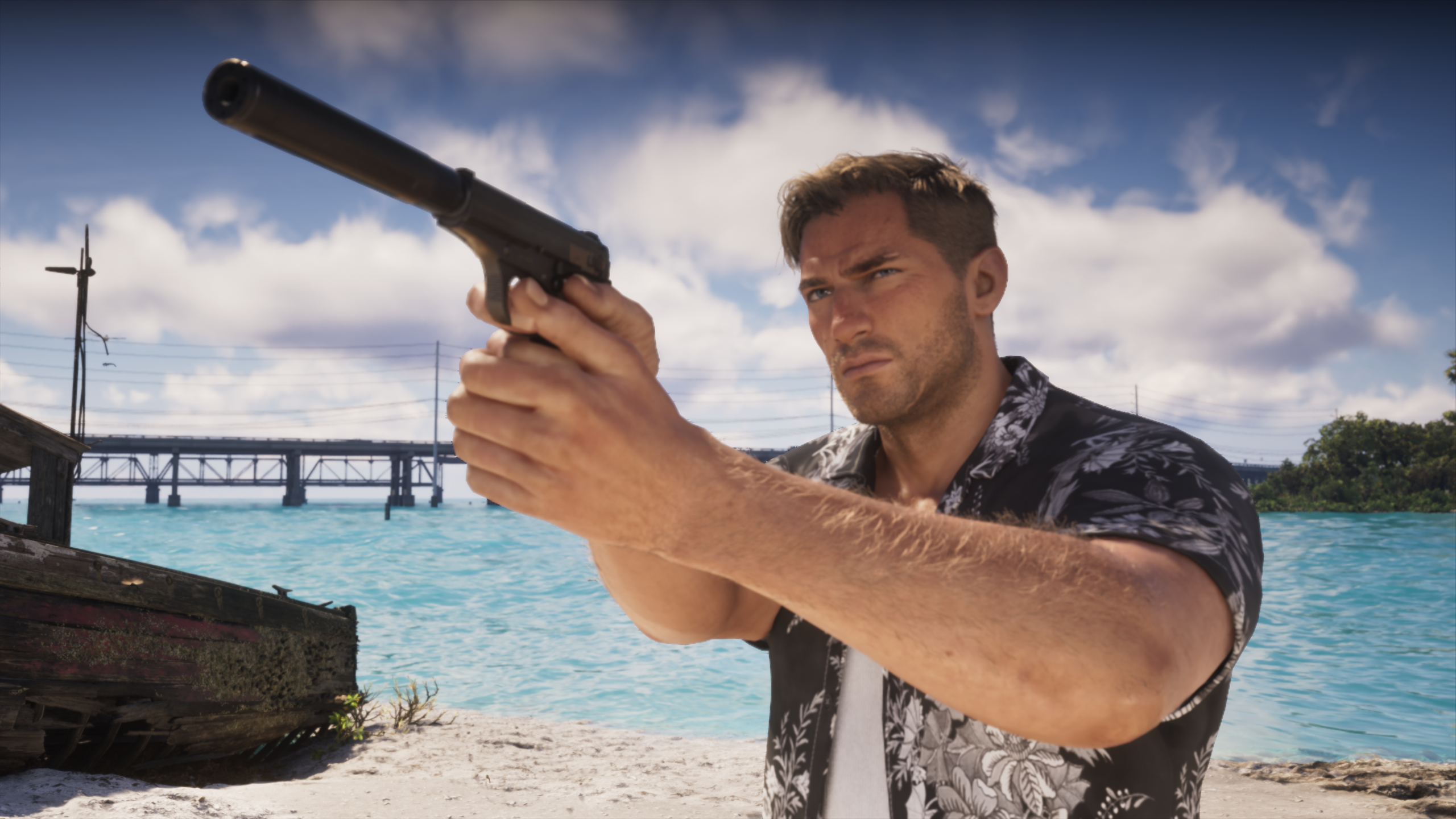
The inclusion of a morality-based criminal profile in GTA 6 signals a shift toward a more grounded, character-focused experience. By tracking the conduct of protagonists Jason and Lucia, Rockstar is attempting to bridge the gap between open-world mayhem and a cohesive, morality-conscious narrative. This system appears designed to force players to consider the consequences of their actions, effectively categorizing them based on their restraint or lack thereof. This shift is not merely cosmetic; it fundamentally alters the player’s relationship with the game world, transforming it from a playground of destruction into an environment where behavioral patterns are recorded and reflected back at the user.
Chronology of the Morality System Implementation
The existence of this system was confirmed through a combination of early player previews and official commentary from the development team at Rockstar North. The trajectory of the feature’s reveal can be summarized as follows:
- Early Development Phase: Internal testing at Rockstar North suggested a need to better differentiate the protagonists, Jason and Lucia, from the psychopathic archetypes seen in previous iterations of the franchise. The team aimed to portray them as individuals driven by necessity—specifically, the need to secure financial stability—rather than innate criminality.
- Initial Previews: As select content creators and journalists gained access to early builds, the presence of a "Criminal Profile" was identified. This system tracks actions such as collateral damage, unnecessary civilian deaths, and specific engagement choices during high-stakes heists.
- Public Discourse: Upon reports of this feature, the player base reacted with notable polarization. Forums such as Reddit and various social media platforms became hubs for heated discussion, with some long-time fans arguing that the system restricts the "GTA spirit," while others praised it for adding depth to the protagonists’ motivations.
- Official Confirmation: In recent interviews, Rockstar North co-studio head Rob Nelson addressed the community’s apprehension, clarifying that the system is intended to expand the range of player choices rather than restrict the overall gameplay experience.
Supporting Data and System Mechanics
The criminal profile system functions as a dynamic tracker of player behavior. Data collected during missions is quantified to generate a profile that dictates how the world responds to the player. Unlike previous titles where the "Wanted" level was a binary state of being hunted or not, the morality system acts as a persistent indicator of the player’s tactical approach.
Preliminary analysis of the game’s mechanics suggests that the system is additive rather than punitive. It does not necessarily block players from playing in a high-chaos style, but it provides a "moral weight" to the proceedings. For instance, accidental casualties during a heist may negatively impact the player’s standing, forcing them to adopt more surgical precision if they wish to maintain a specific "professional" criminal profile.
Furthermore, the game’s difficulty scaling—notably the "six-star" wanted system—serves as a technical barrier to the traditional "go-on-a-spree" style of play. Data indicates that escaping a six-star rating is significantly more difficult than in previous games, creating a mechanical incentive for players to engage with the game’s stealth and tactical elements. By making the cost of engagement higher, Rockstar effectively encourages players to treat the world with more caution.
Official Perspectives from Rockstar North
Rob Nelson’s recent commentary provides insight into the developer’s intent. Recognizing the anxiety surrounding the implementation of the system, Nelson emphasized that the goal is not to police the player’s fun, but to redefine what a GTA experience can be.
"It doesn’t change everything; it changes what GTA can be," Nelson stated during his interview with Video Games Chronicle. He acknowledged that the system is designed to offer a "new range of choices and decisions" for players who wish to engage with the narrative on a deeper level. Nelson also noted that Rockstar is fully aware that some players may reject the system, viewing it as an optional layer of complexity rather than a mandatory shift in the series’ identity. This indicates a developer-led effort to provide a more sophisticated experience for players seeking a challenge, without entirely stripping away the franchise’s signature sandbox elements.
Broader Implications for the Open-World Genre
The introduction of this morality system has significant implications for the open-world genre. For years, the standard for sandbox games has been the "chaos-first" model. However, as the industry moves toward more cinematic, character-driven storytelling, the need to balance player freedom with narrative consistency becomes paramount.
If the system in GTA 6 proves successful, it could set a new standard for how open-world games handle character agency. By rewarding restraint and tracking behavioral patterns, developers can create a sense of consequence that feels earned rather than forced. This shift also mirrors trends seen in other major titles, such as the Red Dead Redemption series, which also utilized a "Honor" system to impact how the game world interacted with the player.
However, the implementation of such systems is not without risks. The primary challenge for Rockstar is ensuring that the morality system does not feel like an arbitrary "hand-slap" that interrupts the player’s immersion. If the game punishes a player for a stray bullet during a high-octane sequence, it risks frustrating those who prioritize spectacle over simulation. The success of GTA 6 will likely depend on whether the developers have managed to integrate this system into the core gameplay loop so seamlessly that it feels like a natural evolution of the player’s own decision-making process.
Fact-Based Analysis of Future Prospects
As the industry prepares for the release of GTA 6, the conversation surrounding the morality system remains a central point of discussion. The data suggests that while the system is an "additive" feature, its presence is a clear indicator that Rockstar intends to elevate the stakes of its storytelling.
The divide in the player base is, in many ways, reflective of the evolution of the audience itself. Many players who grew up with the earlier, more chaotic entries in the series may feel a sense of loss regarding the "no-consequences" freedom. Conversely, a new generation of players, accustomed to the narrative depth of modern RPGs and action-adventure titles, may find the morality system to be a welcome addition that makes their choices feel more consequential.
Ultimately, the impact of the criminal profile system will be measured by how well it balances the series’ legacy of chaos with its new aspirations for narrative depth. If Rockstar can successfully demonstrate that this system enhances the sense of being a professional criminal rather than a mindless agent of destruction, it may well define the next era of the Grand Theft Auto franchise. For now, the system stands as a bold, if controversial, experiment in modern game design.