‘Bad Lieutenant: Tokyo’ Teaser Brings Takashi Miike’s Bloody Crime Thriller to Theaters This March

The Evolution of a Cult Franchise
The Bad Lieutenant brand has occupied a unique space in crime cinema for over three decades. The franchise began in 1992 with Abel Ferrara’s harrowing original, which starred Harvey Keitel as a nameless, self-destructing police officer in New York City. The film became a touchstone for the "corrupt cop" subgenre, famously blending Catholic guilt with urban nihilism.
In 2009, Werner Herzog reimagined the concept with Bad Lieutenant: Port of Call New Orleans, starring Nicolas Cage. Herzog’s iteration took a more surreal, darkly comedic approach, focusing on addiction and hallucinatory chaos rather than the strict morality play of the original. By enlisting Takashi Miike—a director whose filmography spans the extreme violence of Ichi the Killer to the methodical tension of Audition—the producers of Bad Lieutenant: Tokyo are signaling a shift toward a visceral, stylized, and perhaps more operatic interpretation of the archetype. This third iteration is not a direct sequel but rather a thematic successor, utilizing the "Bad Lieutenant" mantle to explore the universal degradation of authority figures within a modern, neon-drenched Tokyo setting.
Narrative Framework and Creative Personnel
The screenplay for Bad Lieutenant: Tokyo was penned by Daisuke Tengan, a frequent collaborator of Miike and the writer behind the 1999 psychological horror masterpiece Audition. Tengan’s involvement suggests a return to the narrative complexity and slow-burn dread that defined the pair’s most acclaimed works.
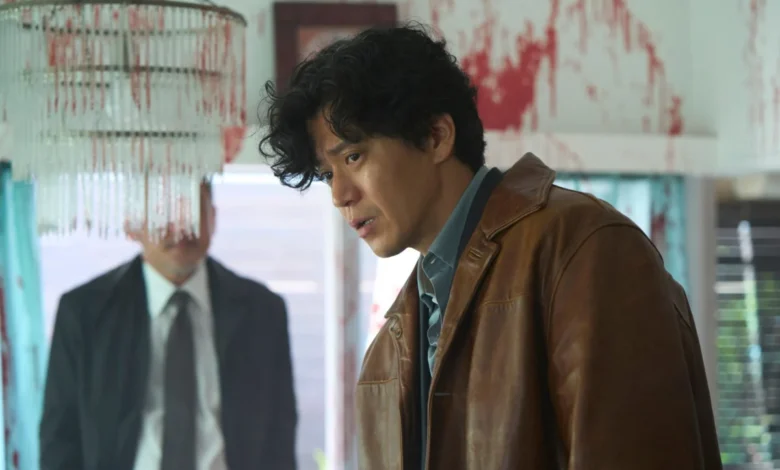
The plot centers on Yabuki, a Tokyo detective whose life is effectively a series of cascading failures. Burdened by heavy gambling debts and severe substance abuse, Yabuki is tasked with investigating a killer who appears to be deeply embedded within the intricate hierarchy of organized crime. Simultaneously, the story introduces Gwen Birgssen, an FBI agent played by Lily James. Her character, stationed in Japan to track a missing American tourist, finds her path crossing with Yabuki’s. As the two investigations converge, the film delves into the intersection of personal rot and institutional incompetence. The pairing of Oguri and James highlights a strategic effort to bridge Japanese domestic audiences with international market appeal, a move consistent with NEON’s track record of distributing prestige genre films that carry both artistic and commercial weight.
Critical Reception and Early Exhibition
The film’s journey to a wide theatrical release began in September 2026, when it held its world premiere at the Toronto International Film Festival (TIFF). The reception at the festival provided an early look at what audiences can expect, revealing a polarized but highly engaged critical response.
Reviews from TIFF have highlighted a significant tonal split. Critics like Chase Hutchinson, writing for The Playlist, lauded the film for its uncompromising commitment to gore and its "grotesque imagery," specifically noting the use of carrion birds as a recurring, unsettling motif. Conversely, other critics, including Travis Hopson of Punch Drunk Critics, expressed a different sentiment, suggesting that Miike may have tempered his usual extremity. These conflicting reports suggest that while the film remains a Miike production, it may lean more into a procedural-noir aesthetic than the unrelenting splatter-horror of his earlier career. This ambiguity is, perhaps, intentional; by moving away from the "shock" factor of his 1990s and 2000s output, Miike may be aiming for a more psychological, character-driven study of a man in the throes of total collapse.

Production and Distribution Strategy
NEON’s acquisition and promotion of the film demonstrate a calculated approach to the March 2027 release window. The distribution strategy has relied heavily on drip-feeding promotional content to build anticipation. Two months prior to the formal release-date announcement, a more substantial trailer was released, showcasing the high-contrast lighting and kinetic camera work characteristic of Miike’s style.
The inclusion of WWE star Liv Morgan in the cast represents a contemporary trend in Hollywood casting, where crossover stars from the world of professional wrestling are increasingly integrated into action-heavy prestige projects. This adds a layer of pop-culture curiosity to the film, potentially widening its appeal beyond the traditional arthouse and horror-fan demographics that usually frequent Miike’s domestic screenings.
Thematic Analysis: Why Now?
The timing of Bad Lieutenant: Tokyo arrives during a period of renewed global interest in Japanese noir and the "yakuza-adjacent" crime genre. Sociologically, the film reflects modern anxieties regarding the intersection of international law enforcement and the localized power structures of organized crime. By setting the story in Tokyo, a city defined by its rigid social codes and extreme technological density, Miike is able to contrast the chaos of his protagonist’s internal life with the orderly, cold environment of the metropolis.
The "Bad Lieutenant" figure serves as a mirror for the audience’s own fears regarding institutional power. Whether it is Ferrara’s New York or Herzog’s New Orleans, the character has always functioned as a conduit for the "sin" of the city. In Tokyo, this dynamic is amplified by the cultural weight of the Japanese police system, which is often viewed through a lens of extreme professional discipline. A protagonist who acts as the antithesis to this societal ideal offers a compelling, if deeply uncomfortable, subject for exploration.
Implications for the Industry
The release of Bad Lieutenant: Tokyo serves as a bellwether for the viability of "auteur-driven" mid-budget crime dramas in the current theatrical climate. As major studios pivot toward massive franchise tentpoles, the reliance on high-concept, director-centric projects like this one—supported by independent distributors like NEON—becomes increasingly vital for the health of the theatrical ecosystem.
Furthermore, the collaboration between Japanese production houses and international distributors signifies a maturation of the global film market. The film is not merely a "remake" of a Western property; it is a synthesis of international talent, local expertise, and a globalized distribution infrastructure. If the film performs well, it may pave the way for more "loose franchise" revivals, where established Western titles are reimagined through the cultural lens of foreign directors.
Chronology of Development
- Late 2025: Production commences in Tokyo, with NEON confirmed as the primary distributor for the North American market.
- Early 2026: Casting news breaks, confirming the involvement of Shun Oguri and Lily James.
- September 2026: The film holds its world premiere at the Toronto International Film Festival, receiving a mixed but vocal critical response.
- November 2026: NEON releases a refined, violent teaser trailer and officially secures the March 5, 2027, theatrical release date.
- March 5, 2027: Scheduled North American theatrical wide release.
Conclusion
As the March 2027 release date approaches, audience expectations remain high, if somewhat divided. Takashi Miike has built a career on defying expectations, and the uncertainty surrounding the tone of Bad Lieutenant: Tokyo—whether it will lean into the grotesque or the psychological—is arguably its strongest marketing asset. By positioning the film as a dark, character-focused crime thriller, NEON is betting that there is still a significant audience for visceral, uncompromising cinema that challenges the traditional hero narrative of the police procedural. Whether or not it reaches the legendary status of its predecessors remains to be seen, but the film is already established as one of the most anticipated international releases of the 2027 spring season.
Related posts: