Steam isn’t doing ‘an official Black Friday fest,’ but it does have a page with hundreds of discounts and…

The Shift in Promotional Strategy
In recent years, Valve has been quietly dismantling the traditional, monolithic structure of its seasonal sale events. Historically, Steam’s calendar was defined by a handful of massive, site-wide sales—such as the Summer and Winter sales—which effectively locked developers into specific discount windows. However, the introduction of the overhauled "Discounts and Events" page in September 2026 provided the necessary infrastructure to change this approach.
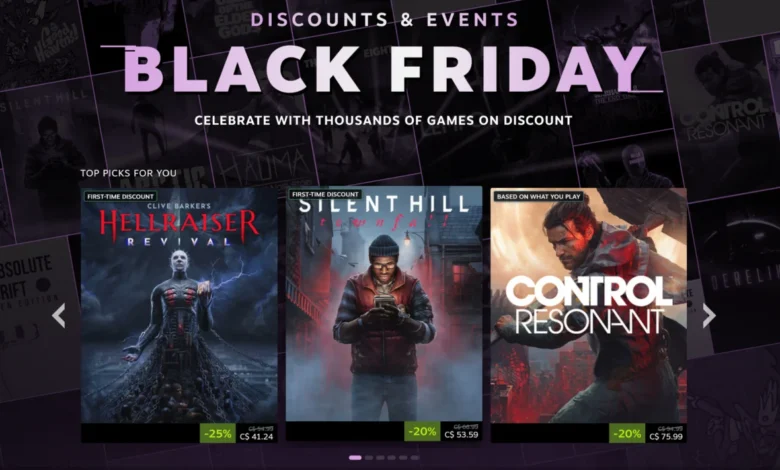
Valve has explicitly stated that while there is no singular "Black Friday Sale" event, the current aesthetic updates to the platform serve to showcase the aggressive pricing strategies adopted by game developers and publishers. By providing a curated, personalized, and visually distinct hub for these discounts, Valve is effectively facilitating a "Black Friday-lite" environment without the administrative overhead of a platform-wide event. This move allows developers to set their own discounting schedules while benefiting from the increased traffic that typically surrounds the global Black Friday shopping period.
Historical Context and the 2025 Realignment
To understand why this distinction is being made, one must look at the historical friction between the Steam Autumn Sale and the retail phenomenon of Black Friday. For over a decade, the Steam Autumn Sale—traditionally held in late November—frequently overlapped or sat uncomfortably close to the American Thanksgiving holiday. This created a competitive landscape where Steam was already running a major site-wide event, making a secondary "Black Friday" event redundant or even cannibalistic to game sales.

The landscape shifted significantly in 2025. Following a major realignment of its seasonal sales calendar, Valve moved the Autumn Sale to a significantly earlier slot, aiming to decouple its core events from the end-of-year holiday rush. This strategic move left a vacuum during the traditional late-November shopping window. Consequently, 2025 saw the inaugural, official Steam Black Friday Sale. That event served as a pilot program to test whether a dedicated, mid-holiday event could sustain engagement without diluting the impact of the upcoming Winter Sale.
By 2026, the company has opted to pivot away from a singular, branded event in favor of an algorithmic, personalized discount feed. This suggests that the internal data from 2025 may have indicated that a "forced" site-wide event is less effective for long-tail sales than a platform that simply highlights and optimizes existing developer discounts during high-traffic periods.
Data-Driven Personalization
The current update to the Discounts and Events page is the culmination of months of backend engineering. Valve’s goal is to move away from a "one size fits all" storefront page toward a system that predicts user interest based on library history, wishlist activity, and playtime trends.
According to technical documentation released alongside the update, the new interface utilizes a dynamic sorting algorithm that prioritizes discounts based on:

- User Affinity: Games that share genres or developer profiles with the user’s most played titles.
- Wishlist Velocity: How many other users are currently buying or wishlisting specific titles.
- Discount Depth: The percentage of price reduction weighted against the game’s historical pricing and popularity.
By integrating these features into a "festive" visual layout, Valve is attempting to replicate the excitement of a traditional sale while maintaining the flexibility of a standard marketplace. For developers, this is a significant benefit. It allows smaller, independent studios to participate in the Black Friday surge without having to commit to the strict participation requirements of a traditional Valve-branded event.
Industry Implications and Developer Impact
The move has been largely welcomed by the developer community. Large publishers and independent developers alike have noted that the rigidity of previous sale formats often forced them into discounting windows that did not align with their own product lifecycles or release calendars.
"The ability to leverage the high traffic of the Black Friday weekend without being tied to a specific, mandatory sale banner provides much greater control over our monetization strategy," remarked an industry consultant familiar with Steamworks operations. "Valve is effectively becoming a facilitator rather than a director of sales."
However, this transition also places more pressure on developers to manage their own promotional timelines. Because the current "non-event" allows for varying end dates—with some titles concluding sales as early as November 30 and others extending deep into early December—the onus is on the consumer to track individual deal expirations. This represents a departure from the "all-or-nothing" structure of previous years, where the vast majority of deals vanished simultaneously at the end of the event.

Timeline of Key Developments
- Pre-2025: Steam holds a consistent Autumn Sale, which frequently coincides with the lead-up to Black Friday.
- Early 2025: Valve initiates a structural shift in the seasonal sale calendar, moving the Autumn Sale earlier in the year to prevent overlap with the Winter Sale and Black Friday.
- November 2025: The first-ever official Steam Black Friday Sale takes place as a standalone event to fill the gap left by the seasonal calendar realignment.
- September 2026: Valve announces and begins testing an overhaul of the Discounts and Events page, emphasizing algorithmic personalization and improved UI.
- November 2026: Valve confirms no official "Black Friday Sale" will occur, opting instead to use the updated storefront tools to highlight third-party discounts.
Looking Ahead: The Future of Steam Sales
The current approach to the 2026 shopping season serves as a litmus test for the future of digital storefront management. If the current model—where the platform provides the infrastructure and the "vibe" while developers provide the substance—proves successful, it is highly likely that Valve will phase out the concept of "official" seasonal sales entirely, save for the most established traditions like the Winter and Summer sales.
This evolution is consistent with Valve’s long-term strategy of reducing manual curation in favor of automated, data-backed systems. By automating the promotional pipeline, the company reduces the labor required to manage thousands of concurrent sales while simultaneously increasing the conversion rate by showing users exactly what they are most likely to purchase.
For the end-user, the experience is one of increased variety but decreased predictability. While the "festive" look of the store during the current period provides a sense of occasion, the lack of a site-wide, unified event means that shoppers must be more diligent in monitoring their wishlists. As the platform continues to refine these algorithmic tools, the line between "sale events" and "normal store operation" will likely continue to blur, effectively turning Steam into a permanent, highly personalized shopping destination where the "event" is simply the state of the market itself.
Ultimately, the 2026 holiday season on Steam is a testament to the platform’s maturity. It no longer needs to rely on the crutch of traditional marketing events to drive massive volume. Instead, by leveraging the data of millions of users and the collective pricing strategies of tens of thousands of developers, Valve has created a self-sustaining ecosystem that functions optimally regardless of whether a formal "event" is officially recognized or not.