The Authority of Power: Analyzing the Sociopolitical Consequences of the Justice League Resurgence in Kingdom Come


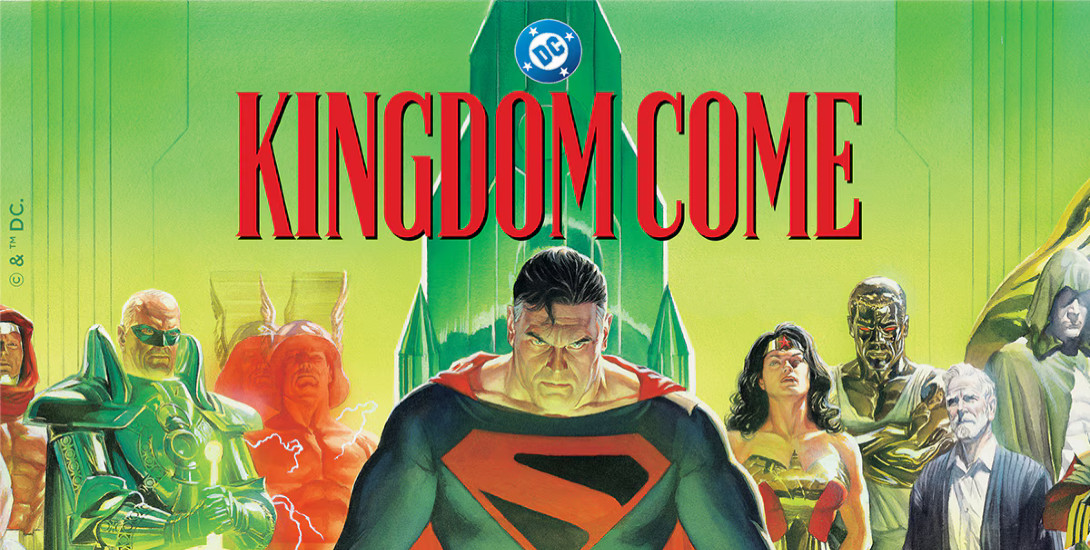
The global landscape of 2026 continues to grapple with the seismic shifts initiated by the return of the Justice League, a development that has effectively recalibrated the international balance of power. Thirty years after the initial publication of the seminal graphic narrative Kingdom Come, its themes regarding the legitimacy of non-state actors in governance, the erosion of privacy, and the inherent dangers of unchecked vigilante justice have transitioned from theoretical fiction to pressing contemporary concerns. As the Justice League asserts its authority over a volatile generation of metahumans, the world finds itself at a crossroads where the promise of stability competes with the risks of authoritarian overreach.
Chronology of the Crisis: The Resurgence and Escalation
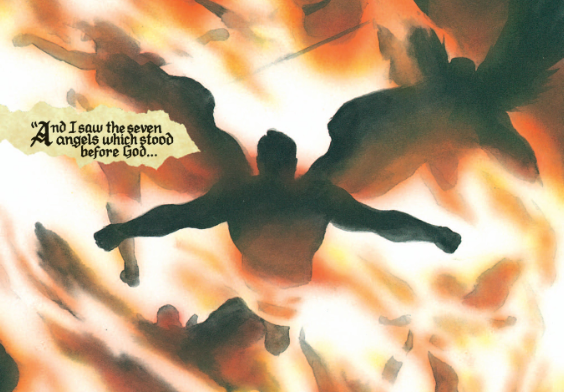
The current instability finds its roots in the vacuum left by the Justice League’s decade-long absence. Following the dissolution of the traditional hero paradigm, the world witnessed the ascent of figures like Magog, whose willingness to bypass established legal frameworks in favor of lethal force gained significant public support. This shift culminated in the Kansas tragedy, an event that decimated the Midwest and served as the catalyst for the current, desperate calls for order.
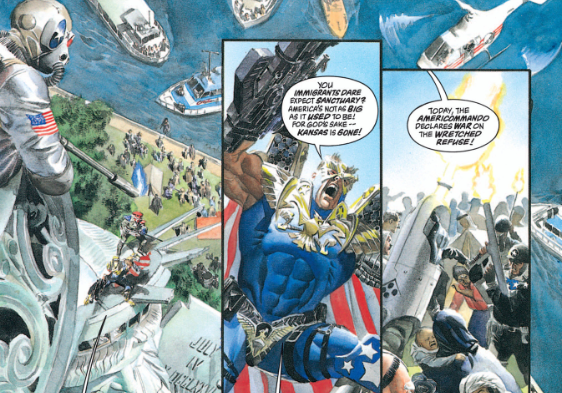
The second chapter of this era—marked by the Justice League’s decisive intervention at the Statue of Liberty—served as a definitive statement of intent. The skirmish between the nationalist vigilante group known as the Minutemen and a faction of robotic entities underscored a dangerous reality: the proliferation of self-appointed law enforcement. By neutralizing these combatants, the Justice League demonstrated a clear tactical superiority, yet their arrival prompted critical questions regarding their mandate. Without a formal request from the United Nations or any recognized sovereign state, the League’s unilateral intervention established a precedent for global interference under the banner of a self-defined, universal "truth and justice."

Data and Infrastructure: The Surveillance State of Gotham
Parallel to the Justice League’s overt, force-based approach is the technological strategy employed by Bruce Wayne. Operating from an undisclosed, fortified command center, Wayne has pivoted toward a surveillance-heavy model of order. By integrating automated robotic assets with a pervasive network of sensors, this model aims to preemptively neutralize criminal activity.
Analysis of this infrastructure reveals significant implications for individual liberties. Unlike traditional law enforcement, which operates under public oversight, the Wayne-led model functions as a private, high-tech security apparatus. Data indicates that this system spans multiple metropolitan areas, including Gotham and Star City. The implications of such a system are stark: when the authority to monitor and act is concentrated in the hands of a single private entity, the lack of transparency regarding data collection, storage, and the criteria for intervention raises profound questions about the protection of civil rights. The absence of legislative checks creates a scenario where personal privacy is treated as a secondary concern to the attainment of a manufactured, albeit precarious, state of security.
The Lex Luthor Factor: Strategic Destabilization
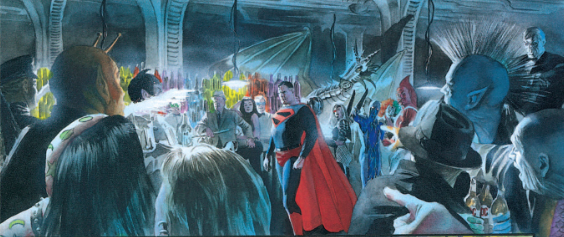
While the Justice League and Batman’s network debate the methodology of control, former adversaries have utilized the chaos to reorganize. Lex Luthor, currently leading the Mankind Liberation Front, has adopted a multifaceted strategy to undermine the metahuman authority. By integrating survivors from the destroyed Arkham and Belle Reve facilities into a new, managed force, Luthor has successfully injected volatility into the public sphere.
Intelligence reports suggest that approximately 8% of the new vigilante activity currently observed is directly linked to Luthor’s orchestration. The goal of this initiative is not to restore the previous status quo, but to accelerate the erosion of public trust in all metahumans. By arming these individuals and directing their actions to maximize civilian disruption, the Liberation Front creates a feedback loop: increased chaos leads to increased fear, which leads to increased reliance on the very heroes the public is being conditioned to resent. This calculated escalation serves as a strategic precursor to a broader, more disruptive endgame, reportedly involving the youth hero Billy Batson.
Diplomatic Strains and the Problem of Authority
The United Nations has expressed mounting concern regarding the Justice League’s refusal to defer to international legal bodies. During a recent press conference, Superman and Wonder Woman articulated a mission to restore order "if necessary, with force." This rhetoric, while comforting to some segments of the population, has alarmed diplomats who observe a lack of formal training in conflict resolution.
The friction between the Justice League’s leadership has also become evident. Wonder Woman’s increased reliance on force and her disregard for the nuances of human collateral have created a perceptible divide between her and Superman. This internal disagreement highlights a fundamental issue: the League lacks a unified political platform. They possess the raw power to enforce their will, but they lack the legal authority or the constitutional mandate to do so. This creates a reliance on individual discretion—a volatile foundation for global governance.

Implications of the New Super-Prison
The most recent development in the effort to contain rogue metahumans is the establishment of a centralized, high-security detention facility. While intended to isolate the most dangerous threats to global stability, the facility operates entirely outside of the international judicial system. There are no provisions for due process, legal counsel, or independent oversight for those detained.
By consolidating these individuals, the League has inadvertently created a single point of failure—a "ticking time bomb" that concentrates immense, potentially explosive power within one location. Moreover, the existence of this prison forces a new alliance: the convergence of interests between Bruce Wayne and Lex Luthor. The realization that the Justice League is prepared to act as judge, jury, and jailer has compelled Wayne to seek unconventional partnerships. This tactical alignment between a long-time vigilante and a known corporate criminal represents a significant turning point in the conflict, signaling that the resistance to the League’s "order" is gaining organized, if deeply problematic, momentum.
Conclusion: The Cost of Security
As the world continues to evaluate the merits of the Justice League’s return, the overarching issue remains the delegation of power. In the absence of established democratic processes, society has been thrust into a competition between two distinct forms of authoritarianism: one driven by the overwhelming force of the metahuman elite, and the other driven by the invasive surveillance and high-tech control of the private sector.
The historical lessons of 1996 serve as a warning for 2026. The reliance on figures who stand above the law—regardless of their moral standing—inevitably leads to a degradation of the very institutions designed to protect the public. The current period is not merely a struggle for security, but a contest over the definition of governance itself. Whether the world chooses the "divine" rule of the Justice League or the cold, technological oversight of the billionaire class, the consequence appears to be the same: the quiet surrender of human agency. As the situation evolves, the primary question for the global populace is not whether order can be restored, but at what cost to the fundamental rights that define a free society. The events currently unfolding in Kansas and beyond indicate that the answer may be far more transformative—and dangerous—than previously imagined.