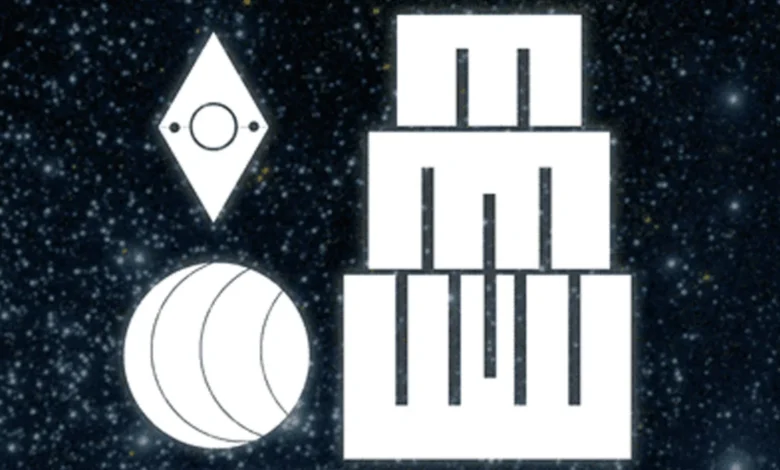
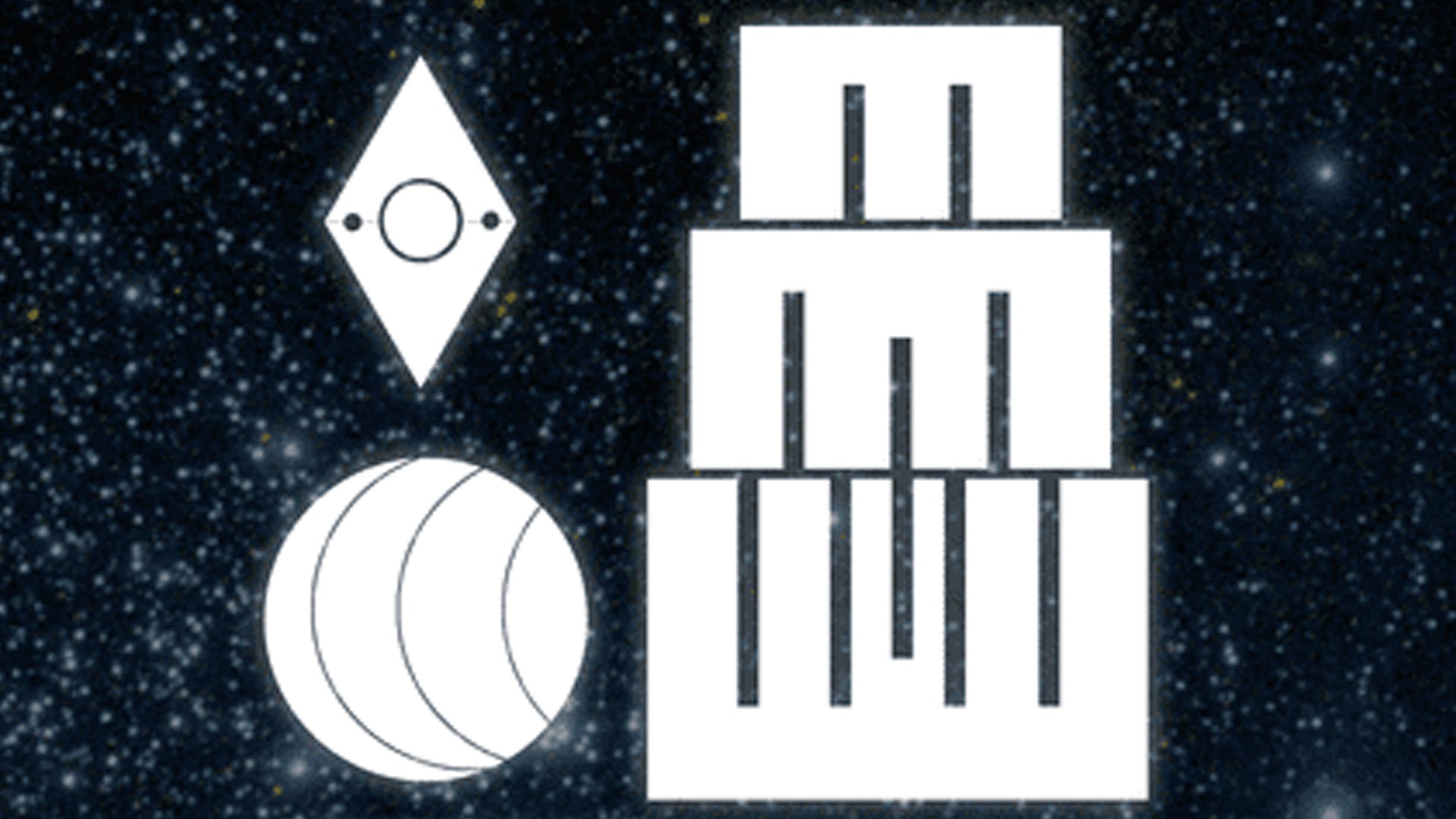
The upcoming board game City of Six Moons is poised to redefine the boundaries of instructional design within the tabletop industry by presenting its rulebook entirely in an alien language. Published by Hollandspiele, the single-player title requires players to act as amateur xenolinguists, deciphering a complex system of icons, glyphs, and symbols before they can even begin to engage with the core mechanics of the game. This unconventional approach, spearheaded by designer Amabel Holland, marks a radical departure from the standard instructional clarity expected in modern tabletop gaming.
The Philosophy of Obfuscation
At its core, City of Six Moons is a simulation of guiding the fortunes of an alien civilization. However, the game design extends the premise beyond the cardboard and plastic components found in the box. By forcing the player to translate the rules, Holland intends to bridge the gap between the player’s reality and the fiction of the game world. The rulebook is not merely a document; it is an artifact of an extraterrestrial culture, written with the assumption that the reader is not necessarily human.
This design choice creates an immediate barrier to entry, one that purposefully conflicts with the industry’s trend toward "streamlining." In an era where many publishers emphasize "quick-start" guides and video tutorials, City of Six Moons demands a significant investment of time and intellectual labor before the first turn is even taken. Holland has confirmed that she will not provide clarification or answer questions regarding the rules, leaving the player to navigate the ambiguity entirely on their own.
Historical Context and the Evolution of Rulebooks
The history of board game rulebooks has long been a point of contention within the hobbyist community. Historically, early wargames—such as those produced in the 1960s and 70s—were notoriously dense, often suffering from "legalese" that made them difficult to parse. As the industry expanded in the 1990s and 2000s, there was a conscious shift toward intuitive iconography, color-coded examples, and modular rulebooks designed to be digested in segments.
City of Six Moons subverts this progression. It utilizes the very tool meant to simplify gameplay—iconography—and weaponizes it to create a cipher. This is not the first time a game has toyed with language; titles like T.I.M.E Stories or various escape-room-in-a-box games have used codes as a mechanic. However, those games usually provide the tools for decryption within the game’s narrative arc. City of Six Moons represents a distinct evolution where the meta-game (learning the rules) is prioritized as highly as the game itself.
The Mechanics of the Unknown
While specific gameplay details remain shrouded in mystery, Holland has indicated that the experience is fundamentally functional and replayable. Once a player achieves a breakthrough in their understanding of the glyphs, the game reveals its underlying mechanics. This creates a unique "Aha!" moment that is both the reward for the player’s persistence and, according to Holland, the beginning of the end of the game’s mystery.
The designer has spoken openly about the transient nature of this discovery. "That loss is a thing I want you to feel; I want it to linger," Holland noted on social media. This suggests that the game is designed to be a finite experience in terms of mystery. Once the "code" is cracked, the game transitions from a linguistic puzzle into a traditional solitaire strategy game. This transition creates a temporal divide in the player’s relationship with the product: the first few hours are defined by frustration and curiosity, while the subsequent hours are defined by mastery and application.
Industry Implications and Market Positioning
The announcement of City of Six Moons has generated significant discussion within the board game industry, particularly regarding the viability of high-friction design. Hollandspiele, co-owned by Amabel and Mary Holland, has established a reputation for niche, often mathematically rigorous titles that eschew mainstream trends.
From a market perspective, this game is a high-risk, high-reward endeavor. By removing the accessibility of standard English instructions, the publisher effectively limits the game’s target audience to those who find the act of deciphering as rewarding as the act of playing. However, in a market saturated with thousands of new releases every year, such a bold departure from convention serves as an effective marketing tool. It positions the game as an "experience" rather than a mere consumer product.
The Role of the Player as Ethnographer
For those who choose to undertake the challenge, the process will likely mirror the methods of anthropological fieldwork. Players must compare the provided iconography against their own cultural assumptions about what a game "should" look like. If an icon resembles a sun, does it denote a turn, a phase, or a resource? By testing these hypotheses against the physical components provided in the box, the player becomes an ethnographer of the fictional civilization.
The inclusion of the components in the box—which are presumably also marked in the same alien language—implies that the game is a self-contained system. There is no external "Rosetta Stone" to be found online. The reliance on internal logic means that the player’s progression is entirely dependent on their ability to recognize patterns, a cognitive task that varies significantly from person to person.
Timeline and Anticipation
The game is scheduled for release in the coming weeks, a timeline that has given the community time to speculate on the potential difficulty. Boards, forums, and social media platforms have already seen early adopters discussing the cover art, searching for hidden patterns in the typography, and debating the ethics of a designer withholding rule clarifications.
The launch of City of Six Moons will serve as a test case for how far modern players are willing to go for a "pure" thematic experience. If the game succeeds, it could pave the way for other titles to experiment with non-traditional rule sets, perhaps utilizing augmented reality or dynamic digital rulebooks that adapt to the player’s progress. If it fails to resonate, it will serve as a reminder of the vital importance of instructional clarity in a hobby that is, at its heart, a social and communicative medium.
Broader Impact: The "Gamification" of Instruction
Beyond the immediate scope of board gaming, the approach taken by Holland highlights a broader trend in interactive media: the gamification of the user experience. By making the interface (the rulebook) part of the challenge, the developer forces a higher level of cognitive engagement.
If this model were to be applied to other sectors, such as software development or educational tools, it could fundamentally change how users learn new systems. However, the caveat remains that such designs are only effective when the user is intrinsically motivated. In the context of City of Six Moons, the player is not trying to learn a tool to perform a task; they are trying to learn a language to inhabit a world.
As the release date approaches, the excitement surrounding the project is palpable. Whether the experience of decoding the rules ultimately enhances or hinders the satisfaction of the gameplay remains to be seen. What is certain, however, is that City of Six Moons has already succeeded in its primary goal: it has forced a conversation about the nature of play, the role of the designer, and the responsibility of the publisher to the player.
The success of the project will ultimately depend on the balance between the frustration of the language barrier and the payoff of the game’s mechanics. For Amabel Holland, the journey of the player—from confusion to enlightenment—is the game itself. The final product, arriving on tables soon, will be the ultimate arbiter of whether this bold experiment in alien linguistics is a masterpiece of design or a bridge too far for the modern gamer.