Independent filmmaker Rene Perez has officially announced his latest project, The Witch at Hell’s Gate, a supernatural gothic horror feature that seeks to evoke the atmospheric dread and visual austerity of classic mid-century cinema. The production, which marks a notable departure from the visceral, contemporary slasher aesthetics often associated with the director’s previous works, is presented entirely in black and white. This creative decision is intended to emphasize the film’s focus on shadows, high-contrast lighting, and a deliberate, slow-burn narrative pace designed to mirror the sensibilities of early 20th-century gothic literature and film.
The film’s central narrative revolves around a female protagonist who falls victim to a malevolent curse cast by a witch. Rather than being confined to a specific haunted location, the curse acts as a catalyst for pervasive supernatural danger. The protagonist finds herself transformed into a focal point for the paranormal; she does not merely encounter evil, she attracts it. According to the project’s official synopsis, this gravitational pull of darkness brings her into contact with a wide spectrum of horror archetypes, ranging from ghouls and vampires to spectral entities and tangible human threats, such as a relentless serial killer. The core premise posits that while traditional horror films often utilize the "haunted house" trope to trap characters, The Witch at Hell’s Gate removes the safety of geography, ensuring that the threat is constant and inescapable.
Contextualizing the Career of Rene Perez
Rene Perez is a veteran figure in the independent film circuit, with a career spanning over four decades and a portfolio of more than 40 commercially distributed feature films. He is perhaps most widely recognized for his work on the Playing with Dolls / HAVOC franchise, a series that helped define his reputation for low-budget, high-concept horror. These earlier films were characterized by their focus on masked antagonists and psychological tension within confined settings, often utilizing the "survivalist" horror subgenre to engage audiences.
The transition to a gothic, black-and-white aesthetic with The Witch at Hell’s Gate suggests a shift in Perez’s creative priorities. Throughout his career, Perez has navigated the challenges of independent distribution, utilizing a lean production model that allows for artistic control. His longevity in a highly competitive market—where independent genre films often struggle to secure consistent distribution—demonstrates a keen understanding of audience demands and the economic realities of the horror marketplace. By pivoting toward a classic aesthetic, Perez is tapping into a resurgence of interest in stylized, "elevated" horror, a trend that has gained significant traction among streaming platforms and niche theatrical distributors in the mid-2020s.
The Evolution of Gothic Horror in Modern Cinema
The decision to film in black and white is a significant stylistic choice that places The Witch at Hell’s Gate within a specific lineage of cinematic history. Gothic horror, which originated with the works of Horace Walpole and Ann Radcliffe, relies heavily on the juxtaposition of light and shadow to articulate the internal anxieties of the characters. In film, this was perfected by German Expressionism in the 1920s and later adapted by Universal Studios and Hammer Film Productions.
By choosing to strip away the color palette, Perez is forcing the audience to focus on composition, silhouette, and the texture of the environment. This technique has been utilized sparingly but effectively in the 21st century by directors looking to evoke nostalgia or artistic gravitas, such as in The Lighthouse (2019) or the television series Penny Dreadful. For an independent filmmaker, black and white also offers a practical solution to budget constraints, as it can hide the limitations of set design and special effects while simultaneously enhancing the atmospheric quality of the film.
Narrative Structure and the "Magnet" Trope
The narrative conceit—that the protagonist is a magnet for evil—serves as a structural device to introduce a variety of horror elements without requiring a singular, long-form origin story for each monster. This episodic approach to supernatural horror is reminiscent of anthology films, yet the presence of a continuous character arc keeps the film grounded in a feature-length narrative.
Industry analysts observe that this structure is particularly effective for modern audiences who may have shorter attention spans for traditional, slow-paced gothic dramas. By introducing different threats throughout the narrative, Perez maintains a high level of kinetic energy while keeping the thematic core—the inescapable nature of the curse—at the forefront. The inclusion of a human element, the "relentless serial killer," alongside supernatural entities, suggests a blend of slasher tropes with gothic supernaturalism, a combination that Perez is uniquely positioned to execute given his background in the HAVOC series.
Production Timeline and Distribution Expectations
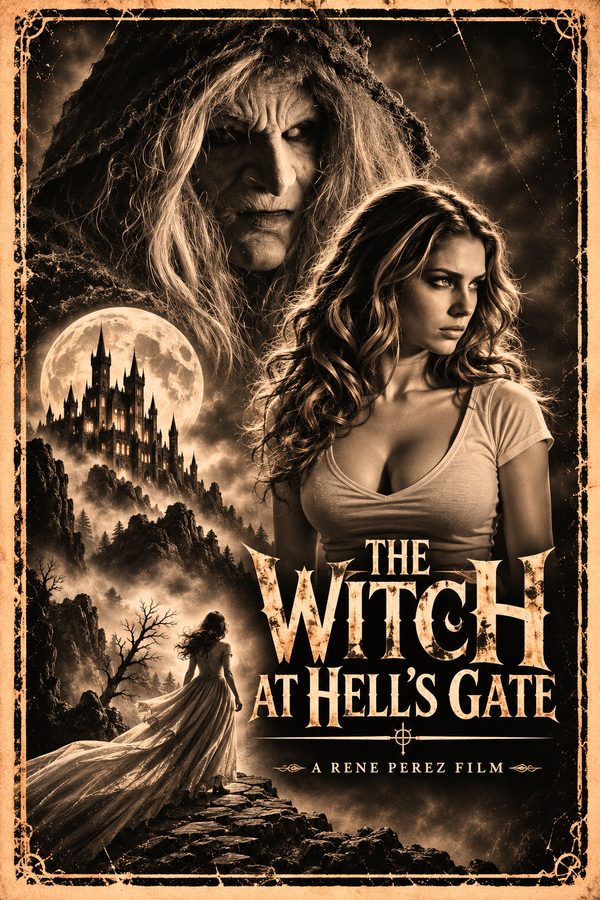
As of late 2026, the production has entered its final marketing phase with the unveiling of the official poster. While the release date is subject to the complexities of independent film distribution, the announcement indicates that the film is in a state of completion or near-completion. In the current media landscape, independent films of this caliber typically target a hybrid release strategy, leveraging digital platforms and video-on-demand (VOD) services to reach a global audience, supplemented by limited boutique theatrical runs in major metropolitan areas.
The marketing campaign, led by the tagline "Some Curses Have No Escape," emphasizes the film’s psychological weight. By branding the film as a "return to the art of classic horror," the production team is clearly signaling to core horror enthusiasts that this is not a contemporary jump-scare-driven production, but rather a more formal exploration of fear.
Industry Implications and Market Impact
The horror genre remains the most profitable sector of the independent film market, consistently outperforming other genres in terms of return on investment. The ability of a filmmaker like Rene Perez to maintain a consistent output of 40+ films highlights the sustainability of the genre. However, the market is becoming increasingly saturated, and filmmakers are finding that differentiation is key to success.
The Witch at Hell’s Gate represents a strategic move to capture the "prestige horror" demographic. By opting for a classic aesthetic, the film distances itself from the "found footage" or "slasher" saturation that defines much of the lower-budget independent landscape. If the film succeeds, it could serve as a case study for how established independent filmmakers can reinvent their brands to remain relevant while appealing to both long-time fans of their work and new audiences drawn to the recent trend of stylish, high-concept horror.
Furthermore, the film’s reliance on practical storytelling rather than heavy reliance on CGI—often a necessity in black-and-white, low-budget productions—may resonate with a growing movement of cinephiles who are increasingly critical of the visual polish and artificiality of modern blockbuster horror. By focusing on the interplay of light and shadow, Perez is returning to the core elements of the genre that made the medium terrifying in its infancy.
As the industry moves toward 2027, the success of projects like The Witch at Hell’s Gate will likely depend on their ability to secure strong digital distribution partnerships. The film is positioned to appeal to fans of atmospheric, slow-burn horror who are looking for a break from the franchise-heavy, high-budget offerings of major studios. Whether the film can effectively translate its gothic ambitions into a compelling viewing experience remains to be seen, but its commitment to a distinct, non-commercial visual style is a testament to the continued vitality of independent horror filmmaking in an era of technological homogenization.