Yellowjackets season four delivers a brutal turning point as the survivors confront the collapse of their social hierarchy

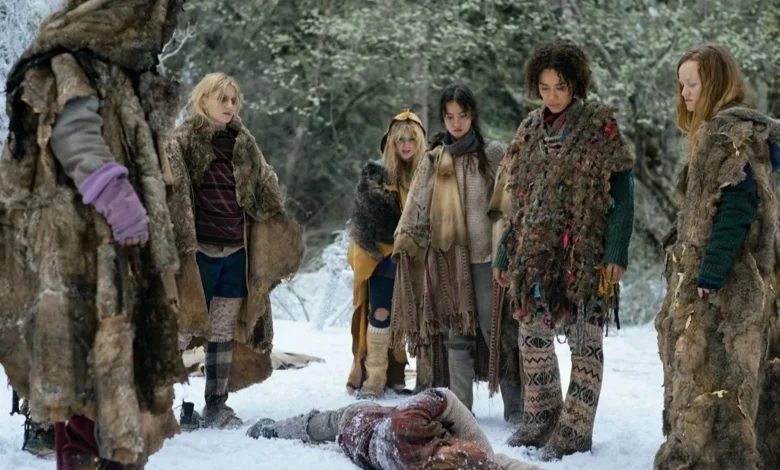
The second episode of the fourth and final season of the critically acclaimed survival drama Yellowjackets has marked a definitive shift in the narrative trajectory of the series. Following seasons of escalating tension and internal conflict, the survivors trapped in the Canadian wilderness reached a breaking point, culminating in a violent confrontation directed at one of their own: Shauna. This event, now being referred to by viewers as the "woods beatdown," serves as a critical juncture in the series, signaling the inevitable fragmentation of the group’s established, albeit twisted, social order.
The Anatomy of a Power Struggle
To understand the significance of this confrontation, one must examine the progression of power within the group since their plane crash. Initially defined by a desperate, collective effort to survive, the group’s dynamic shifted as the harsh reality of their isolation persisted. Shauna, who assumed a position of dominance—often associated with the persona of the "Antler Queen"—had increasingly leveraged violence and psychological intimidation to maintain control.
By the early stages of season four, this control had begun to fray. The group’s collective psyche was already battered by the long-term effects of starvation, the brutal winter, and the psychological trauma of resorting to cannibalism to sustain life. Shauna’s behavior, characterized by a refusal to consider rescue and an insistence on maintaining a "survival of the fittest" mentality, created a deep schism. When she turned her aggression toward Van, it served as the catalyst for a collective uprising. The subsequent intervention by the other survivors, who collectively restrained and neutralized her, underscored a fundamental realization: the group could no longer function under her authoritarian rule.
Chronology of the Wilderness Descent
The path to this confrontation is marked by several key incidents that eroded the group’s cohesion:
- The Initial Trauma: The immediate aftermath of the plane crash established the necessity of cooperation. However, the loss of resources quickly introduced the concept of tribalism.
- The Loss of Jackie: The death of Jackie acted as a psychological anchor for Shauna. The guilt associated with this loss, coupled with the act of cannibalism, fundamentally altered Shauna’s moral compass, leading to a state of arrested development characterized by aggression.
- The Loss of Mari: The previous season’s loss of Mari pushed the survivors into a state of mourning that quickly curdled into resentment. The group began to view the environment not just as an enemy, but as a test of their own internal cruelty.
- The Season Four Turning Point: With the realization that rescue was a tangible possibility, the group split between those who wanted to reclaim their humanity and those, led by Shauna, who feared the return to societal norms. The confrontation in the woods represents the final rejection of the latter.
Psychological Implications and Trauma Response
Psychologists who study survival scenarios in extreme isolation have long noted that such environments can induce a regression in social behavior. In the context of the Yellowjackets narrative, the characters are experiencing what is often termed "Hyper-vigilant Survivalism."
Shauna’s character arc demonstrates the dangers of this state. By normalizing the "eat or be eaten" ethos, she created a justification for her own lack of empathy. Her decision to act as an antagonist to those seeking a return to normalcy suggests that she had begun to derive a sense of identity and power from the chaos. The fact that the other survivors, including Taissa and others who have long endured her outbursts, finally opted for a physical revolt indicates a desperate attempt to regain agency. This act of violence, while shocking, serves as a survival mechanism in itself—the group realized that to survive the wilderness, they first had to survive the leader they had empowered.
Data on Group Dynamics and Collective Rebellion
While the series is fictional, the events mirror documented cases of "groupthink" and the eventual collapse of informal hierarchies in isolated settings. Sociological data from extreme survival expeditions often shows that once a group reaches a threshold of shared trauma, the "leader-follower" dynamic becomes highly volatile.
In studies regarding high-stress environments—such as long-term maritime isolation or deep-cave exploration—the breakdown of leadership usually occurs when the leader’s personal survival strategies begin to actively endanger the group’s primary objective, which is extraction. In the narrative of Yellowjackets, the objective shifted from mere survival to the prospect of repatriation. Because Shauna represented the continuation of the "wilderness logic," she became a liability. The statistical probability of a group turning on a dominant individual in such a scenario is high, particularly when the group perceives that the dominant individual’s actions are motivated by personal instability rather than communal benefit.
Official Narrative and Character Motivation
The show’s creative team has consistently pointed toward the idea that no character in the wilderness is purely "evil" or "good." Instead, they are products of extreme environmental pressure. Shauna’s struggle is a testament to the devastating impact of the loss of her child and the subsequent burden of surviving in an environment that demands the shedding of all civilized traits.
However, the implications of this shift extend beyond the woods. The series has consistently paralleled the wilderness timeline with a contemporary timeline. The "beatdown" serves to explain the deep-seated mistrust that haunts the characters in their adult lives. The fact that Shauna, upon returning to society, chose a life of apparent normalcy—marrying Jeff and becoming a suburban mother—is the central irony of the show. Her inability to fully leave the wilderness behind is evident in the current season, as she continues to display the same volatility that defined her youth.
Broader Impact on the Final Season
As Yellowjackets enters its final season, the fallout from this event will likely dictate the pacing of the remaining episodes. The power vacuum left by the removal of the Antler Queen does not necessarily guarantee peace. Instead, it introduces a period of uncertainty. If the survivors are to be rescued, they must now navigate the interpersonal wreckage of their time in the woods.
The implications for the audience are clear: the series is moving toward a resolution that will force the characters to confront the "ugly" side of their own survival. The beatdown was not just a plot point; it was a thematic declaration. It suggests that the true cost of survival was not just the physical toll, but the moral degradation that occurred when they allowed their worst impulses to dictate their leadership.
Furthermore, the involvement of the younger generation—seen in previous seasons—now takes on a more ominous tone. The cycle of trauma that Shauna perpetuates is not contained within the woods; it bleeds into the lives of those around her, including her own family. The upcoming episodes are expected to explore whether these characters can ever truly move past the wilderness, or if the "beatdown" was merely the first in a series of necessary reckonings.
The final episodes of Yellowjackets will be judged on how effectively they bridge this gap between the girls in the woods and the women in the present day. If the past informs the future, the audience should expect more revelations regarding the specific motivations behind the group’s final actions before their eventual, and clearly problematic, return to society. As it stands, the show has successfully maintained its status as a grim exploration of human nature under duress, providing a compelling, if harrowing, conclusion to the saga of the Yellowjackets.