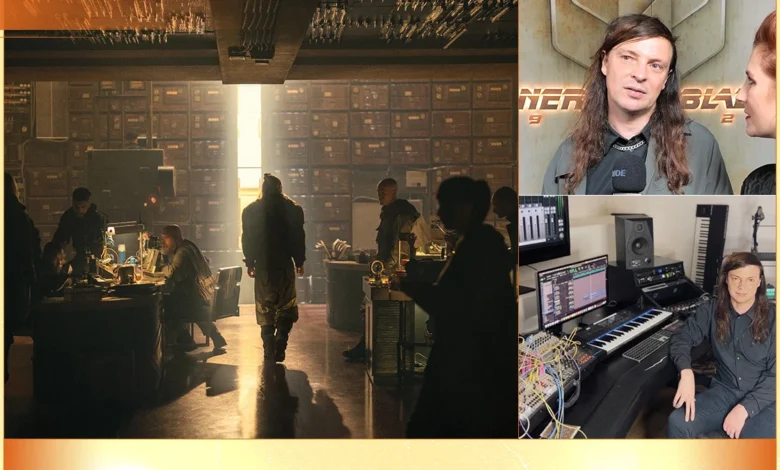
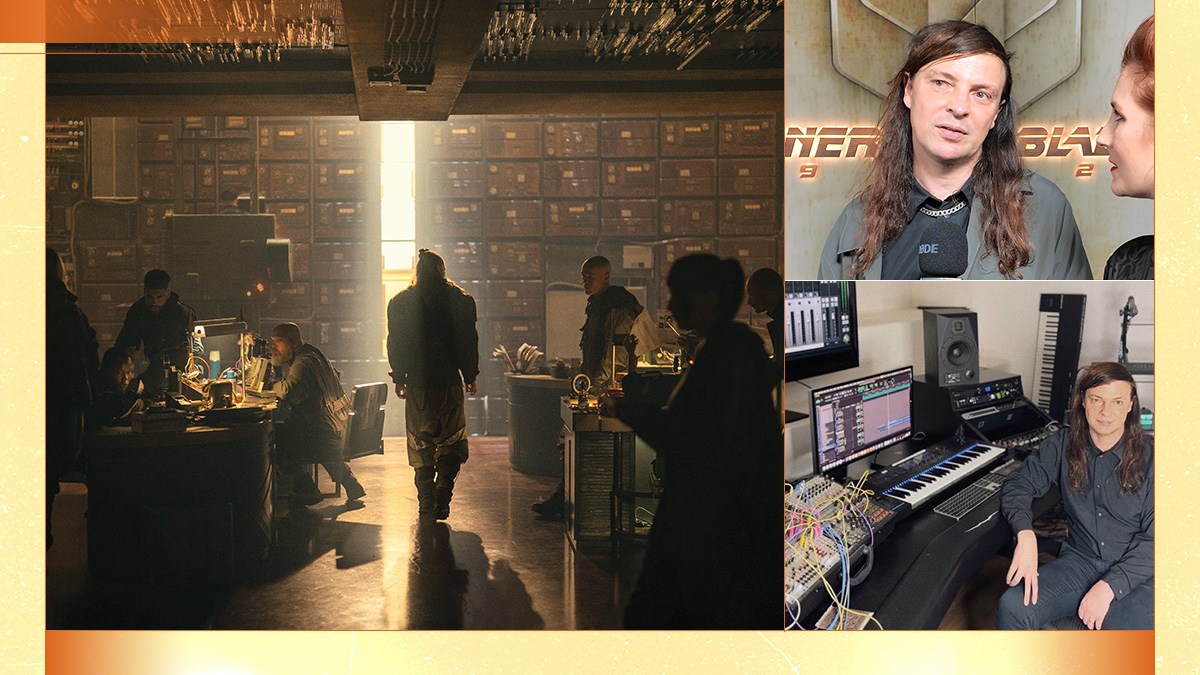
Prime Video’s highly anticipated science fiction series Blade Runner 2099 arrives with the heavy burden of living up to one of the most celebrated cinematic legacies in history. Stepping into the shoes of the legendary Vangelis, composer Leopold Ross has taken on the monumental task of musically defining a dystopian future where the global power dynamic has fundamentally inverted. Set 50 years after the events of Denis Villeneuve’s 2016 film Blade Runner 2049, the new series depicts a society where humanity has been reduced to an underclass, while replicants hold the reins of authority. For Ross, the challenge was not merely to mimic the sonic blueprint established in Ridley Scott’s 1982 original, but to push the franchise into a new technological and emotional epoch.
The evolution of the Blade Runner soundscape has always been intrinsically tied to cutting-edge audio technology. Vangelis famously defined the futuristic atmosphere of the original film by utilizing the Yamaha CS-80, a massive and sophisticated polyphonic synthesizer that was considered state-of-the-art at the time. Speaking on his creative approach to the Prime Video series, Ross revealed that he sought to honor this philosophy by adopting the most advanced musical hardware available today. Rather than relying solely on nostalgic pastiche, Ross aimed to capture what he and showrunner Silka Luisa describe as a distinct "sense of otherness," ensuring that 2099 possesses a unique auditory identity while remaining anchored to the franchise’s rich historical lineage.
A Technological Leap: Sourcing Unreleased Instruments
To achieve a sound distinct from its predecessors, Ross went to extraordinary lengths before production even officially commenced. Upon signing onto the project, the composer contacted boutique synthesizer manufacturer SOMA Laboratory with a covert request for unreleased hardware. The company subsequently provided Ross with a prototype of a synthesizer that had not yet hit the market, a device now commercially known as the Flux. Because the instrument was delivered as a prototype without an accompanying instruction manual, Ross was forced to experiment with it in a state of unguided exploration.
This environment of blissful ignorance heavily influenced the musical motifs associated with the character of Olwen. The prototype synthesizer became the primary vehicle for generating both the chilling, aggressive tones indicative of a predator and the deeply evocative atmospheric textures that underscore Olwen’s narrative arc. By utilizing an instrument that was literally on the bleeding edge of modern synthesizer technology, Ross mirrored Vangelis’s 1982 methodology of employing the newest tools of the era to construct a futuristic world.
Bridging the Organic and the Synthetic
One of the central thematic conflicts of the Blade Runner universe has always been the philosophical and physical blurring of lines between artificial creations and organic life. Ross leaned heavily into this dichotomy by engineering what he calls an "uncanny valley" effect within the score. Throughout the series, listeners are intentionally left questioning the origin of certain sounds: Is a given texture a synthesizer mimicking a human breath, or an organic instrument distorted digitally? Is a vocal element real or artificially generated?
However, to counter the overwhelming dominance of electronic soundscapes in a world governed by replicants, Ross made the deliberate choice to incorporate deeply organic instrumentation to represent the human struggle. Specifically, he utilized the saxophone to anchor the musical themes of the character Cora. The saxophone was selected precisely because its sound is entirely driven by human breath—a physical manifestation of life where the listener can audibly perceive the performer’s inhalation, exertion, and soul.
When Cora experiences heightened emotional states or moments of profound vulnerability, Ross utilizes an unashamed, upfront saxophone performance to cut through the synthetic backdrop. This stark contrast serves as a powerful reminder of human fragility in a world where biological life has been marginalized.
The Emotional Core: Yearning, Loneliness, and PTSD
Beyond the technological innovations and structural inversions of the narrative, Ross’s score deliberately channels complex psychological states. While the original 1982 score is widely remembered for its lush, romantic qualities, Ross noted that it also carried an enduring sense of profound loneliness and introspection. He sought to imbue the 2099 score with these exact emotional frequencies, focusing heavily on the concepts of yearning and isolation.
These themes manifest most clearly through Cora, whom Ross describes as a child of war suffering from post-traumatic stress disorder. As her narrative arc centers on the arduous process of reconnecting with what it means to be fundamentally human, the music reflects her internal struggles. Rather than viewing the score purely through the lens of science fiction tropes, Ross approached it as a deeply human drama about survival, identity, and the ache of remembrance in an increasingly synthetic society.
Chronology and Franchise Background
The release of Blade Runner 2099 on November 25, 2026, marks the latest milestone in a cinematic franchise that spans over four decades. The chronology of the universe began with the original 1982 film directed by Ridley Scott, set in a dystopian, rain-slicked Los Angeles of November 2019. That film established the Tyrell Corporation as the creator of bioengineered beings known as replicants, designed for off-world slave labor, and tasked Harrison Ford’s Rick Deckard with hunting down rogue units.
Thirty-five years later, the universe expanded with Denis Villeneuve’s critically acclaimed sequel, Blade Runner 2049, which explored the aftermath of an apocalyptic blackout that destroyed Tyrell’s digital records and led to the rise of the Wallace Corporation, headed by Jared Leto’s Niander Wallace. The 2049 film shifted the paradigm by introducing replicants capable of natural reproduction, further complicating the philosophical boundary between human and machine.
Now, leaping another half-century forward to the year 2099, the Prime Video series explores the geopolitical and social fallout of a world where the historical power balance has completely inverted. As humans struggle as an underclass under a regime dominated by replicants, the thematic weight of the narrative shifts toward questions of endurance, subjugation, and the residual definition of humanity.
Broader Industry Implications and Reception
The approach taken by Leopold Ross in Blade Runner 2099 highlights a broader trend in modern franchise scoring: balancing fan expectations for nostalgic continuity with the necessity for artistic evolution. In an era where legacy sequels and television adaptations frequently rely on recycled auditory cues to trigger easy recognition, Ross’s methodology demonstrates a commitment to narrative-driven sound design. By refusing to simply recreate Vangelis’s iconic themes and instead investing in new hardware, organic breath-based instrumentation, and psychological depth, the production signals a maturing approach to cyberpunk media scoring.
As audiences tune into Prime Video to experience the world of 2099, the success of the series will undoubtedly rest on how seamlessly its auditory and visual worlds synthesize. Through meticulous soundscaping, custom-built synthetic prototypes, and the raw, emotive wail of a saxophone, Ross has crafted a sonic landscape that honors its monumental heritage while boldly carving out its own distinct place in science fiction history.