Feasting on Fear: A Cinematic History of Thanksgiving Horror and the Evolution of Holiday Subversion

While Halloween and Christmas have long dominated the landscape of seasonal horror, Thanksgiving remains a curiously untapped wellspring for cinematic terror. Despite being a major North American cultural milestone characterized by family gatherings, overindulgence, and historical reflection, the holiday is often overlooked by filmmakers in favor of more overtly supernatural or commercialized events. However, the juxtaposition of domestic tranquility and systemic societal dysfunction makes Thanksgiving an ideal setting for psychological thrillers and slasher narratives. This article examines the historical evolution of Thanksgiving-themed horror, analyzing the thematic underpinnings of key films that have redefined the genre, and considers why this specific holiday offers a unique, albeit underutilized, framework for exploring human malice.

The Anatomy of Holiday Horror: A Cultural Shift
The integration of horror into traditional holidays is a practice rooted in the desire to subvert the comforting, idealized nature of family-centric celebrations. Statistics from film industry analysis suggest that holiday-themed horror movies see a significant spike in streaming viewership during their respective seasons. For instance, films centered on Halloween consistently outperform other subgenres in October, while Christmas horror has become a staple of modern streaming platforms. Thanksgiving, however, occupies a unique space in the calendar, bridging the gap between the autumnal chill of late October and the commercial zenith of December.
Historically, Thanksgiving horror relies on the "broken home" trope. The pressure of maintaining a facade of familial harmony during a holiday centered on gratitude provides a natural friction point for screenwriters. When these expectations collide with external threats—whether they be serial killers, historical reenactors, or psychological manipulators—the resulting tension is amplified by the audience’s own real-world associations with the holiday.

Chronology of Thanksgiving-Themed Horror
The trajectory of the genre can be mapped through several pivotal, albeit diverse, cinematic offerings spanning the last four decades:
- 1981 (Home Sweet Home): Often categorized as "so-bad-it’s-good" cinema, this low-budget slasher established the trope of the escaped psychiatric patient infiltrating a domestic environment. Its cultural impact lies in its unabashed commitment to the slasher archetype, providing a blueprint for later films to build upon.
- 1983/1987 (Blood Rage): Filmed in 1983 but released in 1987, this film introduced the concept of the "evil twin" dynamic, utilizing the Thanksgiving dinner table as a stage for visceral practical effects. Its focus on family dysfunction remains a foundational element of the subgenre.
- 1987 (The Stepfather): While not exclusively a Thanksgiving movie, its central dinner scene is frequently cited by film critics as a masterclass in psychological tension. It highlights the terrifying possibility that the person closest to us, particularly in the context of a "perfect" family unit, may be a complete stranger.
- 1997 (Intensity): Based on Dean Koontz’s novel, this made-for-TV production demonstrated the viability of the home-invasion thriller during the Thanksgiving period. By focusing on a high-stakes cat-and-mouse game, it elevated the stakes from simple slashers to a more nuanced, psychological study of survival.
- 2019 (Escape Room): This film represents a modern shift toward high-concept, survivalist horror. By grounding the narrative in the immediate aftermath of the holiday, it explores themes of systemic trauma and the "final girl" archetype in a contemporary setting.
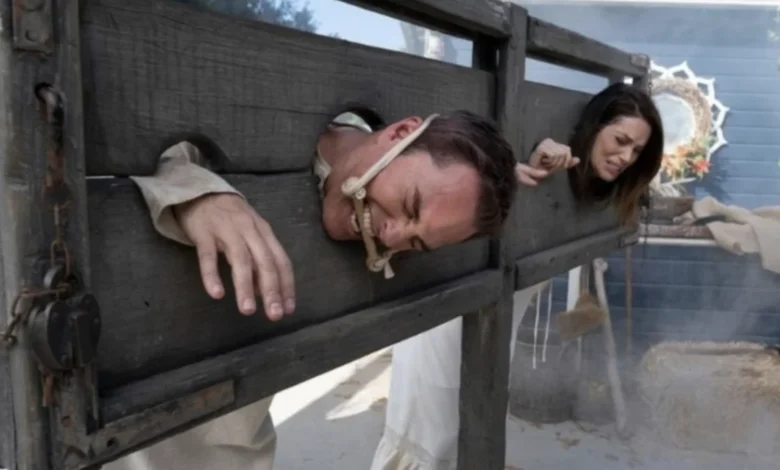
- 2019 (Into the Dark: Pilgrim): As part of an experimental anthology series by Blumhouse and Hulu, this entry explored the dangers of historical obsession. By pitting modern families against 17th-century reenactors, it tapped into the latent anxieties surrounding the holiday’s historical origins.
- 2023 (Thanksgiving): Directed by Eli Roth, this project evolved from a fake trailer in the 2007 Grindhouse anthology. It serves as a modern critique of consumerism, specifically the violent nature of Black Friday retail events, cementing its place as a significant contribution to the genre.
The Intersection of Consumerism and Violence
One of the most profound developments in the Thanksgiving horror subgenre is the inclusion of anti-consumerist themes. The 2023 film Thanksgiving effectively bridges the gap between traditional horror and social commentary. By depicting the violent repercussions of a Black Friday shopping stampede, the film mirrors real-world concerns regarding the commercialization of the holiday. According to industry reports, Black Friday has historically been associated with physical altercations and crowd-control failures at major retail outlets, a reality that filmmakers have begun to exploit to ground their fictional narratives in tangible, recognizable fears.

This thematic shift from the supernatural to the societal reflects a broader trend in horror cinema, where the "villain" is no longer just a masked killer, but the collective greed of society itself. This adds a layer of depth to the viewing experience, transforming a standard slasher into a mirror held up to contemporary cultural values.
The Role of Practical Effects and Psychological Tension
A significant aspect of the longevity of these films, particularly Blood Rage, is the reliance on practical gore effects. In an era where computer-generated imagery (CGI) has become the industry standard, the tactile, "messy" nature of practical effects in 1980s and 90s horror provides a sense of reality that resonates with audiences. These films do not just rely on shock value; they utilize the environment—the kitchen, the dining room, the hearth—to heighten the viewer’s sense of unease.

Psychological thrillers like The Stepfather and Intensity offer a different approach, relying on the performance of the antagonist to drive the narrative. Terry O’Quinn’s performance in The Stepfather is often analyzed for its portrayal of the "American Dream" gone wrong. By positioning the killer as someone desperately attempting to achieve a perfect, idealized family life, the film taps into the fear of performative domesticity.
Critical Analysis and Future Implications
The future of Thanksgiving horror appears to be leaning toward the "prestige" model, where established directors use the holiday as a backdrop for deeper explorations of trauma and societal rot. As audiences become more sophisticated in their consumption of horror, the demand for films that combine high-concept premises with strong character development will likely increase.

From an analytical standpoint, the success of these films hinges on their ability to balance the festive with the fatal. The "Thanksgiving effect"—the period of high stress, forced proximity, and intense familial expectation—provides a fertile ground for conflict. When a narrative successfully navigates these tensions, the resulting horror is not merely about the death of the characters, but the destruction of the holiday itself.
Furthermore, the integration of these films into annual viewing traditions suggests a shift in how audiences relate to the holiday. Just as Die Hard or Gremlins have become non-traditional staples for Christmas, films like Thanksgiving and Blood Rage are carving out their own space in the seasonal lexicon. This ritualistic consumption of horror underscores a cultural need to process the stressors of the holiday season through the cathartic lens of cinema.

Conclusion
Thanksgiving horror is far more than a niche subgenre; it is a vital exploration of the vulnerabilities inherent in our most cherished traditions. By examining the domestic, psychological, and societal pressures that define the holiday, filmmakers have created a body of work that is both entertaining and reflective of our own societal anxieties. Whether through the campy slashers of the 1980s or the modern, socially-conscious thrillers of today, the genre continues to evolve, proving that there is always room for a little terror alongside the turkey. As the genre matures, it will likely continue to draw from the holiday’s rich, albeit complex, history to challenge and entertain audiences for years to come. The enduring appeal of these films lies in their ability to remind us that behind the closed doors of the family home, the most unsettling stories are often the ones closest to our own reality.