The release of Christopher Nolan’s latest cinematic epic, "The Odyssey," has ignited fervent discussion, not only for its ambitious adaptation of Homer’s ancient tale but for its profound contemporary resonance. Nolan, renowned for his intricate narratives and intellectual depth, has masterfully woven a contemporary allegory into the fabric of a story that predates recorded history, drawing parallels between the fall of Bronze Age civilizations and the potential trajectory of our own 21st-century world. The film, which is remarkably faithful to its millennia-old source material, reimagines the arduous journey of Odysseus through the lens of modern anxieties and societal fragmentation, presenting a stark warning about the consequences of eroded civility and the erosion of foundational moral principles.
Nolan’s Vision: A Modern Allegory Rooted in Antiquity
At its core, Nolan’s "The Odyssey" is a profound exploration of a hero’s reckoning with the consequences of his actions. Matt Damon portrays Odysseus, a figure haunted by the immense destruction wrought during the Trojan War. His genius, once celebrated, is now overshadowed by the thousands of lives lost in a city reduced to ashes. The film posits that Odysseus’s journey home is not merely a physical one, but a deeply personal quest for redemption, a reconciliation of his past deeds with his roles as husband and father. This introspective arc aligns with Nolan’s consistent thematic preoccupations, echoing the internal struggles of characters in films like "Oppenheimer."
However, the true innovation of Nolan’s adaptation lies in its departure from a purely personal narrative. By drawing upon historical accounts of the mysterious "Sea Peoples" and the concept of xenia (guest-friendship), Nolan constructs a powerful critique of contemporary societal decay. The film suggests that the ancient world, much like our own, teetered on the brink of collapse due to a gradual abandonment of fundamental ethical codes.
The Shadow of the Sea Peoples: Historical Echoes of Collapse
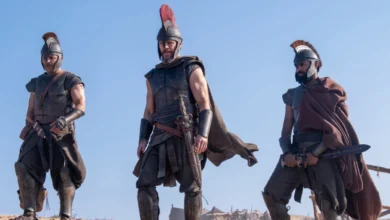
Nolan’s most significant addition to Homer’s narrative is the inclusion of the "Sea Peoples" as a palpable, albeit off-screen, threat. This element is not present in Homer’s original epic but is rooted in historical records of the Late Bronze Age collapse. Penelope (Anne Hathaway) and Telemachus (Tom Holland) allude to this encroaching danger, and the menacing query from a stranger, "Are they the people from the sea?" to Odysseus’s loyal second-in-command Eurylochus (Himesh Patel), underscores the pervasive fear.
The historical "Sea Peoples" were a confederation of maritime raiders who, around the 12th century BCE, launched devastating attacks across the Mediterranean. Their incursions are believed to have played a significant role in the downfall of powerful Bronze Age empires, including the Hittites in Anatolia and the Mycenaean civilization in Greece. While Egypt managed to repel these invaders, records from their temples provide the primary historical evidence of their existence and their terrifying impact. For other civilizations, like the Hittites, their recorded histories simply cease. The Greek world, though it survived, experienced a catastrophic regression into a "Dark Age," characterized by the loss of literacy and a decline in societal complexity, lasting for over 300 years.
Nolan seizes upon this historical enigma, imbuing it with contemporary relevance. The "Sea Peoples" in his film serve as a potent metaphor for the external and internal forces that can destabilize and dismantle even the most advanced civilizations. Their mysterious origins and destructive power mirror the anxieties of a world grappling with globalized threats, economic instability, and the potential for widespread societal breakdown.
Xenia: The Bedrock of Civilization Under Threat
Central to Nolan’s thematic exploration is the ancient Greek concept of xenia, often translated as "guest-friendship" or "ritualized hospitality." In the film, this principle is referred to as "Zeus’s law," emphasizing its divine and fundamental importance. Xenia dictates the sacred duty to treat strangers with honor, respect, and kindness, recognizing a shared humanity that transcends immediate differences. This concept is a precursor to the Golden Rule found in many ethical and religious traditions, including Christianity’s "do unto others as you would have them do unto you."
Historically, xenia served a dual purpose: a pragmatic understanding that hospitality could foster alliances and prevent conflict, and a deeply ingrained moral imperative, partly driven by the fear that a stranger might be a god in disguise or, as in Odysseus’s case, a returning king. Nolan, however, highlights a critical hypocrisy within Homer’s original narrative: Odysseus, who benefits immensely from the hospitality of figures like the Phaeacians, is also depicted as having flagrantly violated xenia himself. His initial offering of a peace gift to the Trojans was, in Nolan’s interpretation, a prelude to the brutal enslavement, rape, and murder of its inhabitants.
This perceived transgression by Odysseus, Nolan argues, set a dangerous precedent. Just as J. Robert Oppenheimer ushered in the atomic age with devastating consequences, Odysseus, in Nolan’s vision, granted his people implicit permission to disregard Zeus’s law. This erosion of civility is evident in the film’s depiction of Trojan War veterans who, in their post-war fervor, mistake strangers for enemies, burning villages and threatening Circe (Samantha Morton) for revealing their inherent brutality. The younger generation, raised on tales of Troy’s fiery demise rather than its noble ideals, further embodies this descent into moral laxity.
The Rise of Antinous: A Caricature of Modern Entitlement
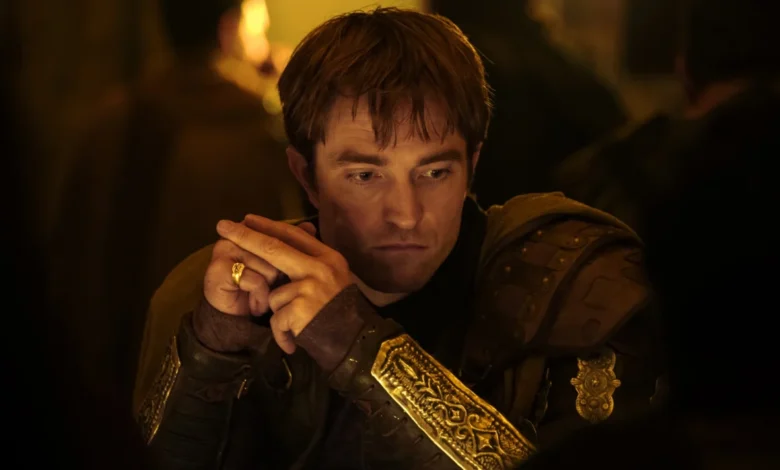
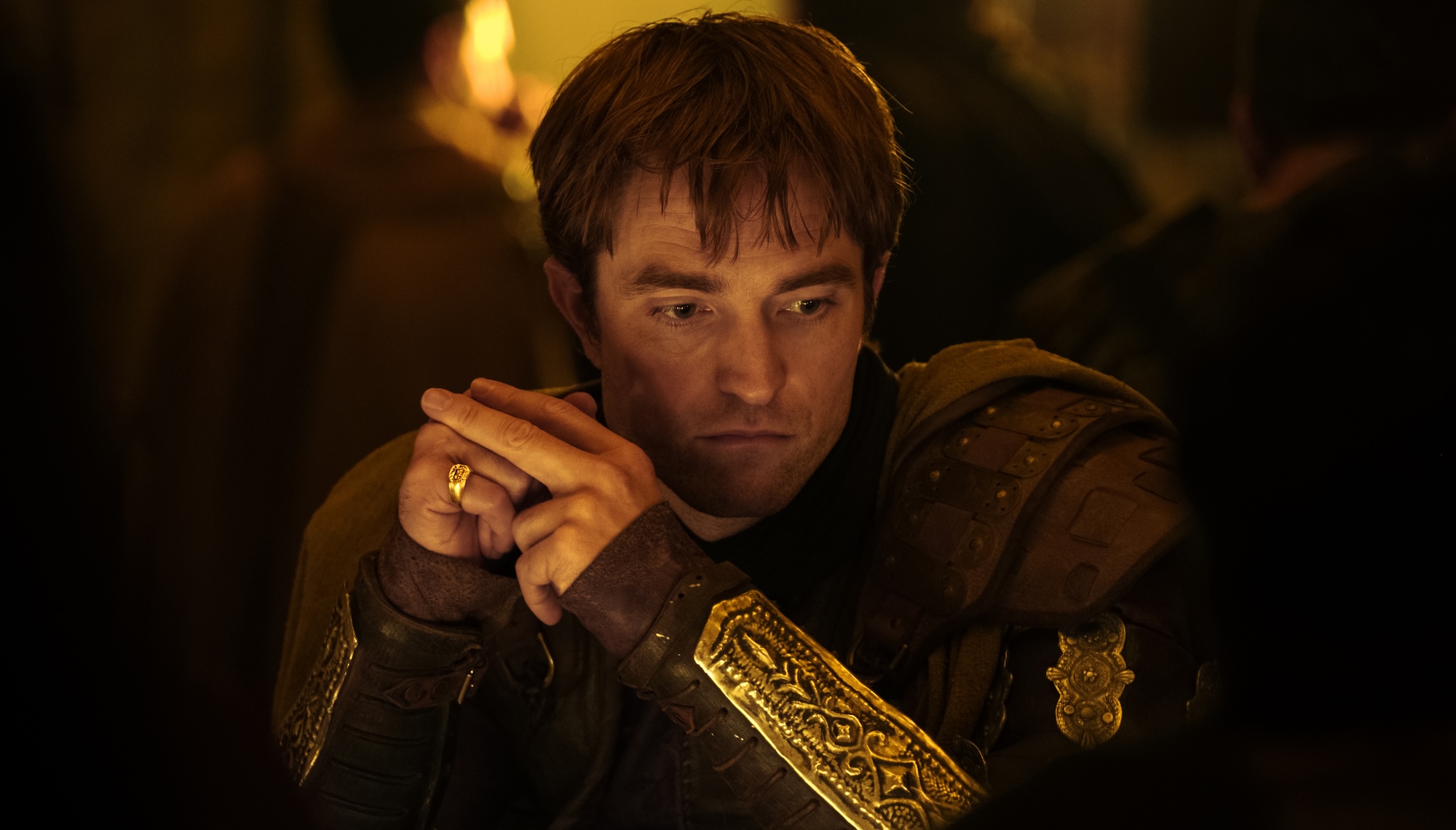
The film vividly illustrates the consequences of this moral decay through the character of Antinous, portrayed with chilling effectiveness by Robert Pattinson. In Homer’s epic, Antinous is a prideful suitor, but Nolan imbues him with a far more insidious nature. He is the epitome of entitlement, a man who did not fight in the Trojan War but seeks to claim its spoils by marrying Odysseus’s wife. His contempt for Odysseus, disguised as a beggar, is palpable. "Filthy beg-GAR!" he sneers, embodying a deep-seated disdain for those less fortunate.
Nolan and Pattinson revel in portraying Antinous as a collection of vices that have, in a post-Trojan War Greece, become perversely celebrated. This characterization serves as a pointed commentary on the rise of similar figures in the 21st century, individuals who leverage their privilege and connections to avoid genuine struggle while reaping undeserved rewards. Nolan’s departure from Homer, by giving Antinous a backstory where he bribed a shepherd’s son, Sinon (Elliot Page), to fight in his place, draws a direct parallel to modern leaders and "strongmen" who evade military service or societal responsibility through wealth and influence.
These are men, the film suggests, who are eager for others’ sons to commit violence on their behalf, who indulge in luxury funded by others, and who covet what rightfully belongs to others. Pattinson’s Antinous becomes a grotesque caricature of these contemporary figures, hiding behind opulent banquets while demanding sacrifices from their subordinates. Odysseus’s chilling declaration to Antinous, "I will give you back your shame," signifies a desire to force such individuals to confront the moral bankruptcy of their actions.
The film draws a direct line from this ancient portrayal to contemporary political figures and societal trends. The marginalization of once-sacred values and the ascendance of sycophancy and opportunism are presented as hallmarks of our current era. The article points to Elon Musk, a prominent critic of Nolan’s film, as an example. Musk’s public statements, including amplifying claims that "The Odyssey" will "destroy Western civilization," while simultaneously lamenting that "the fundamental weakness of Western civilization is empathy," are cited as evidence of this ideological shift. The article highlights the stark irony: a cornerstone of xenia, and indeed Western civilization, is now dismissed as a weakness by some of the world’s wealthiest individuals. The piece further critiques Musk’s alleged actions regarding USAID, suggesting a callous disregard for human life that mirrors the ancient disregard for xenia.
The Crumbling Foundations: A Civilization’s Moral Compass
The narrative culminates in a poignant exchange between Penelope and Telemachus. When Telemachus expresses disbelief that their magnificent kingdom could ever be destroyed, Penelope counters that true greatness lies not in grand structures, but in the character and values of its people. This exchange underscores Nolan’s central thesis: that the erosion of morality, the abandonment of empathy, and the violation of fundamental principles of human dignity are the true architects of societal collapse.
Odysseus’s initial transgression against the Trojans, including the tragic death of a young Trojan girl who becomes a spectral embodiment of Athena in his mind, is portrayed as the catalyst for his civilization’s drift from decency. This act, Nolan suggests, paved the way for the rise of figures like Antinous, individuals who thrive in an environment where empathy for the vulnerable – be it foreigners, the elderly, or the destitute – is met with disdain and hostility.
The Inevitable Reckoning
In Nolan’s "The Odyssey," the descent into barbarism, born from a fractured moral compass and a disregard for shared humanity, is not merely a historical footnote but a prescient warning. The film posits that the collapse of Bronze Age civilizations, exemplified by the mystery of the Sea Peoples, was not an external force of nature but a consequence of internal decay. By revisiting this ancient story through a contemporary lens, Nolan urges audiences to confront the potential for similar self-destruction in our own time. The film’s enduring power lies in its ability to transform an epic poem into a stark, urgent message: that the foundations of civilization are not built on stone and steel, but on the enduring strength of our collective values and our commitment to treating each other with dignity and respect. The fate of our world, like that of ancient Mycenae, may hinge on our willingness to uphold these principles before the tide of chaos overwhelms us.