The landscape of modern independent horror cinema has increasingly found fertile ground in the transition of digital content creators into feature-length filmmaking. Among the latest entries to garner critical discussion within the genre space is Breeder, directed by YouTuber-turned-filmmaker Alex Goyette, also known professionally as JOULETHIEF. The film plunges audiences into a dark, visceral examination of eugenics, drawing sharp parallels between the selective breeding of livestock and the systematic commodification of human beings. Anchored by a commanding lead performance from Dot-Marie Jones and supported by a cast that includes Daniel Doheny and Tanaya Beatty, Breeder attempts to blend atmospheric dread with high-concept social commentary. However, despite its striking visual presentation and early narrative momentum, the project ultimately navigates a complex trajectory regarding its thematic execution, particularly in its polarizing third act.
Narrative Premise and Character Development
The plot of Breeder centers on Russell, portrayed by Daniel Doheny, an academic researcher who made the drastic decision to leave his doctoral program at the Massachusetts Institute of Technology (MIT). Russell chooses instead to dedicate his professional life to an independent environmental project focusing on genetics and the behavioral patterns of honeybees. While his romantic partner, Haley—played by Tanaya Beatty—remains supportive of his non-profit ambitions, the harsh economic realities of scientific research loom large. Without an official doctoral degree, Russell finds himself systematically locked out of crucial institutional grants and private funding opportunities necessary to sustain his work.
The central conflict ignites when Russell receives an unexpected correspondence from Patti, a reclusive and enigmatic dog breeder played with imposing intensity by Dot-Marie Jones. Patti dangles the tantalizing prospect of financial investment to keep Russell’s apiary research afloat, inviting him to her isolated compound for a fateful dinner. Blinded by financial desperation and the potential salvation of his life’s work, Russell accepts the invitation, unaware that Patti’s hospitality masks predatory intentions. Once ensnared within the compound, Russell realizes he has stepped into a terrifying environment governed by twisted biological ideologies, where escape appears increasingly improbable.
Thematic Exploration and Cinematic Influences
From its inception, Breeder establishes a palpable sense of unease, invoking comparisons to contemporary genre works that explore bodily autonomy and systemic horror, such as the "Fur Babies" segment from Christian and Justin Long’s V/H/S/Beyond. Goyette utilizes an introductory sequence to immediately establish Patti’s vocation as a breeder, quickly subverting expectations when it becomes clear her focus extends far beyond traditional canine breeds.
The film confronts audiences with the dark historical shadows of eugenics, echoing real-world atrocities and pseudo-scientific philosophies surrounding selective human reproduction. By translating the standards of Westminster dog shows—where judges meticulously evaluate lineage, physical perfection, and purity of bloodlines—into a human context, Goyette forces viewers to confront the existential horror of systemic elitism. The narrative posits a dystopian reality where an authoritarian hierarchy dictates that only a privileged percentage of society possesses the genetic right to procreate. Goyette relies heavily on a slow-burn directorial style, opting to sustain tension through psychological intimidation and the claustrophobic atmosphere of the compound rather than immediate physical violence.
Performances and Production Design
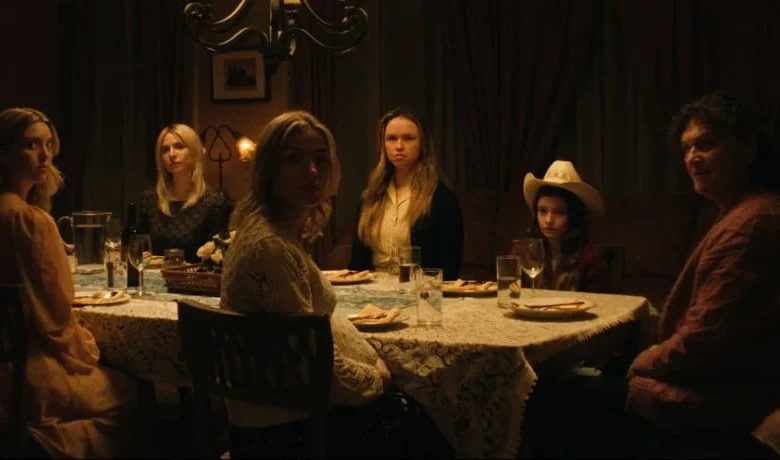
A significant driving force behind the film’s effectiveness is the casting of Dot-Marie Jones as Patti. Bringing a towering physical presence and a championship athletic background to the role, Jones cuts an imposing figure that fills every frame. Patti oversees a structured hierarchy within the compound, managing a stable of young blonde women—led by Maddie Phillips as Ainsley—while maintaining eccentric and unsettling authoritarian protocols, such as demanding to be addressed as "Chief." Critics and audiences have noted Jones’s ability to balance stone-cold brutality with bizarre, offbeat delivery, creating a character who feels like an unpredictable volatile compound.
Daniel Doheny complements Jones’s ferocity with a portrayal of vulnerability and intellectual myopia. As Russell, Doheny embodies the archetype of the obsessive academic who is fundamentally incapable of recognizing external threats until it is too late. The role demands significant physical and emotional commitment, including full-frontal nudity and sequences of intense psychological and physical coercion. Supporting performances, particularly from Maddie Phillips, introduce complex layers of tension, forcing Russell to navigate psychological warfare while pressured to betray his partner back home.
Visually, cinematographer Jaryl Lim employs a distinct aesthetic style that enhances the narrative’s grim tone. The compound is shot with a deliberate, art-house precision reminiscent of modern elevated horror distributors like A24. The visual composition frequently underscores the vulnerability of the characters against the cold, calculated architecture of Patti’s operational domain. The score and sound design further propel the narrative like a slow-burning fuse, maintaining an atmosphere of persistent dread.
Critical Reception and Thematic Resolution
Despite its technical merits and strong initial two acts, Breeder has encountered substantial critical debate regarding its conclusion. As the narrative progresses from a generalized thriller into a direct exploration of black-market human trafficking and white supremacist "master race" ideologies, certain elements of the script have been described by reviewers as increasingly transparent. The film’s messaging—highlighted by Patti’s explicit disdain for non-conforming genetics, her abuse of her sole brunette captive, and her obsession with blue-eyed Aryan ideals—lays its themes out with stark, unfiltered bluntness.
While this directness effectively communicates the repulsive nature of eugenics, the resolution of the narrative has drawn mixed evaluations. Reviewers note that the climax tends to dissipate the tension accumulated over the preceding hour, resulting in a cynical and somewhat lopsided finale. Questions surrounding the motivations of surviving characters, the unresolved trauma of the ordeal, and the narrative logic governing certain character trajectories have led to critiques that the film stumbles in its final execution. Rather than delivering a resonant thematic punch, the conclusion leaves foundational plot threads feeling underdeveloped.
Broader Impact and Implications for Independent Horror
Breeder serves as a notable case study in the evolution of digital-native creators crossing over into traditional feature filmmaking. Alex Goyette demonstrates a clear command of tone, atmospheric pacing, and visual storytelling, proving capable of sustaining audience engagement through discomfort and psychological suspense. The film highlights the viability of indie productions tackling heavy, politically charged themes without shying away from provocative imagery.
Ultimately, Breeder achieves a nuanced industry status as a film defined by its ambitions and its uneven execution. It establishes Goyette as a filmmaker to watch within the horror genre, showcasing strong technical proficiency and an acute awareness of how to provoke viewer discomfort. However, the disconnect between its meticulously crafted first two acts and its confounding resolution underscores the ongoing challenge for psychological thrillers: balancing provocative high-concept social commentary with a cohesive and satisfying narrative payoff. As independent cinema continues to embrace transgressive subject matter, projects like Breeder will undoubtedly inform future discussions on how effectively genre storytelling can interrogate complex historical and ideological horrors.