A Life of Remarkable Reach
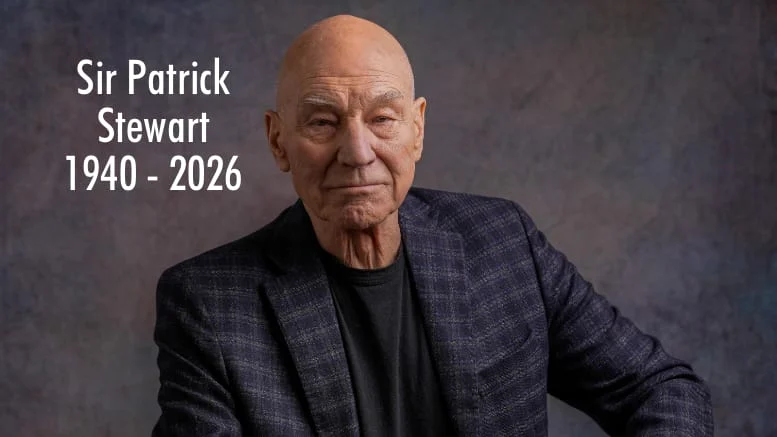
Born in Mirfield, in the West Riding of Yorkshire, England, on July 13, 1940, Patrick Stewart’s trajectory from a modest upbringing to global icon status remains one of the most storied in British acting history. Before he became the face of the U.S.S. Enterprise, Stewart was a pillar of the Royal Shakespeare Company, where he spent years honing the craft that would later give Captain Jean-Luc Picard his signature gravitas. His ability to marry the rigid discipline of classical stage acting with the imaginative demands of space opera allowed him to elevate science fiction into a medium of profound philosophical inquiry.
Throughout his career, Stewart appeared in over 150 television and film productions. His performance as Jean-Luc Picard, beginning in 1987 with Star Trek: The Next Generation, brought a new level of sophistication to the franchise. Unlike the swashbuckling captains of the past, Stewart’s Picard was an intellectual, a diplomat, and a man who favored negotiation over combat. This approach transformed the Star Trek brand, influencing seven seasons of The Next Generation, four feature films, and the critically acclaimed Star Trek: Picard series, which concluded in recent years.
The Chronology of an Iconic Career
The professional timeline of Sir Patrick Stewart is as diverse as it is extensive. His early years were defined by his tenure with the Royal Shakespeare Company from 1966 to 1982, during which he performed in seminal productions of Hamlet, The Tempest, and Antony and Cleopatra.

In 1987, at the age of 47, he made the transition to Los Angeles for the role that would define his public identity. The success of The Next Generation propelled him to international stardom, but Stewart refused to be pigeonholed. By the year 2000, he had successfully integrated into the Marvel Cinematic Universe as Professor Charles Xavier in the X-Men franchise, a role he reprised as recently as 2026. His ability to inhabit these two vastly different yet iconic characters—a diplomat of the stars and a telepathic mentor of mutants—demonstrated a versatility that few actors in history have matched.
A Legacy of Advocacy and Philanthropy
Beyond the screen, Stewart was a tireless advocate for social justice. His work was deeply personal, often rooted in his own experiences. He served as a patron for various organizations dedicated to the support of survivors of domestic violence, frequently speaking out about his own childhood witnessing the abuse of his mother.
His commitment to human rights extended to global refugee initiatives and veterans’ mental health services. Furthermore, Stewart was a vocal champion of animal welfare, with his penchant for fostering "pit bull" type dogs becoming a heartwarming, well-documented aspect of his private life. These efforts were not mere celebrity vanity projects; those who worked with him noted a consistent, quiet dedication to these causes that mirrored his professional professionalism. He was knighted by Queen Elizabeth II in 2010 for his services to drama, a testament to his status as a cultural institution in the United Kingdom.
The Official Announcement and Family Statement
The news of his death was confirmed on Wednesday through official channels, following a period of private struggle with his health. The statement released by his family emphasized the peace and dignity that characterized his final days:

"We announce with great sorrow the passing of Sir Patrick Stewart yesterday at his home in Los Angeles, in the loving care of his beloved wife Sunny, following a brief and poignant journey with Alzheimer’s Disease and Lewy Body Dementia. He has been held in the warm embrace of family and friends, surrounded by live music, prayer, tears, laughter, and the kind of profound emotion that only he could inspire after a lifetime of devotion to us all."
The family’s emphasis on the "invincible grace" with which he faced his illness serves as a final, poignant reflection of the man himself. By choosing to face the finality of his condition with transparency and reflection, Stewart mirrored the very humanity he spent his life portraying on stage and screen.
Industry Impact and Cultural Implications
The passing of Patrick Stewart leaves a void in both the theatrical and science fiction communities that will be difficult to fill. Analysts of the entertainment industry point to Stewart as a primary reason for the mainstream acceptance of "nerd culture" in the 1990s and early 2000s. His presence brought legitimacy to sci-fi, signaling that the genre was capable of hosting complex, adult-oriented drama.
From an economic perspective, Stewart’s involvement in major franchises ensured their longevity. The Star Trek universe, in particular, owes much of its modern-day viability to the foundations he laid. His return to the role of Jean-Luc Picard in the 2020s provided a bridge between the classic fan base and a new generation of viewers, proving that his appeal was not limited by time or technology.

In the Marvel Cinematic Universe, his portrayal of Professor Xavier set the standard for the modern superhero mentor, influencing the way comic book adaptations were handled by studios. The industry-wide reaction to his death has been one of universal mourning, with colleagues from across his sixty-year career praising his punctuality, his encyclopedic knowledge of literature, and his unwavering commitment to his craft.
Personal Reflection and Philosophical Roots
In his 2023 memoir, Making It So, Stewart reflected on the duality of his life—the man from the industrial town of Mirfield and the captain of the Enterprise. He wrote, "Like me, Jean-Luc has lived an unusual life that has taken him far beyond the bounds of normal human experience. But he is also someone who has remained true to his earthbound roots, for they are what gave him his identity. In the end, he feels the call of home, as do I."
This sentiment captures the essence of his public persona. Despite the accolades, the knighthood, and the global fame, Stewart remained a man deeply grounded in his roots. He was a lifelong Huddersfield Football fan and an enthusiast for motor sports, finding joy in the mundane aspects of life as much as he did in the heights of his professional achievements.
Conclusion: A Final Frontier
As the world reflects on the passing of Sir Patrick Stewart, the consensus among critics and fans alike is that he was a rare breed of performer who transcended his roles. He did not merely act; he informed the characters he played with a sense of moral clarity that resonated with millions. Whether it was the Shakespearean stage, the bridge of the Enterprise, or the halls of the Xavier School for Gifted Youngsters, Stewart commanded attention with a voice that was as authoritative as it was compassionate.

The loss of Stewart is more than the loss of a television icon; it is the loss of a public intellectual who used his platform to advocate for the vulnerable. As the tributes continue to pour in from around the globe, the lasting image of Sir Patrick Stewart remains that of a man who looked into the unknown—whether in the far reaches of space or the complexities of the human condition—and encouraged us all to engage with it with courage, empathy, and grace. He has reached his final frontier, leaving behind a body of work that will continue to inspire and entertain for generations to come.