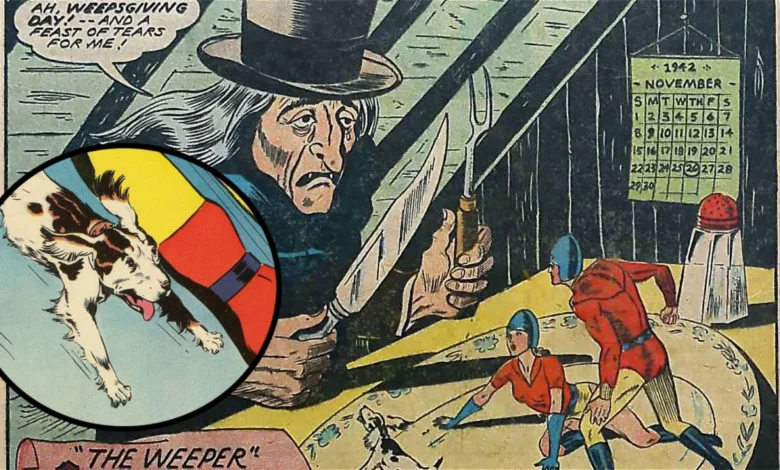
The Golden Age of comic books produced some of the most eccentric, memorable, and enduring characters in the history of sequential art. While caped crusaders, patriotic protectors, and mystery men dominated the newsstands of the early 1940s, Fawcett Publications introduced a uniquely charming innovation that would carve out its own niche in comic book lore: the canine superhero. In late 1942, Fawcett’s Bulletman #10 introduced readers to Bulletdog, widely regarded as the very first dog superhero of the Golden Age. Now, a certified CGC VF 8.0 copy of this historic issue is heading to auction at the upcoming Heritage Auctions event, bringing a piece of whimsical wartime comic book history back into the spotlight.

Main Facts of the Issue and the Upcoming Auction
The auction piece in question, Bulletman #10, published by Fawcett Publications in 1942, features white pages and has achieved a high-grade Universal rating of 8.0 from the Certified Guaranty Company (CGC). According to the CGC census, only 16 Universal copies of this specific issue exist in total, with just three graded at 8.0 and three higher, making this a remarkably scarce vintage collectible.

Artistic attribution for the iconic cover varies slightly depending on the archiving source. Both Heritage Auctions and CGC credit the dynamic cover art to Mac Raboy, while the Grand Comics Database (GCD) tentatively attributes the pencils and inks to Jack Binder. Regardless of the exact artistic hand behind the cover, the imagery of Bulletman, Bulletgirl, and their newly minted canine companion soaring across the sky above a bustling metropolis remains a quintessential snapshot of 1940s superhero fiction. The issue is scheduled to cross the auction block on December 10, during Heritage Auctions’ ongoing vintage comic sales.
Chronology of a Canine Crusader: From Ordinary Pup to Anti-Gravity Hero

The path of Susan Kent’s pet to becoming a costumed crime-fighter unfolded across consecutive issues during a turbulent period in American history. The origins of the character can be traced directly to Bulletman #9, in which Susan Kent—heroine Bulletgirl—acquires a small brown puppy. In this adventure, titled "Case of the Canine Criminals," Bulletman and Bulletgirl find themselves investigating a jewelry store heist executed by an organized pack of dogs controlled remotely via radio waves.
During the chaotic confrontation, the puppy steps up to defend Bulletman from an attacking canine. Subsequent investigation reveals that the puppy’s mother is an unwitting participant in the villain’s mind-controlled pack. By the end of the narrative, the clever puppy actively prevents the human mastermind behind the operation from escaping.

However, the definitive transformation into a true superhero occurred in Bulletman #10, released with a Copyright Office entry date of November 13, 1942—just weeks ahead of the national Thanksgiving holiday on November 26. In this holiday-themed issue, a sinister villain known as "the Weeper" hatches a cruel plot to inflict maximum psychological distress on the citizenry. Declaring that people would remember the holiday as the saddest day of their lives, the Weeper orchestrates a series of sophisticated psychological attacks, including dispatching fraudulent War Department telegrams falsely claiming that local sons had been killed in action.
When the Weeper eventually corners and overpowers Bulletgirl during a later clash, her loyal puppy—having followed the heroes on foot—intervenes by sinking his teeth deep into the villain’s arm. This timely distraction gives Bulletman the opening he needs to turn the tide of the battle. Recognizing the dog’s bravery and recalling his heroics in the previous issue, Bulletgirl proposes outfitting the pup with a specialized anti-gravity collar, granting him the same airborne mobility as their own superhero helmets. Christened "Bulletdog" by Bulletgirl, the newly empowered canine uses the scent from the Weeper’s handkerchief to track down the fleeing villain, ultimately discovering him hiding inside a grandfather clock. Order restored, Bulletdog returns home to enjoy a well-earned Thanksgiving dinner featuring a pair of turkey legs.

Editorial Strategy and the Search for a Permanent Name
Fawcett Publications recognized the immediate commercial appeal of the character and wasted no time weaving him into future promotional material. Even within the pages of the Thanksgiving issue, the publisher was actively advertising subsequent adventures, including a Christmas-themed caper.

Interestingly, the publishing timeline reveals a brief period of moniker experimentation. While the character was officially named Bulletdog in issue #10, promotional and internal production naming conventions varied slightly. In accounts of the subsequent Christmas case featured in issue #11, the pup was referred to as Slug. Seeking to fully engage their youthful readership, Fawcett turned the naming process over to the fans in issue #12, prompting thousands of children across the United States to mail in their suggestions. The winning name, Tracer, was officially announced on page 33 of Master Comics #39, cementing the character’s place in the publisher’s broader shared universe of heroes.
Broader Impact and Historical Context

The debut of Bulletdog offers a fascinating lens through which to examine the evolution of the comic book medium during World War II. During the Golden Age, publishers frequently introduced whimsical, lighthearted elements—ranging from sidekicks and magical imps to super-powered animals—to balance the heavy, war-focused headlines dominating the daily newspapers. Fawcett, a primary competitor to National Periodicals (later DC Comics), built its success on accessible, high-energy adventure tales that appealed directly to younger demographics.
The inclusion of animals with human-level intellects and technological enhancements was part of a broader industry trend. As the superhero genre matured past its initial Superman-inspired boom of 1938, creators sought novel ways to expand existing hero mythos. Giving sidekicks their own pets—and subsequently granting those pets superpowers—foreshadowed a trope that would become immensely popular across the decades in both comic books and animated television.

Market Implications for Vintage Collectors
The appearance of Bulletman #10 in high grade at a major venue like Heritage Auctions underscores the surging market interest in Golden Age rarities, particularly unique thematic milestones such as the first dog superhero. While cornerstone issues featuring Batman, Superman, and Wonder Woman regularly command staggering six- and seven-figure sums, secondary-tier Golden Age books in exceptional condition have seen steady appreciation among dedicated historical collectors.

For vintage paper enthusiasts and Golden Age historians, slabbed copies possessing certified white pages and high numerical grades represent pristine artifacts of a bygone era. As the marketplace continues to place a premium on first appearances and distinctive character milestones, the auction of Bulletman #10 serves as a reminder of the creative exuberance that defined the formative years of the American comic book industry.