Blizzard Entertainment commits to a retro visual overhaul for the controversial Skyborne race in World of Warcraft: Forever

The ongoing challenge of maintaining visual and thematic cohesion within World of Warcraft: Forever has reached a significant turning point as Blizzard Entertainment announces a comprehensive redesign of the Skyborne, the game’s newest playable race. Following weeks of intense community feedback regarding the Skyborne’s high-fidelity aesthetic, which many players argued clashed with the "crunchy," low-polygon art style of the original 2004 MMORPG experience, developers have confirmed a transition toward a more retro-aligned visual model. This decision arrives just ahead of the game’s official launch, scheduled for November 4, marking a pivotal moment in the studio’s efforts to balance modern design expectations with the nostalgic purity requested by the long-standing community.
The Anatomy of the Controversy
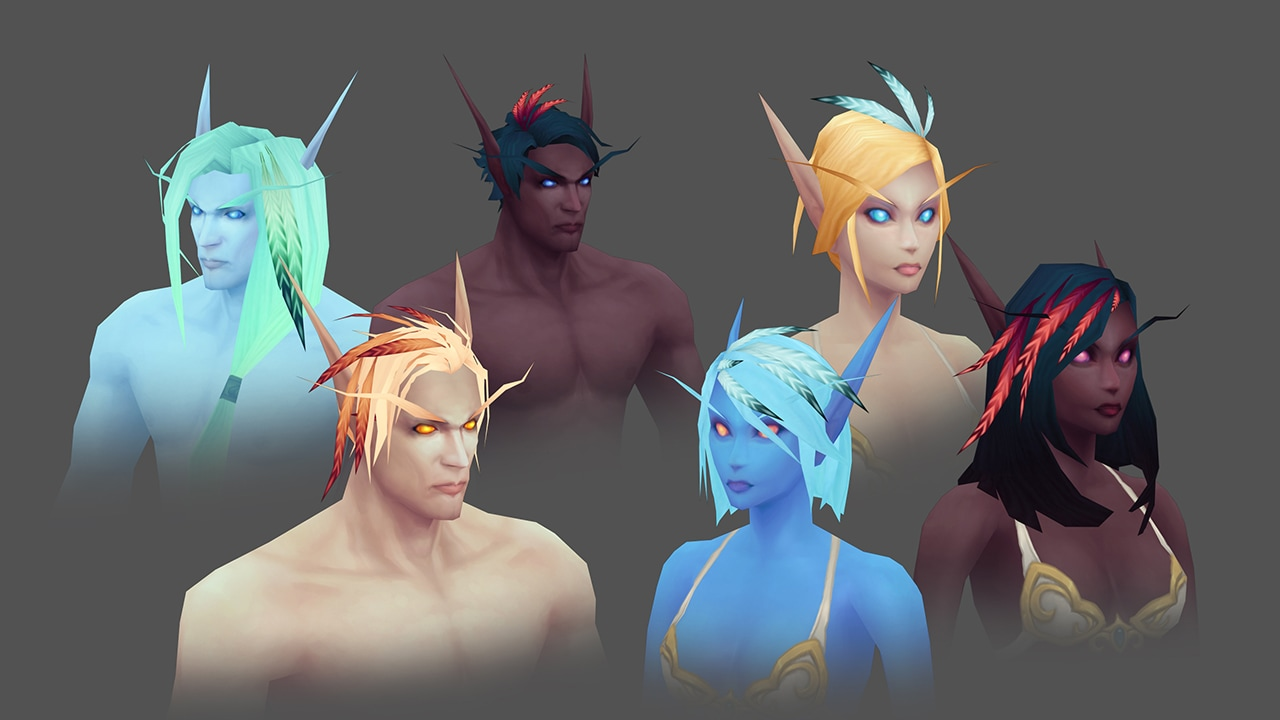
The Skyborne were introduced as an exclusive, premium addition to the World of Warcraft: Forever ecosystem, tied to higher-tier expansion purchases. From their debut, they became a focal point for internal community tension. Lore-wise, the Skyborne are depicted as a faction of High Elves; however, their character models closely resembled the Blood Elves introduced in the 2007 Burning Crusade expansion.
The primary contention stemmed from the visual fidelity gap. While WoW: Forever is built on the foundation of the 2004 classic era, the initial Skyborne models featured smooth surfaces, high-resolution textures, and fluid animations that stood in stark contrast to the legacy character models that populate the rest of the game world. For proponents of the "authentic" classic experience, the presence of these "HD" models was viewed as an immersion-breaking element that threatened the integrity of the game’s aesthetic identity. This debate was exacerbated by the $30 price tag associated with unlocking the race, leading many players to demand that premium content respect the established artistic constraints of the game’s historical setting.
Chronology of the Development Shift
The path to this visual recalibration began almost immediately following the initial reveal of the Skyborne. During the pre-launch testing phases, community forums and social media channels were flooded with comparisons between the Skyborne and original racial models.
- Initial Reveal: The Skyborne are unveiled, featuring sleek, modern textures that immediately draw criticism for being "too clean."
- Community Pushback: Players express concerns that the race feels like an import from a modern expansion rather than a 2004-era asset.
- The Pricing Catalyst: The decision to lock the race behind a $30 paywall intensifies scrutiny, as players hold premium content to a higher standard of thematic consistency.
- Official Acknowledgment: Recognizing the discrepancy, Blizzard issues a formal response via a blog post, admitting the models failed to meet the required "consistency and cohesion."
- The Retro Pivot: Blizzard outlines a two-phase rollout for updated models, focusing first on the "HD" settings before addressing the "SD" (Standard Definition) legacy-style models.
Technical Analysis: Bridging the Fidelity Gap
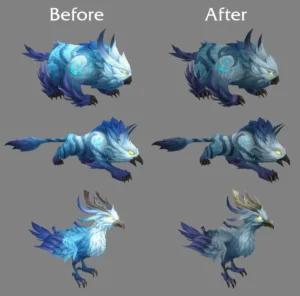
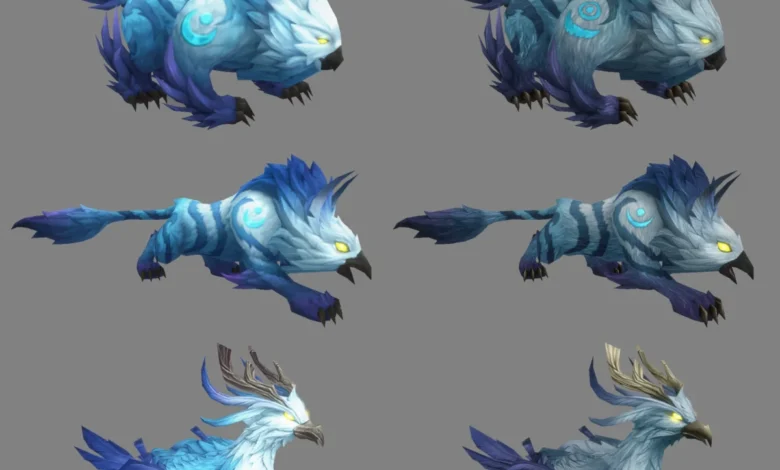
Blizzard’s strategy for the redesign is twofold. For players who utilize the modern "HD" graphics toggle, the studio is adjusting the Skyborne’s textures to incorporate more rigid, defined lines. In the case of the Skyborne druid forms, the updated models feature fur and feather textures with harsher, more angular geometry. This design choice effectively mimics the original game’s aesthetic, where graphical limitations forced artists to prioritize silhouette and distinct, bold color blocks over smooth gradients.
For the segment of the player base that utilizes "SD" mode—a feature designed to replicate the exact visual experience of 2004—the update will arrive in early 2025. Preview images provided by Blizzard demonstrate a commitment to low-polygon counts, jagged edges, and a simplified color palette that mirrors the aesthetic of original races like the Night Elves or Undead. By intentionally "downgrading" the appearance of a premium asset, Blizzard is making a rare concession that prioritizes game-wide consistency over individual model complexity.
Broader Implications for WoW: Forever
This incident serves as a case study in the difficulties of managing a "living" classic service. As Blizzard continues to develop content for World of Warcraft: Forever, the tension between modern quality-of-life improvements and historical fidelity will likely persist.
The studio’s willingness to retroactively modify a paid race is a significant signal to the player base. It suggests that, despite the monetization model, the development team is cognizant of the "Classic" brand’s reliance on aesthetic nostalgia. By aligning new assets with the older visual language, Blizzard is attempting to mitigate the "modernization creep" that many veteran players fear.
Furthermore, this development provides a template for future content releases. If Blizzard can successfully maintain the "crunchy" look of the original game while introducing new narratives and races, it may help alleviate the skepticism that often accompanies new content in legacy-based MMOs. The move also serves as a strategic public relations victory, demonstrating that the development team is listening to user feedback—a crucial element for retaining subscribers who prioritize a specific, curated experience.
Market Context and Player Sentiment
The economic implications of the Skyborne controversy cannot be overlooked. In the current gaming landscape, where microtransactions and premium skins often dominate, the pushback against the Skyborne highlights a unique subset of the market: the "Classic" purist. These players are often willing to pay for access, but only if that access does not compromise the perceived sanctity of the original game environment.
Industry analysts note that Blizzard’s rapid response to the visual critique is a calculated move to ensure a smooth launch on November 4. By addressing the most vocal complaints before the product officially hits the market, the company reduces the risk of negative early reviews and community backlash that could impact long-term retention.
As the launch date approaches, the focus now shifts to whether the "retro makeover" will satisfy the most ardent critics. While the visual update addresses the surface-level concerns, the underlying debate—whether any "new" content truly belongs in the 2004 era—will continue to be a defining characteristic of the World of Warcraft: Forever experience.
Looking Ahead
The commitment to providing a "retro makeover" for the Skyborne is more than a simple texture swap; it is an acknowledgment of the specific cultural contract between Blizzard and the World of Warcraft community. As the game moves out of its beta phase, the success of these updated models will likely set the tone for all subsequent releases.
Blizzard has promised additional updates as the SD models near completion, signaling that the current iteration is part of an iterative design process. This transparency is expected to play a major role in how the community evaluates the future of the game. For now, the focus remains on the November launch, where the Skyborne—in their new, retro-styled form—will finally be introduced to the wider player base. Whether this compromise is sufficient to quell the ongoing debate remains to be seen, but for many, it represents a necessary step in preserving the unique, timeless aesthetic that defined the original World of Warcraft era.
Related posts: