Back in Black Review: Christopher Walken and Ella Ballentine Lead a Darkly Comic Satire on the Economics of Mortality

Death has long been a reliable subject for cinematic exploration, typically approached through the lenses of terror, existential dread, or solemn drama. However, director Ron Murphy’s dark comedy feature, Back in Black, diverges significantly from traditional genre conventions by reframing the grim inevitability of mortality through an economic lens. Set within the seemingly idyllic, sun-drenched confines of North Everett—a fictional community modeled after the nostalgic, small-town Americana of classic television—the film examines the grim financial realities of a family-owned funeral parlor facing imminent bankruptcy. Rather than focusing on the psychological weight of grief, Murphy’s narrative treats fatalities as a vital economic stimulus package for a struggling local business.
The production brings together a distinct ensemble cast, anchored by Academy Award winner Christopher Walken alongside young rising talent Ella Ballentine. Blending the stylistic veneer of a mid-century sitcom with the macabre sensibilities of black comedy, the film attempts a delicate tonal tightrope walk. As it navigates the friction between wholesome suburban aesthetics and calculated manslaughter, Back in Black offers a curious case study in modern satirical filmmaking, examining the absurd lengths to which a devoted granddaughter will go to keep her family afloat.
Main Facts and Narrative Premise
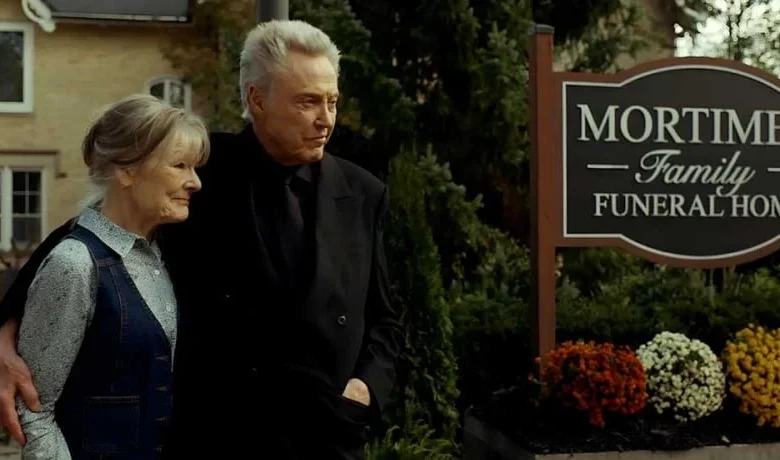
At the center of the narrative is Clyde Mortimer, portrayed by Christopher Walken, the veteran director of North Everett’s legacy funeral home. Once a thriving pillar of the community, the establishment is now hurtling toward financial ruin. The underlying crisis driving the plot is deceptively simple: people in North Everett simply are not dying at a rate sufficient to sustain the business, leaving Clyde vulnerable to mounting pressure and aggressive foreclosure warnings from local bank associates.
Enter Samantha, or Sam, played by Ella Ballentine. Operating as a largely non-verbal, unassuming teenager, Sam devises an unorthodox and lethal solution to her grandfather’s financial distress. Armed with mechanical aptitude and a startling lack of hesitation, she begins engineering a series of elaborate, fatal "freak accidents" across the township. From tampered warning signs and frayed electrical wiring to escaped circus animals and swimming pool electrocutions, Sam systematically increases the fatality rate to drive grieving families directly to the Mortimers’ doorstep.
While the town’s amiable Sheriff Wiley, played by Tony Nappo, remains entirely oblivious to the foul play, Deputy Donna, portrayed by Louise Lambert, slowly begins connecting the dots behind the sudden spike in accidental deaths. Operating under the surface of North Everett’s pleasant exterior is a dynamic that reviewers have likened to "The Andy Griffith Show meets a small-time Dexter," where neighborly hospitality masks a chillingly pragmatic approach to family preservation.
Behind the Scenes and Production Context
Director Ron Murphy, known for his work on projects such as Trailer Park Boys and Wynonna Earp, teamed up with co-writer Nick Torokvei to develop the screenplay for Back in Black. The production relies heavily on contrast, pitting the bright, saturated color palettes typical of traditional family sitcoms against the inherently grim reality of violent suburban deaths.
The supporting cast further grounds the film’s eccentric universe. Jane Curtin stars as Autumn Mortimer, Clyde’s immaculate and steady wife whose primary role as the parlor’s cosmetologist adds an extra layer of ghoulish domesticity to the family trade. Meanwhile, young actor Watson Rose steps in as Autumn’s eager understudy, integrating seamlessly into the bizarrely cheerful household. The production also features Giamo Alfredi as Kevin, a chatty German visitor who serves as a verbal foil to Ballentine’s predominantly silent protagonist.
The thematic core of the film extends beyond mere slapstick violence, taking direct aim at the economic vulnerabilities faced by small-town, independent businesses in modern rural economies. Through Clyde’s interactions with his clientele, the script highlights the commercialization of grief. Cyrus shifts effortlessly from a polished salesman upcharging grieving families for artisan caskets and premium memorial packages to a frustrated patriarch cursing stingy townspeople who opt for budget-conscious alternatives like discount wooden boxes or simple sandwich platters.
Chronology and Escalation of Events
The narrative progression of Back in Black mirrors the escalating stakes of Sam’s clandestine operations. The chronology of the film can be broken down into three distinct phases:
- The Crisis Phase: The narrative opens by establishing the dire financial straits of the Mortimer funeral home. Bank notices pile up, Clyde expresses acute anxiety over impending bankruptcy, and the town of North Everett experiences an abnormal statistical lull in mortality.
- The Intervention Phase: Recognizing her grandfather’s distress, Sam initiates her campaign of engineered accidents. These initial incidents are subtle, designed to blend seamlessly into the statistical noise of everyday rural life, successfully generating a steady stream of clientele and temporarily reviving the business’s cash flow.
- The Escalation and Climax: As Sam becomes bolder, the sophistication and scale of the fatal traps increase dramatically. The narrative transitions from minor structural malfunctions to massive public spectacles, including structural explosions and wild animal encounters. Deputy Donna’s investigation closes in, forcing a convergence of storylines in a third act that resolves the tension between criminal enterprise and family survival.
Critical Reception and Analytical Overview
Upon its release, Back in Black drew a mixed critical response, ultimately securing a respectable 3 out of 5 stars from industry reviewers. Critics have generally praised the film’s ambitious premise and the commitment of its central cast, particularly highlighting Walken’s charismatic delivery and Ballentine’s magnetic, hypnotic screen presence.
However, analytical evaluations note distinct pacing and structural challenges. The dynamic between Ballentine’s intentionally non-verbal character and Alfredi’s loquacious visitor occasionally yields diminishing returns, with certain comedic beats falling flat. Reviewers estimate a roughly 60/40 ratio of successful comedic moments to structural misfires, suggesting that Murphy occasionally struggles to maintain equilibrium between the film’s lighthearted comedic styling and its darker thriller elements.
Despite these minor narrative friction points, the film’s stylistic audacity has been widely acknowledged. By treating severe trauma and loss with detached, sunshiny optimism, Back in Black forces an unconventional emotional response from the audience. The juxtaposition of hacked-up body parts with the innocent, "aw-shucks" demeanor of the perpetrators creates a uniquely disorienting viewing experience.
Broader Economic and Cultural Implications
While framed as a dark comedy, Back in Black touches upon broader, timely conversations regarding the corporatization of end-of-life care and the financial fragility of generational mom-and-pop establishments. The mortuary industry, often insulated by cultural reverence and strict regulatory frameworks, is rarely depicted through the lens of aggressive retail capitalism and upselling tactics.
By tying the physical survival of a small-town family to the untimely demise of their neighbors, the film offers a satirical commentary on community interdependency and economic desperation. It questions the moral compromises individuals are willing to make when basic financial survival is threatened, wrapped safely inside the comforting tropes of retro American television. Ultimately, Back in Black stands out as a curious cinematic experiment—one that prioritizes systemic satire and structural absurdity over traditional moral resolutions, leaving audiences to laugh through a decidedly morbid premise.
Related posts: