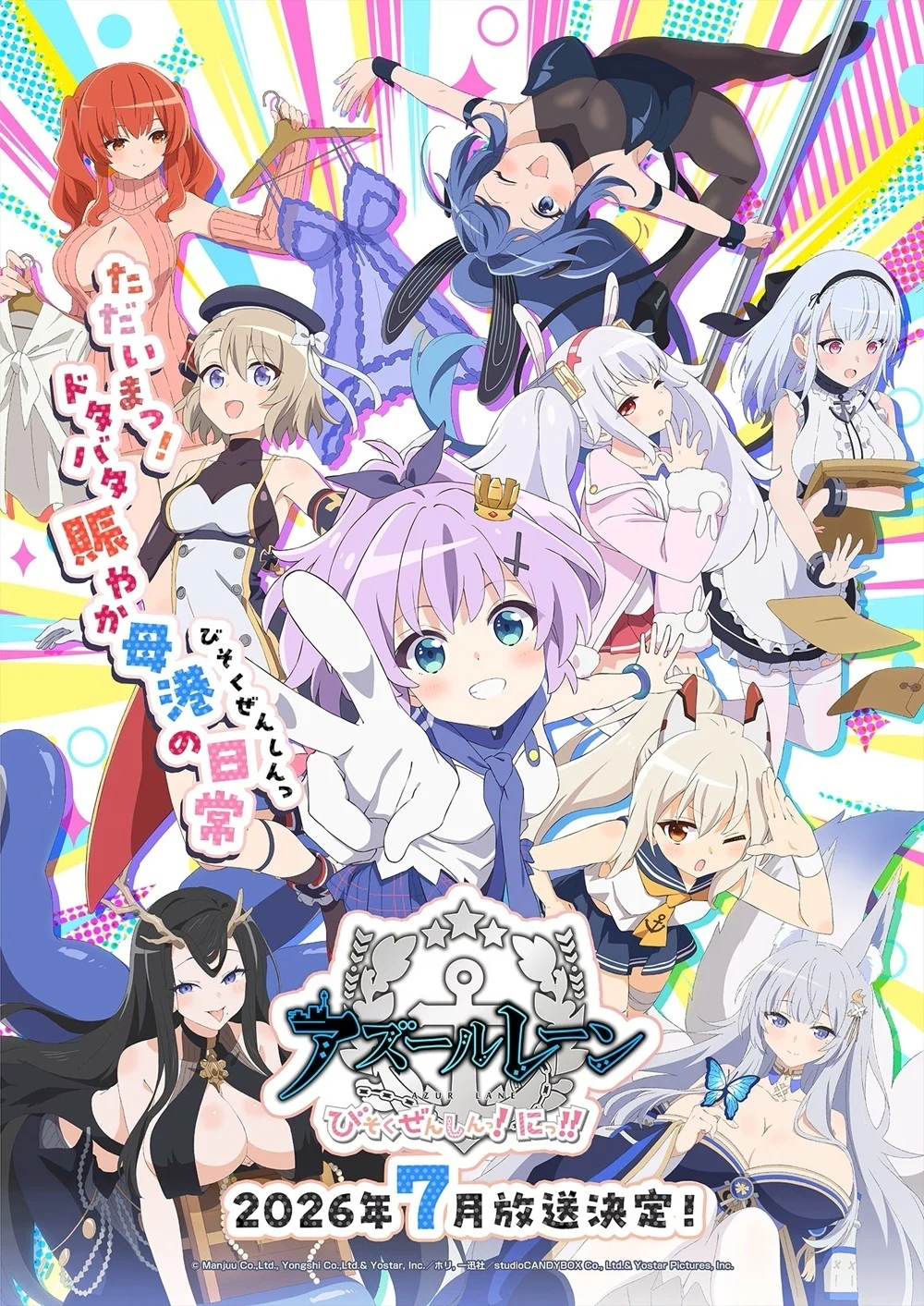
Comprehensive Cast and Character Expansion
The second season of Azur Lane: Bisoku Zenshin! Ni!! introduces a wide array of fan-favorite characters from the mobile game who did not appear in the first season. The casting choices reflect a mix of veteran voice talent and rising stars in the industry, ensuring that the distinct personalities of the Royal Navy, Eagle Union, Sakura Empire, and Sardegna Empire ships are faithfully represented.
Yuu Ayase, known for her role in Frame Arms Girl, joins the cast as the Royal Navy light cruiser Charybdis. Joining her from the Royal Navy contingent are Kaoru Sakura as the heavy cruiser Devonshire and Ruriko Aoki as the formidable light cruiser Dido. The expansion of the Royal Navy roster is a significant draw for the series, as the faction remains one of the most popular within the global Azur Lane player base.
The Eagle Union is represented by one of the game’s most iconic characters, the Iowa-class battleship New Jersey, voiced by Miyu Tomita. Tomita, whose previous high-profile roles include Miko Iino in Kaguya-sama: Love is War, brings a high-energy performance to the "Black Dragon" of the Eagle Union. The Sakura Empire sees the return of the ethereal aircraft carrier Shinano, voiced by the prolific Mamiko Noto, whose soft, melodic voice has become a staple of the anime industry through series like Kimi ni Todoke.
Other notable additions include Yuka Hinata as the Tempesta faction’s Golden Hind and Mizuki Mano as the Royal Navy’s Liverpool. Atsumi Tanezaki, who has recently gained immense acclaim for her portrayal of Frieren in Sousou no Frieren, will voice the Sardegna Empire’s heavy cruiser Zara. The inclusion of Tanezaki underscores the production’s commitment to high-quality voice acting, as her versatility is expected to capture Zara’s confident and mature persona.
Production Staff and Creative Direction
The production of Azur Lane: Bisoku Zenshin! Ni!! sees a transition in leadership while maintaining a core creative team to ensure stylistic continuity. Shunji Maki takes the helm as director for the second season. Maki, who recently served as the assistant director for Blue Archive the Animation, brings experience in managing large casts of female characters within game-to-anime adaptations. The series is being produced at Studio CANDY BOX, which previously co-produced the first season alongside Yostar Pictures.
The screenplay and series composition are being handled by a collaborative effort between Yuu Satou and Hotaru Asafuji. Satou returns from the first season, providing a bridge in tone and narrative structure, while Asafuji brings fresh perspective from his work on Blue Archive the Animation. Character designs and chief animation direction are managed by Nana Mori, whose previous credits include chief animation direction on Dr. Stone: Stone Wars. Mori’s task is to translate Hori’s softer, more rounded manga art style into a fluid animation format that retains the "moe" aesthetic central to the Slow Ahead! brand.
The musical landscape of the series is overseen by composer Fuuga Hatori. Hatori is tasked with creating a soundtrack that complements the relaxed, "iyashikei" (healing) atmosphere of the show. Complementing the background score is the new theme song, titled "Lu lu lun♪ ~Urahara Kibun wa Automatic~," performed by Miyuki Hashimoto. Hashimoto is a veteran J-pop singer with an extensive discography in the anime and visual novel industries, including theme songs for Walkure Romanze and Saki. The song, previewed in the latest promotional video, is a high-tempo, cheerful track that sets the mood for the comedic antics of the shipgirls.
Historical Context and Franchise Evolution
The Azur Lane franchise, originally developed by Chinese developers Manjuu and Yongshi and published by Yostar, has grown into a multi-media juggernaut since its 2017 launch. While the original mobile game focuses on a complex alternate-history narrative involving alien "Sirens" and a global naval war, the Slow Ahead! spin-off serves as a tonal counterpoint.
The manga by Hori began serialization on the official Azur Lane Twitter (now X) account in April 2018. Its popularity led to a physical publication by Ichijinsha, with the fourth volume released in September 2023. The manga’s success is largely attributed to its ability to humanize the shipgirls, focusing on their hobbies, friendships, and the humorous side of living at a naval port.
The first season of the anime adaptation aired during the Winter 2021 season. Comprising 12 short-form episodes, it was praised by fans for its high production values and faithful characterizations. Unlike the 2019 Azur Lane television series by Bibury Animation Studios, which attempted a serious, plot-driven war story to mixed reviews, Slow Ahead! found a dedicated audience by leaning into the "slice-of-life" genre. This success paved the way for the greenlighting of the second season, as Yostar Pictures and CANDY BOX identified a clear demand for more character-driven content.
Chronology of the Azur Lane Media Expansion
To understand the significance of Azur Lane: Bisoku Zenshin! Ni!!, one must look at the timeline of the franchise’s expansion into animation:
- October 2019: The first major anime adaptation, Azur Lane: The Animation, premieres. Produced by Bibury Animation Studios, it focuses on the conflict between the Azur Lane alliance and the Red Axis.
- January 2021: Azur Lane: Bisoku Zenshin! (Season 1) premieres. It introduces the short-form, slice-of-life format that focuses on the four starter ships: Javelin, Laffey, Z23, and Ayanami.
- May 2021: Azur Lane: Queen’s Orders, another manga spin-off focusing on Queen Elizabeth and Warspite, is announced for an OVA adaptation.
- September 2023: The fourth volume of Hori’s manga is published, confirming the continued longevity of the source material.
- May 2024: The official confirmation of the July 6 premiere for Season 2 is released, along with the second PV.
This timeline illustrates a strategic shift by Yostar to diversify its animated offerings, moving from singular, large-scale productions to multiple, specialized series that cater to different segments of the fanbase.
Analysis of Market Implications and Fan Reception
The return of Slow Ahead! is a strategic move for Yostar. In the competitive landscape of mobile game adaptations, maintaining player engagement through "transmedia storytelling" is essential. By providing an anime that focuses on the personalities of the ships, Yostar reinforces the emotional connection players have with their in-game "fleets."
From an industry perspective, the involvement of Studio CANDY BOX and Yostar Pictures highlights the trend of game publishers taking a more direct role in the production of their intellectual properties. By keeping production largely "in-house" or with trusted partners, Yostar ensures that the character designs and lore remain consistent with the game’s established brand. This "Yostar ecosystem" has proven successful not just for Azur Lane, but also for Arknights and Blue Archive, both of which have seen successful anime adaptations under similar production models.
The choice of a 1:00 a.m. time slot on BS11 and Tokyo MX is standard for "late-night anime" targeting an adult demographic—specifically the core "otaku" audience that plays the mobile game. This demographic is known for high engagement rates and a willingness to purchase physical media and merchandise, making the series a low-risk, high-reward venture for the production committee.
Technical Specifications and Global Accessibility
The second promotional video showcases a refinement in the digital compositing and color palette, leaning into bright, saturated tones that evoke a summer-like atmosphere. The animation style remains consistent with the "chibi-adjacent" but technically detailed look of the first season. Each character is rendered with their iconic riggings and outfits from the game, providing a visual feast for long-time players.
For international audiences, the first season was licensed and streamed by Crunchyroll. While a formal announcement for the second season’s international streaming rights has not been finalized at the time of writing, it is widely anticipated that Crunchyroll or a similar major platform will provide simulcast services with subtitles in multiple languages. Given the global popularity of the Azur Lane game, particularly in North America, Southeast Asia, and Europe, a worldwide release is a commercial necessity.
Conclusion and Future Outlook
Azur Lane: Bisoku Zenshin! Ni!! represents more than just a seasonal sequel; it is a testament to the enduring popularity of the Azur Lane characters and the effective collaboration between manga artists, game developers, and animation studios. As the July 6 premiere approaches, the anticipation among the community remains high. The addition of high-tier voice actors like Atsumi Tanezaki and Miyu Tomita suggests that the production is sparing no expense to make this season even more impactful than the first.
With the "Slow Ahead!" format proving to be the preferred method of adaptation for many fans, the success of this second season could potentially lead to further adaptations of other Azur Lane manga, such as Queen’s Orders or the more action-oriented Anthology series. For now, fans can look forward to a summer of lighthearted comedy, naval camaraderie, and the continued adventures of the world’s most famous warships reimagined as anime heroines.