Pool of Radiance Ruins of Myth Drannor Returns to Modern Systems Following Its Infamous 2001 Launch

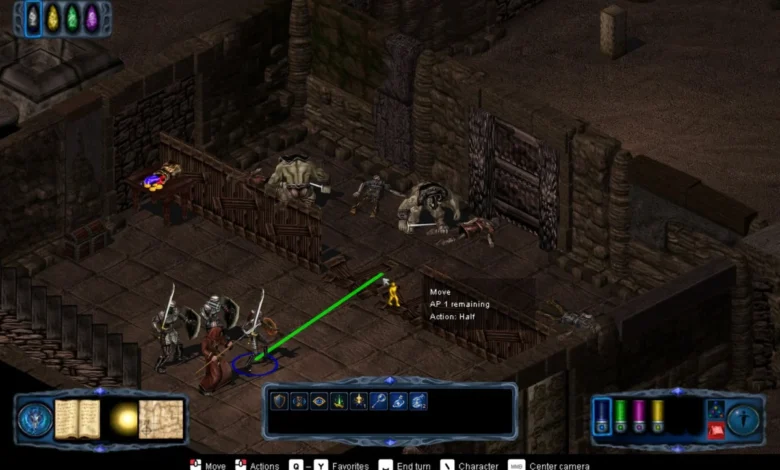
The release of Pool of Radiance: Ruins of Myth Drannor in 2001 remains a landmark case study in software instability and the perils of rushed development cycles within the computer role-playing game (CRPG) industry. More than two decades after its initial launch, the title has returned to digital storefronts via a modernized rerelease by SNEG, now available on Steam and GOG. This release attempts to rehabilitate a project that, at the time of its debut, was widely compared to the catastrophic launch of Daikatana, setting a standard for consumer frustration that few games have managed to reach before or since.
A Legacy of Technical Failure
When SSI (Strategic Simulations, Inc.) first published the game, it was anticipated as a grand revival of the legendary Gold Box series that defined Dungeons & Dragons (D&D) gaming in the 1980s. However, the retail version was crippled by profound technical defects. Reports from the period detail a suite of catastrophic issues, including corrupted save files, the spontaneous disappearance of essential quest items, and a particularly egregious bug in the uninstaller that could delete system-level files, effectively rendering the host computer inoperable.
These issues were not merely minor annoyances; they represented a fundamental breakdown in quality assurance. In the early 2000s, the lack of widespread high-speed internet meant that day-one patches were not the industry standard they are today. Consequently, many players were left with a non-functional product, leading to a wave of criticism that tarnished the reputation of the developers involved. The industry at large viewed the game as a cautionary tale regarding the transition of tabletop rulesets into complex, three-dimensional digital environments.
The Modern Re-release: Addressing Historical Grievances
The current iteration of the game, published by SNEG, represents a significant departure from the 2001 release in terms of stability. By leveraging modern emulation and compatibility layers, the developers have successfully mitigated the critical errors that once plagued the software. The new build includes support for widescreen resolutions, improved controller mapping, adjustable combat speeds to alleviate the game’s slow pacing, and modern quality-of-life additions like contextual tooltips and a refined action bar.
For those who avoided the title due to its historical reputation, the game is now functionally sound. Testing confirms that key quest items remain persistent, and save file integrity is maintained throughout the opening chapters—a far cry from the volatility of the original release.
Dungeons & Dragons: The 3.0 Ruleset Transition
Contextually, Pool of Radiance: Ruins of Myth Drannor was an attempt to showcase the then-new 3rd Edition (3.0) D&D ruleset. At the time, the transition from 2nd Edition AD&D to 3.0 was a seismic shift for the tabletop community. The new rules replaced the counter-intuitive "THAC0" and descending Armor Class (AC) system with a more streamlined d20-based mechanic, where higher numbers were universally better and combat was governed by a unified difficulty score system.
The game effectively served as a digital proof-of-concept for these mechanics. Features such as the ability to choose classes more flexibly and the standardization of attribute modifiers were revolutionary for the time. However, critics noted that the game failed to implement the full depth of the 3.0 rulebook. Players were restricted in their character creation choices—such as being forced to play as a Sorcerer rather than a Wizard—and the game lacked the granular skill point allocation and feat progression that defined the tabletop experience.
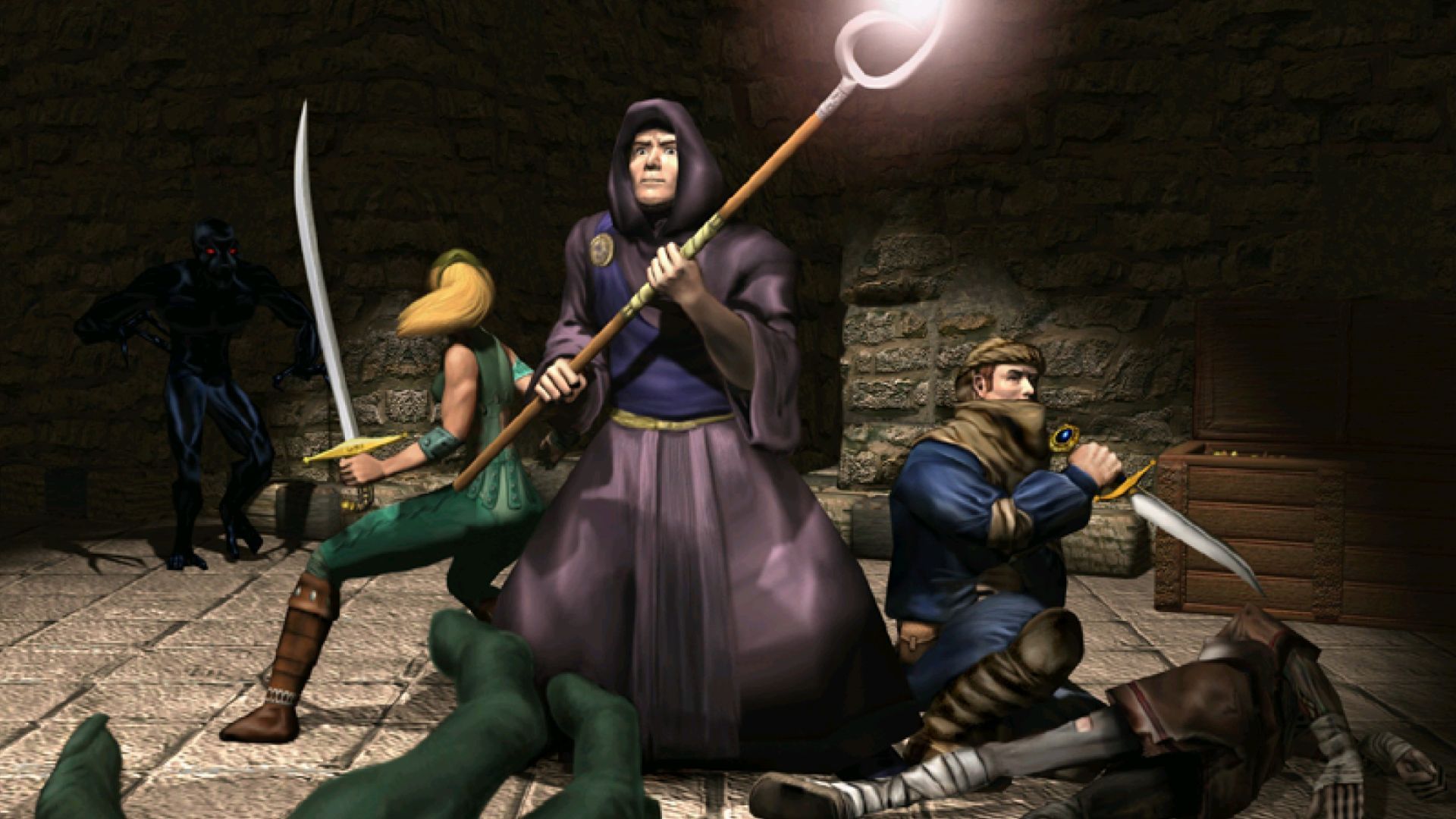
Comparatively, the 2003 release of The Temple of Elemental Evil, developed by Troika Games, would later succeed where Ruins of Myth Drannor faltered. By adapting the 3.5 ruleset with greater precision, Temple of Elemental Evil became the gold standard for D&D adaptations, making the rudimentary systems in Myth Drannor appear even more dated by comparison.
Narrative Framework and Gameplay Mechanics
The narrative of the game acts as a direct, albeit thin, sequel to the original 1988 Pool of Radiance. Set in the desolate elven city of Myth Drannor, the plot follows a party of adventurers tasked with investigating a resurgence of evil, centered around a dracolich and an ambitious sorceress.
The player assumes the role of a "B-team"—a group of backup adventurers who arrive at the ruins only to discover their predecessors have been neutralized by a portal malfunction. This narrative device serves to explain why the player starts at level one, tasked with clearing a massive, sprawling dungeon. The gameplay loop is heavily focused on tactical, turn-based combat against waves of undead and orcs. While the combat is repetitive, it provides a functional, low-stakes experience that adheres to the fundamental pillars of D&D combat: movement, spellcasting, and the management of "Turn Undead" abilities.
Broader Implications for Historical Preservation
The re-release of Ruins of Myth Drannor raises important questions regarding the preservation of "failed" games. In the gaming industry, there is a tendency to focus on re-releasing masterpieces, yet there is significant value in maintaining access to titles that, while flawed, represent a specific period in technological history.
By bringing this game to modern systems, SNEG has allowed a new generation of players to experience a piece of D&D gaming history without the risk of system-level corruption. It is an acknowledgment that even titles with difficult legacies deserve to be playable. From a development perspective, the process of modernizing the game underscores how far compatibility technology has come. What was once considered a "broken" experience is now simply a dated, linear dungeon crawler.
Industry Reception and Legacy
The release is unlikely to change the critical consensus that the game is an imperfect product. It does not possess the narrative nuance of contemporaries like Baldur’s Gate or the mechanical rigor of later CRPGs. However, the restoration provides a "junk food" RPG experience—a term often used to describe games that offer simple, repeatable pleasures without the need for intense intellectual investment.
As the industry continues to move toward digital distribution, the ability to patch and update titles has mitigated the risk of a "Myth Drannor scenario" recurring on the same scale. The modern gaming landscape has little tolerance for the catastrophic instability that defined the 2001 launch. Nevertheless, the successful rehabilitation of this title serves as a reminder of the importance of quality assurance and the necessity of documentation in software development.
Ultimately, while Pool of Radiance: Ruins of Myth Drannor will likely never be remembered as an RPG masterpiece, its return to the digital stage is a triumph of technical preservation. It allows players to experience the game as it was intended to be played, free from the bugs that defined its initial, turbulent entry into the annals of gaming history. Whether viewed as a historical curiosity or a casual dungeon-crawling diversion, the title now stands as a functional, albeit basic, representative of a transformative era for tabletop-to-digital adaptations.
Related posts: