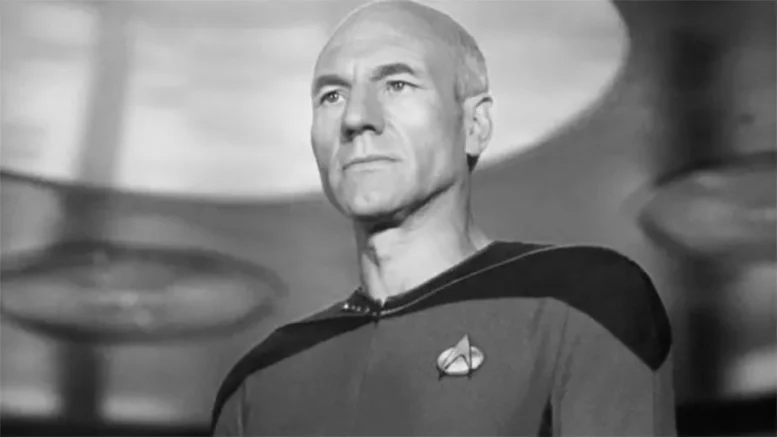
Sir Patrick Stewart, the celebrated stage and screen actor whose portrayal of Captain Jean-Luc Picard redefined the landscape of science fiction television, passed away this week at the age of 86. His death, confirmed to be the result of complications from Alzheimer’s disease and Lewy body dementia, marks the end of a prolific seven-decade career that traversed the highest echelons of classical theater and the most popular corners of global pop culture. While his credits include iconic roles as Professor Charles Xavier in the X-Men franchise and Captain Ahab in Moby Dick, it is his tenure as the diplomatic, philosophical, and resolute commander of the USS Enterprise that remains his most profound contribution to the arts.
A Chronology of a Storied Career
Born in 1940 in Mirfield, West Yorkshire, Stewart’s journey to international stardom began not in front of a camera, but on the wooden boards of British repertory theater. By 19, he was training at the Bristol Old Vic, a crucible that would eventually lead him to the Royal Shakespeare Company in the 1960s. For nearly two decades, Stewart was defined by his rigorous classical training, mastering the works of Shakespeare and becoming a staple of the British stage.

His transition to American television in the late 1980s was considered an unconventional gamble by industry standards. When Gene Roddenberry cast the classically trained, bald, 47-year-old Englishman as the lead of Star Trek: The Next Generation (TNG), it defied the established conventions of the time, which favored younger, more traditional leading men. Despite initial skepticism from network executives and even his own producer, Stewart’s presence provided the gravitas necessary to transform a syndicated sequel into a cultural phenomenon.
The timeline of his Star Trek involvement is extensive:
- 1987: Premiered as Captain Jean-Luc Picard in Star Trek: The Next Generation.
- 1994: TNG concludes after seven seasons and 178 episodes, reaching a historic series finale audience of 31 million viewers.
- 1994–2002: Stewart starred in four feature films: Generations, First Contact, Insurrection, and Nemesis.
- 2020–2023: Returned to the franchise for the three-season sequel series Star Trek: Picard, culminating in a critically acclaimed final season.
The Anatomy of an Icon: Beyond the Bridge
Stewart’s portrayal of Picard was instrumental in steering Star Trek away from the swashbuckling, action-oriented tone of the original 1960s series toward a more cerebral, diplomatic, and humanistic approach. Episodes such as "The Measure of a Man"—in which he argued for the sentient rights of his android colleague, Data—and "The Inner Light"—a poignant exploration of mortality and memory—showcased a level of dramatic range rarely afforded to actors in science fiction.

His work on TNG served as a catalyst for his broader career. Following the conclusion of the series, Stewart utilized his elevated profile to navigate high-stakes roles in major film franchises. His tenure as Professor Charles Xavier in the X-Men series spanned over two decades, introducing his commanding screen presence to a new generation of cinema-goers. Furthermore, his collaborative relationship with Seth MacFarlane led to his long-standing role as the voice of Avery Bullock on American Dad!, demonstrating a versatility that ranged from Shakespearean tragedy to irreverent adult animation.
Advocacy and Personal Convictions
Beyond his professional achievements, Stewart was a vocal advocate for humanitarian causes, most notably the fight against domestic violence. Drawing from his own childhood experiences, he served as a prominent ambassador for organizations like Amnesty International and Refuge. He consistently used his platform to speak on the systemic failures that often force survivors to stay in abusive environments.
His commitment to these causes was not merely performative; it was deeply personal. Stewart frequently integrated his philanthropic interests into his professional life, including his time on Star Trek: Picard, where he ensured that themes of social justice, trauma, and recovery were woven into the narrative fabric of the show. His dedication to animal welfare, particularly his work fostering pit bulls, also became a defining aspect of his public persona, often shared with his global audience to combat the stigma surrounding the breed.

Industry Impact and Official Context
The significance of Stewart’s impact on television cannot be overstated. When he joined the cast of TNG, the concept of a syndicated science fiction series being a "prestige" project was virtually unheard of. Through his leadership, the show garnered multiple Emmy and Hugo awards, proving that high-concept science fiction could tackle complex social issues, philosophy, and political theory.
Reflecting on the casting process, former executive producer Rick Berman noted in the recent podcast Dropping Names that Stewart’s acquisition was a battle of wills against the late Gene Roddenberry. "We had to talk him into Patrick Stewart," Berman recalled, emphasizing that it was Stewart’s unique combination of stage-trained authority and screen presence that ultimately won over the network.
The industry at large is mourning the loss of a titan. Fellow actors and creative partners have noted his rigorous work ethic and his reputation as a mentor. His TNG co-stars, including Jonathan Frakes and Brent Spiner, have often cited Stewart as the anchor of the Enterprise bridge—both on-screen and off. The final season of Star Trek: Picard, which saw the entire TNG cast reunite for a final mission, serves as a fitting testament to the camaraderie he fostered throughout his decades in the franchise.

The Legacy of Leadership
As the news of his passing circulates, the analysis of his career turns to his enduring influence on modern acting. Stewart’s ability to command a room, whether through a Shakespearean soliloquy or a command to "Engage!" at the helm of a starship, established a gold standard for leadership roles in media.
The implications of his passing extend beyond the loss of a talented performer; it marks the conclusion of a bridge between the golden age of classical theater and the modern era of franchise-driven content. Stewart proved that an actor could be both a serious proponent of the classics and a beloved figure in popular culture, never compromising his integrity in the pursuit of either.
For fans of Star Trek, his legacy is inextricably linked to the optimism and intellectual curiosity of Jean-Luc Picard. As the franchise continues to evolve, the blueprint for a "captain" remains firmly rooted in the standard Stewart set: one of empathy, moral fortitude, and unwavering courage.

Sir Patrick Stewart is survived by his family, friends, and a global community of admirers who found inspiration in his work. While his voice has been silenced, the body of work he leaves behind remains a cornerstone of 21st-century entertainment. Whether through the lens of a futuristic diplomat or the pages of a Shakespearean script, his contribution to the arts ensures that his influence will continue to resonate for generations to come. The final act of his life was one defined by the same grace and gravitas he brought to every role, and the world is undeniably better for his having graced it.