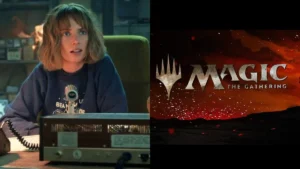
The upcoming live-action cinematic adaptation of Wizards of the Coast’s enduring cultural phenomenon, Magic: The Gathering, has officially secured its first major talent acquisition. Production banners Legendary Entertainment and Hasbro have announced that Stranger Things breakout star Maya Hawke has joined the feature’s developing roster. While this casting instantly infuses the project with critical genre credibility, industry insiders and tabletop gaming enthusiasts alike are focusing on a more granular detail revealed alongside the announcement: the film is being constructed as an ensemble piece. For a franchise whose decades-long narrative and gameplay loops rely heavily on a diverse tapestry of powerful, multi-dimensional characters, this foundational creative choice indicates that the production team is prioritizing narrative authenticity right from the earliest stages of pre-production.
Background Context and Intellectual Property Evolution
First introduced to the public in 1993 by creator Richard Garfield, Magic: The Gathering (MTG) revolutionized the tabletop gaming industry by pioneering the modern trading card game (TCG) genre. Over the course of more than thirty years, the property has expanded from a simple fantasy card game into a sprawling multimedia powerhouse, boasting an estimated tens of millions of active players worldwide.
The backbone of MTG’s commercial and narrative success is its expansive lore, which unfolds across a vast multiverse made up of distinct planes of existence. Unlike traditional static fantasy settings, the core protagonists and antagonists of the Magic universe are "planeswalkers"—exceptionally powerful beings who possess a latent supernatural spark enabling them to travel freely between these diverse worlds. Iconic planeswalkers such as Jace Beleren, a master of telepathic illusion and memory manipulation, and Chandra Nalaar, a fiery pyromancer, have served as the anchors for countless novels, digital expansions, and comic book series.
Translating this sprawling, multi-planar mythology to the silver screen has been a notoriously difficult puzzle for Hollywood studios. For over a decade, various iterations of a cinematic or television adaptation have stalled in development hell, with studios struggling to find a narrative entry point that satisfies both hardcore tabletop veterans and casual moviegoers unfamiliar with the intricacies of the stack, the mana curve, or the lore of the Gatewatch.
The Chronology of the Production and the Director’s Vision
The journey toward a viable Magic: The Gathering film has been marked by false starts and shifting corporate strategies. Hasbro’s cinematic arm, working in tandem with major studio partners, has spent years attempting to bring the intellectual property to life. The current momentum solidified when filmmaker Matt Johnson—acclaimed for his distinct style in works like Tony and Blackberry—was attached to direct the project.
However, Johnson’s distinct independent filmmaking background has sparked intense speculation regarding the scale and scope of the adaptation. In previous interviews concerning his cinematic philosophy, Johnson has openly noted a preference for grounded, character-driven storytelling over heavily CGI-dependent, multi-hundred-million-dollar blockbusters. This creative stance introduced a compelling paradox for fans: how does a director known for intimate, scrappy productions tackle a multiverse-spanning fantasy epic populated by god-like entities?
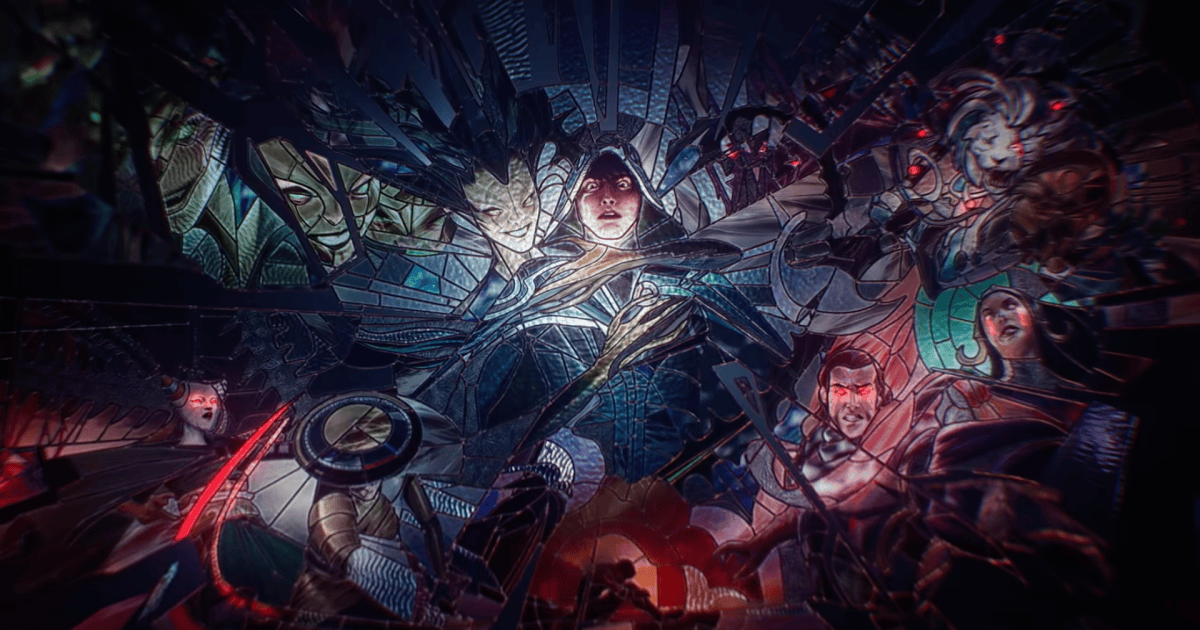
The recent casting confirmation of Maya Hawke, coupled with reports from industry trades indicating an ensemble-focused narrative, suggests a pragmatic middle ground. Rather than attempting to cram thirty years of dense multiversal lore into a single two-hour runtime, the production appears to be leaning into an interdependent group dynamic. This structure mirrors the cooperative nature of the game itself, where victory is rarely achieved by a single solitary force, but rather through the strategic synergy of multiple elements.
Speculation and Potential Narrative Frameworks
With Hawke officially cast, fan speculation has reached a fever pitch regarding which specific figures from the MTG pantheon she might portray. Observers have theorized about potential roles ranging from iconic elemental spellcasters to lethal necromancers like Liliana Vess.
Yet, a more compelling narrative avenue exists within the game’s modern lore: the "Battle for Zendikar" arc and the formation of the Gatewatch. In this seminal storyline, a coalition of planeswalkers bands together to protect the Multiverse from cosmic, existential threats that no single hero could conquer alone. This narrative template provides a built-in franchise roadmap. It naturally accommodates an ensemble cast, allows for distinct character arcs, and establishes clear stakes that can easily expand into sequels or interconnected spin-offs.
Conversely, some industry analysts suggest that Johnson might circumvent traditional high-fantasy tropes entirely by introducing a meta-narrative element—perhaps bringing the fantastical elements into contact with real-world players, or focusing intimately on the human subculture that surrounds the competitive TCG scene. Precedents for this style of storytelling already exist within popular media; acclaimed manga series such as Destroy All Humans: They Can’t Be Regenerated have proven that the deeply human drama, rivalry, and camaraderie found at local game store tables can be just as compelling as magical combat across distant dimensions.
Implications and Broader Industry Impact
The strategic decision to build an ensemble cast rather than anchoring the entire story on a single, isolated protagonist carries significant implications for the success of the film. By assembling a diverse collective of characters, the production mitigates the risk of alienating audiences who may find dense fantasy exposition overwhelming. Ensemble-driven blockbusters, when executed effectively, distribute the narrative weight evenly, allowing multiple audience demographics to find a point of emotional entry.
Furthermore, this casting approach signals a broader shift in how major studios adapt tabletop and video game intellectual properties. Following the critical and commercial triumphs of adaptations like Dungeons & Dragons: Honor Among Thieves and HBO’s The Last of Us, modern audiences have demonstrated a clear appetite for adaptations that capture the communal spirit and internal logic of their source material, rather than merely using established brand names to market generic genre films.
As pre-production continues and additional cast members are announced in the coming months, the contours of Matt Johnson’s vision will become clearer. For now, the confirmation of an ensemble cast and the addition of a recognizable, critically respected talent like Maya Hawke indicates that the Magic: The Gathering cinematic universe is laying its foundation with calculated precision—ensuring that when the cards finally hit the table on the big screen, the human element remains at the very center of the experience.