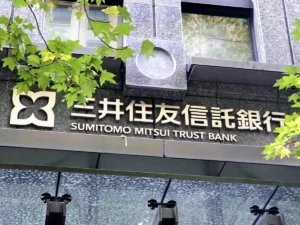
COMISMA and Sumitomo Mitsui Trust Bank Launch Massive Anime Production Fund to Bolster Industry Capacity


In a strategic move to bridge the growing gap between surging global demand for Japanese animation and the industry’s current production bandwidth, IP platform company COMISMA—the parent organization of the popular manga application GANMA! and the animation studio Qzil.la—has officially entered into a memorandum of understanding with Sumitomo Mitsui Trust Bank. The partnership seeks to establish a specialized anime production fund, a financial vehicle designed to democratize investment in a sector that has historically been exclusive to a select group of veteran production committees and major media conglomerates.
According to initial reports confirmed by the financial publication Nikkei, the collaborative venture aims to reach an operating scale of 10 billion yen (approximately US$63.5 million) by the conclusion of the 2027 fiscal year. This initiative arrives at a pivotal moment for the Japanese creative economy, as both private stakeholders and the Japanese government look to capitalize on the unprecedented international expansion of anime as a primary cultural export.
The Financial Landscape and Strategic Objectives
The core mission of this newly minted fund is to lower the barrier to entry for corporations that have historically viewed the anime business as opaque or inaccessible. Traditionally, anime production in Japan has relied on the "production committee" model, a system where multiple companies—broadcasters, publishers, toy manufacturers, and studios—pool their resources and distribute risk. While effective for spreading financial burden, this system often keeps smaller firms or entities outside the traditional media ecosystem from participating in the lucrative potential of intellectual property (IP) monetization.
By leveraging Sumitomo Mitsui Trust Bank’s extensive investor network alongside COMISMA’s specialized expertise in IP acquisition and creative development, the fund aims to provide a more streamlined pathway for capital injection. COMISMA, through its subsidiary Qzil.la, provides the necessary creative infrastructure to translate manga narratives into animated form, while the bank facilitates the institutional trust and financial oversight required to attract large-scale investment.
Addressing the Production Bottleneck
The decision to launch this fund is not merely a financial endeavor; it is a direct response to a critical supply-side crisis within the animation industry. Despite record-breaking market growth, the actual capacity to produce high-quality anime has failed to scale at an equivalent rate. Many of the industry’s premier studios, which boast the technical expertise and talent to deliver global hits, are currently operating at maximum capacity, with production schedules booked years in advance.
This saturation has led to a "bottleneck" effect, where promising IP languishes due to a lack of available studio resources. By injecting capital into the ecosystem, COMISMA and Sumitomo Mitsui Trust Bank hope to incentivize the expansion of studio capacity and the professional development of new talent. The fund will theoretically allow studios to scale their operations, hire more animators, and adopt advanced digital production workflows that can alleviate the current backlog.

Chronology of Recent Market Shifts
The timing of this announcement follows a significant period of data-driven growth and governmental intervention:
- April 12, 2026: The Japanese government publicly announced an ambitious policy goal to increase the value of the anime industry’s overseas market to 6 trillion yen (roughly US$37 billion) by the year 2033. This policy shift signaled a shift in national priorities, treating anime as a core pillar of the country’s "Soft Power" strategy.
- October 30, 2026: The Association of Japanese Animations (AJA) released its annual industry report, revealing that the global market for Japanese animation reached an all-time high of 4.45 trillion yen in 2025—a 15.8% year-over-year increase. Of that total, 2.54 trillion yen (approximately US$16.1 billion) was attributed to overseas markets.
- October 31, 2026: COMISMA formally announced the memorandum of understanding with Sumitomo Mitsui Trust Bank, marking the first major private-sector financial response to the AJA’s latest market figures.
Industry Implications and Financial Analysis
The involvement of a major financial institution like Sumitomo Mitsui Trust Bank suggests that the anime industry is maturing from a niche entertainment sector into a legitimate institutional asset class. Historically, venture capital and private equity firms have been hesitant to invest directly in anime production due to the volatile nature of creative success and the complexities of copyright management. However, as streaming platforms have turned anime into a consistent, "evergreen" form of content with global reach, the risk profile has shifted.
The establishment of this fund is expected to have several long-term implications for the market:
- Standardization of Investment: By creating a structured fund, the partners are moving toward a more transparent model of investment that could encourage other financial institutions to follow suit, potentially leading to a broader financialization of the anime sector.
- IP Valorization: With dedicated funding, COMISMA can move more aggressively to acquire promising titles from their GANMA! manga platform, ensuring that high-potential stories are fast-tracked into production rather than waiting for available committee partners.
- Technological Investment: Part of the funding may be directed toward improving studio efficiency. With the industry facing a shortage of skilled labor, investments in AI-assisted animation, digital pipelines, and better project management software are likely to become focal points for those managing the fund’s capital.
- Risk Diversification: The fund structure allows for a portfolio approach to anime production. Instead of betting on a single project, investors can gain exposure to a slate of multiple series, effectively diversifying their risk against the potential underperformance of any single title.
Stakeholder Perspectives and Market Outlook
While neither COMISMA nor Sumitomo Mitsui Trust Bank has released a list of potential investors or specific projects, industry analysts suggest that the interest will likely come from domestic companies seeking to diversify their portfolios and international players eager to secure a stake in the lucrative Japanese animation pipeline.
From the perspective of creators, the fund represents a potential increase in production budgets and a greater willingness to take risks on non-traditional narratives. For the Japanese government, which has been vocal about its desire to see the anime industry serve as a primary engine for economic growth, this partnership is a validation of the "Cool Japan" strategy. If the fund reaches its 10 billion yen target, it will represent a significant milestone in the ongoing efforts to industrialize the creative process, moving away from the cottage-industry roots of the mid-20th century toward a robust, capital-efficient, global media powerhouse.
As the industry moves toward the 2033 target set by the Japanese government, the role of financial intermediaries will only grow in importance. The COMISMA-Sumitomo partnership acts as a pilot program for the entire sector, setting a precedent for how animation studios can pair with financial giants to scale their output to meet the insatiable global demand for content.
Conclusion
The memorandum of understanding between COMISMA and Sumitomo Mitsui Trust Bank marks a decisive turn in the history of anime production. By addressing the twin challenges of capital access and production capacity, the partnership aims to stabilize an industry that has historically been characterized by erratic funding cycles and severe logistical limitations. As the global market continues to expand toward the 6 trillion yen goal, the success of this 10 billion yen fund will likely serve as a benchmark for how the intersection of finance and animation can foster sustainable, long-term growth in an increasingly competitive global media landscape. Whether this model can be replicated by other studios remains to be seen, but the clear commitment of institutional capital suggests that the industry is entering a new, more stable era of corporate-led growth.