The production of Paranormal Activity: A New Story Live on Broadway represents a significant evolution in the commercial theater landscape, merging the high-stakes world of immersive horror with the precision of Broadway stagecraft. Directed by Felix Barrett, the founder of the pioneering immersive theater company Punchdrunk, the production brings a cinematic phenomenon to the stage through a narrative lens developed by playwright Levi Holloway, known for his work on Grey House.
The Evolution of Broadway Horror
The arrival of this production is not an isolated incident but rather the culmination of a broader trend of horror intellectual property (IP) finding success on the live stage. For decades, horror in theater was largely relegated to campy adaptations or niche productions. However, the current landscape has shifted dramatically. Recent successes, such as the multiple Broadway engagements of Beetlejuice, the macabre musical comedy Death Becomes Her, and the critically acclaimed Stranger Things: The First Shadow, have demonstrated that audiences have a growing appetite for sophisticated, high-budget scares.

This trend is backed by robust data. According to The Broadway League, the 2025–2026 season saw approximately 14.6 million admissions, with theaters operating at a 90.8 percent capacity. Producers are increasingly looking to genre-based content to maintain these high attendance figures, utilizing the visceral, shared experience of live performance to differentiate their offerings from the increasingly digital and AI-driven entertainment market.
Chronology and Creative Vision
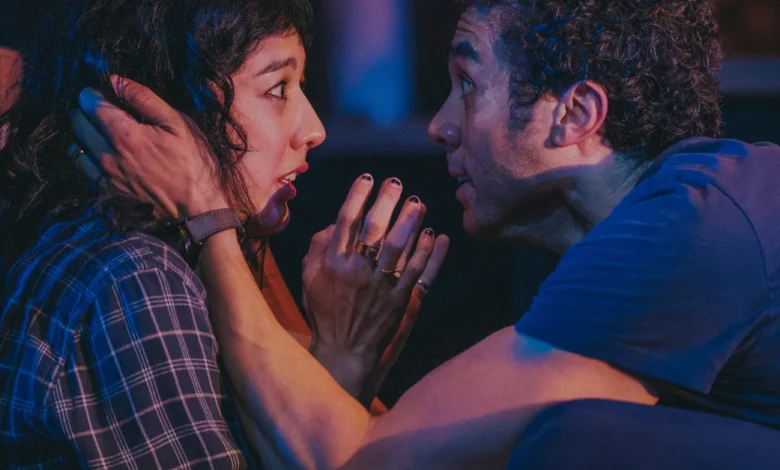
The journey of Paranormal Activity to the stage began with a collaboration between producers Simon Friend and Hanna Osmolska through Melting Pot, in partnership with Jason Blum and the powerhouse horror studio, Blumhouse. The narrative follows characters James and Lou, portrayed by Travis A. Knight and Cher Álvarez, as they relocate from Chicago to London in a failed attempt to escape a lingering supernatural threat.
The development process was heavily iterative. According to the production team, the show underwent extensive refinement during its pre-Broadway runs, focusing on the psychological endurance of the audience. The production team utilized the expertise of Chris Fisher, a Special Tony Award recipient who previously served as the illusions designer for Stranger Things: The First Shadow. Fisher’s involvement was critical in engineering a sensory experience that challenges the limitations of a static stage environment.

The Engineering of Dread
Unlike film, which relies on editing and camera angles to manipulate the audience’s perspective, live theater requires a mastery of physical space and timing. The production design utilizes a "graph-based" approach to tension, where the creative team carefully monitors audience reaction to determine the pacing of scares.
Fisher emphasizes that the primary goal is not the frequency of jump scares, but the duration of sustained dread. By deliberately withholding expected payoffs, the production conditions the audience to feel vulnerable, striking only when the audience’s guard is at its lowest. This philosophy—often referred to as "restraint"—is designed to prevent the audience from breaking their immersion through excessive nervous laughter or external awareness. The goal is to keep the viewer in a constant state of psychological engagement, where the physical presence of the actors reinforces the reality of the threat.
Industry Implications and the Role of Illusions
The technical requirements for this production represent a significant investment in practical, live effects. As CGI continues to dominate the film industry, the theater industry is carving out a niche as a sanctuary for tangible, "analog" spectacle. The success of the illusion design in Paranormal Activity suggests that modern audiences are seeking a return to physical, in-room experiences that cannot be replicated by digital media.

The collaboration between veteran illusionists like Jamie Harrison and Chris Fisher marks a professionalization of theatrical magic. By applying the techniques of 1970s and 80s practical effects to a live, non-cinematic environment, these designers are essentially creating a new sub-genre of theatrical production. The industry is currently observing these developments with interest, as the success of these shows could influence future programming decisions across both Broadway and London’s West End.
Audience Response and Future Outlook
Anecdotal evidence from the production’s early run suggests that the strategy of immersive, live-stage horror is effective. Reports of audience members physically clutching one another or exhibiting post-show anxiety indicate that the production successfully bridges the gap between the screen and the stage.
The involvement of Jason Blum—a figure synonymous with low-budget, high-impact horror—lends further credibility to the production’s commercial viability. Industry analysts suggest that if Paranormal Activity continues to sell out its run at the August Wilson Theatre, which is currently scheduled through February 28, 2027, it will likely trigger a wave of similar horror-IP adaptations.

Broader Impact on the Theatrical Ecosystem
The rise of horror on Broadway serves as a broader commentary on the current state of entertainment. In an era where artificial intelligence and digital generated content are increasingly prevalent, the demand for live performance—where a mistake, a breath, or a movement is real and unrepeatable—has surged.
The production of Paranormal Activity highlights the necessity of the "shared experience." Horror, by its nature, is a communal act; the sound of an entire auditorium screaming in unison creates a collective memory that is impossible to manufacture in a solitary viewing environment. This social aspect is a primary driver for the current resurgence of horror theater, as it offers a tactile, human connection that digital media often lacks.
Furthermore, the integration of high-concept illusion design with traditional dramatic storytelling provides a template for future theatrical productions. As the creative team, including director Felix Barrett, continues to explore the boundaries of what is possible in a proscenium setting, they are setting a new standard for the genre.

Conclusion
As Paranormal Activity: A New Story Live on Broadway continues its tenure in New York, it stands as a testament to the versatility of the theatrical medium. By balancing technical precision with the raw, unpredictable energy of live performers, the production has effectively captured the essence of the horror genre while offering a unique, three-dimensional experience.
For the theater industry, the implications are clear: the audience is hungry for spectacle, but they are also looking for substance and genuine, palpable fear. Whether this success leads to a permanent "horror season" on Broadway remains to be seen, but for now, the August Wilson Theatre has become the epicenter of a new movement in live entertainment. The collaboration between seasoned producers, innovative directors, and world-class illusionists has not only revitalized the Paranormal Activity brand but has also validated the stage as a viable, and perhaps even superior, venue for the next evolution of horror.