Sir Patrick Stewart Passes Away at 86 Leaving Behind a Legacy of Artistic Excellence and Humanitarian Advocacy

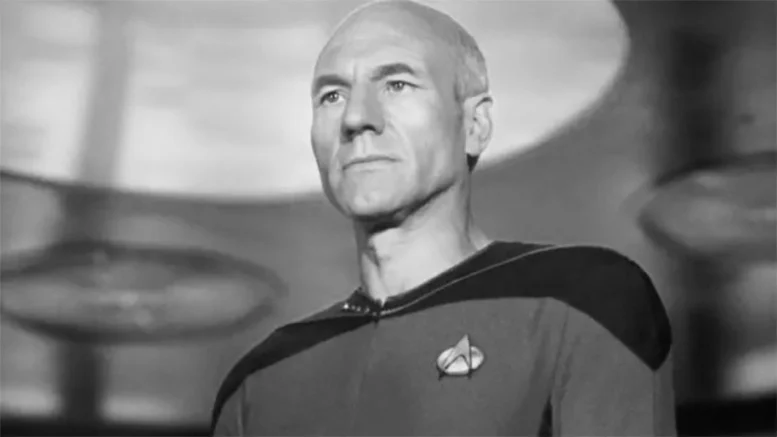
The global entertainment industry is in mourning following the passing of Sir Patrick Stewart, the celebrated stage and screen actor whose portrayal of Captain Jean-Luc Picard redefined the archetype of the science fiction leader. Sir Patrick died on Wednesday at the age of 86, following a private struggle with complications arising from Alzheimer’s disease and Lewy body dementia. His passing marks the conclusion of a career that spanned more than six decades, transitioning from the hallowed halls of the Royal Shakespeare Company to the bridge of the USS Enterprise and, eventually, to the pantheon of cinematic icons.
A Chronology of a Legendary Career
Born in Mirfield, West Yorkshire, in 1940, Stewart’s journey into the arts began at the Bristol Old Vic Theatre School. By the 1960s, he had established himself as a stalwart of the Royal Shakespeare Company, where his rigorous classical training provided the foundation for his commanding presence. His transition to international stardom in 1987, when he was cast as Captain Jean-Luc Picard in Star Trek: The Next Generation (TNG), was anything but conventional.

At the time, the science fiction genre was viewed with skepticism by traditional theater actors. Stewart’s initial reluctance was famously documented; he reportedly brought his own hairpiece to auditions, fearing that a bald lead character would be rejected by studio executives. However, the vision of producers Bob Justman and Rick Berman prevailed, and the series defied industry expectations. TNG became a cultural phenomenon, evolving from a syndicated experiment into a franchise cornerstone. Its 1994 series finale drew 31 million viewers, a staggering metric that remains one of the highest-rated scripted television conclusions in history.
Following his tenure as Picard, Stewart maintained a prolific output. He successfully bridged the gap between high-brow theater and blockbuster franchises, most notably through his portrayal of Professor Charles Xavier in the X-Men film series. His range further extended to voice acting—most prominently as Deputy Director Avery Bullock in American Dad!—and critically acclaimed turns as Ebenezer Scrooge in A Christmas Carol and Captain Ahab in Moby Dick.
The Evolution of an Icon: From TNG to Picard
The character of Jean-Luc Picard became synonymous with Stewart’s own intellectual and moral rigor. Throughout the seven-season run of TNG, Stewart pushed for character depth that transcended the standard tropes of 1980s television. In iconic episodes such as "The Measure of a Man," which interrogated the legal rights of synthetic life, and the existential masterpiece "The Inner Light," Stewart brought a Shakespearean gravitas that elevated the material.

After the 2002 release of Star Trek: Nemesis, which met with lukewarm commercial success, Stewart publicly indicated that his time in the captain’s chair had reached its natural end. However, the landscape of television shifted with the advent of prestige streaming services. In 2018, a new team of writers—including Akiva Goldsman, Alex Kurtzman, and Michael Chabon—approached Stewart with a 30-page treatment for a series that would not merely revive the character, but deconstruct him. Star Trek: Picard explored themes of aging, regret, and the loss of institutional influence. The series culminated in a highly successful third season, which served as a sentimental and narrative reunion for the original TNG cast, providing fans with a final, poignant look at the crew of the Enterprise-D.
Data and Industry Impact
The economic and cultural impact of Stewart’s work cannot be overstated. Star Trek transitioned from a cult hit to a multi-billion-dollar enterprise under his stewardship. Analysts note that his involvement in the X-Men franchise, which helped pioneer the modern comic-book movie era, further solidified his status as one of the most bankable actors of the early 21st century. Beyond his box office performance, Stewart’s influence is measured in the "Picard Effect"—the inspiration he provided to generations of fans who saw in his portrayal a model of diplomacy, scientific curiosity, and ethical leadership.
Beyond the Screen: A Commitment to Advocacy

While his professional accolades were numerous, Sir Patrick Stewart was equally defined by his commitment to humanitarian efforts. He was a vocal and consistent advocate for victims of domestic violence, often speaking openly about his childhood experiences witnessing abuse in his own home. He worked extensively with Amnesty International and campaigned for policy reforms regarding police response to domestic disturbances.
Furthermore, Stewart was a passionate supporter of animal welfare, particularly for pit bulls, which he frequently fostered and championed. By weaving these causes into his public persona and his later creative projects, he ensured that his platform served the public interest, leaving a legacy that extended far beyond his filmography.
Industry and Peer Reflections
The news of his passing has prompted an outpouring of tributes from across the entertainment sector. Former co-stars and collaborators have lauded not only his technical skill as an actor but his mentorship. Jonathan Frakes, who portrayed Commander William Riker, has often cited Stewart’s professionalism and dedication to the craft as a defining element of the Star Trek set.

Industry analysts suggest that Stewart’s death represents the end of an era for traditional "classical-to-commercial" crossover actors. His ability to move seamlessly between the works of William Shakespeare and the complex demands of science fiction set a precedent for contemporary performers. His influence on the craft is perhaps best summarized by his own philosophy on acting: that the medium matters less than the truth and dignity one brings to the character.
Broader Implications for the Franchise
Sir Patrick Stewart’s death leaves a void in the Star Trek universe that will likely be felt for decades. While the franchise continues to expand through various spin-offs and new narratives, Picard remains the standard-bearer for the series’ core values: exploration, empathy, and the defense of the vulnerable.
As the industry reflects on his life, the focus remains on the immense body of work he leaves behind. From the bridge of the Enterprise to the classrooms of the Xavier School for Gifted Youngsters, Stewart’s performances were characterized by a singular intensity and warmth. He proved that an actor could be both a populist hero and a high-art practitioner, bridge-building between disparate audiences.

A Memorial to a Titan
In the coming weeks, various institutions and organizations are expected to hold commemorative events to honor Sir Patrick’s contribution to the arts. While the specific details of a memorial service remain private at the request of his family, the global fan base has already begun to organize tributes. The consensus among critics and peers alike is that Stewart’s influence on the landscape of popular culture is permanent. Whether through the lens of a classic play or a futuristic space drama, his work remains a testament to the power of storytelling to inspire, educate, and provoke thought.
Sir Patrick Stewart’s journey, which spanned from the stages of Bristol to the furthest reaches of the galaxy, concludes with a legacy of artistic excellence and profound humanitarian impact. He remains, as many fans have noted in their tributes, the definitive captain of our collective imagination. As the industry looks toward the future, the standard set by Stewart—one of gravitas, nuance, and unwavering commitment to the human condition—will undoubtedly continue to inform the next generation of performers. He leaves behind a world more thoughtful for his presence, and a cinematic history forever marked by his dignity.