When DC Comics Mandated Gorillas, They Accidentally Created a Legend: The History, Market Value, and Cultural Evolution of Gorilla Grodd

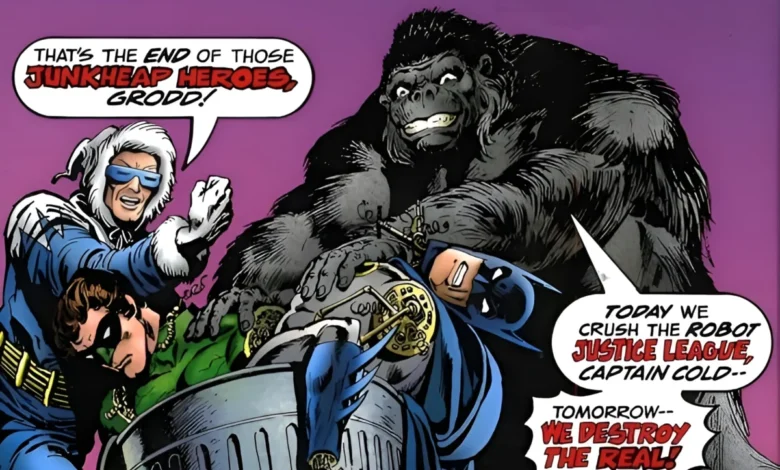
In the dynamic and often eccentric landscape of mid-20th-century comic book publishing, editorial mandates occasionally birthed cultural cornerstones. During the 1950s and 1960s—a period widely recognized by historians and enthusiasts as the Silver Age of Comic Books—conventional wisdom at DC Comics dictated a peculiar formula for guaranteed financial success: gorillas meant sales. Publisher Julius Schwartz, armed with internal sales data that consistently demonstrated a spike in newsstand purchases whenever a primate graced the front cover, instituted an informal editorial guideline. Writers and artists across the company’s vast stable of titles were heavily encouraged to feature at least one gorilla-themed cover every month.
This unusual directive unleashed a wave of wonderfully bizarre creative output. Across the publisher’s lineup, iconic heroes clashed with remarkably specific simian threats. Superman famously went toe-to-toe with Titano the Super-Ape, while Batman crossed paths with Mogo the Bat-Ape and regularly tangled with the underworld figure known as the Gorilla Boss of Gotham City. Meanwhile, DC’s extensive anthology catalogs covering mystery, science fiction, and war genres flooded the market with concepts such as the "Gorilla Witch" and the "Mod Gorilla Boss"—the latter somehow existing as an entirely separate entity from Gotham’s underworld simian. Yet, towering above this menagerie of mid-century madness is one specific, highly calculated mastermind: Gorilla Grodd. Emerging from the shadows of telepathic dominance, Grodd has remained a primary antagonist for the Flash and the wider DC Universe since his debut in The Flash #106, published in the spring of 1959.
The Chronology of a Simian Sovereign: From Silver Age Obscurity to Global Threat
The publication of The Flash #106 in February 1959 arrived during a landmark month for DC Comics, coinciding closely with the historic introduction of Supergirl in Action Comics #252. Within the pages of The Flash #106, readers were introduced to "Menace of the Super-Gorilla," the opening chapter of a three-issue narrative arc that extended through issue #107 and concluded in issue #108. Curiously, despite cementing his place in comic book history within this storyline, Grodd was entirely omitted from the cover of his debut issue. Instead, artist Carmine Infantino’s cover emphasized the "Pied Piper of Peril," another newcomer making his first appearance in the issue. Subsequent covers likewise bypassed the hyper-intelligent ape in favor of striking, albeit unusual, imagery, such as a marathon runner moving backward and the Flash running on a treadmill.
Within the narrative, Grodd was established as an exile from Gorilla City—a technologically advanced, pacifist civilization of hyper-intelligent gorillas secretly thriving within the African jungles. Unlike his peaceful kin, the telepathic Grodd emerged as his society’s most dangerous criminal, venturing into human civilization with the explicit intent of harvesting humanity’s greatest intellects, unlocking absolute mind-control capabilities, and orchestrating global domination.
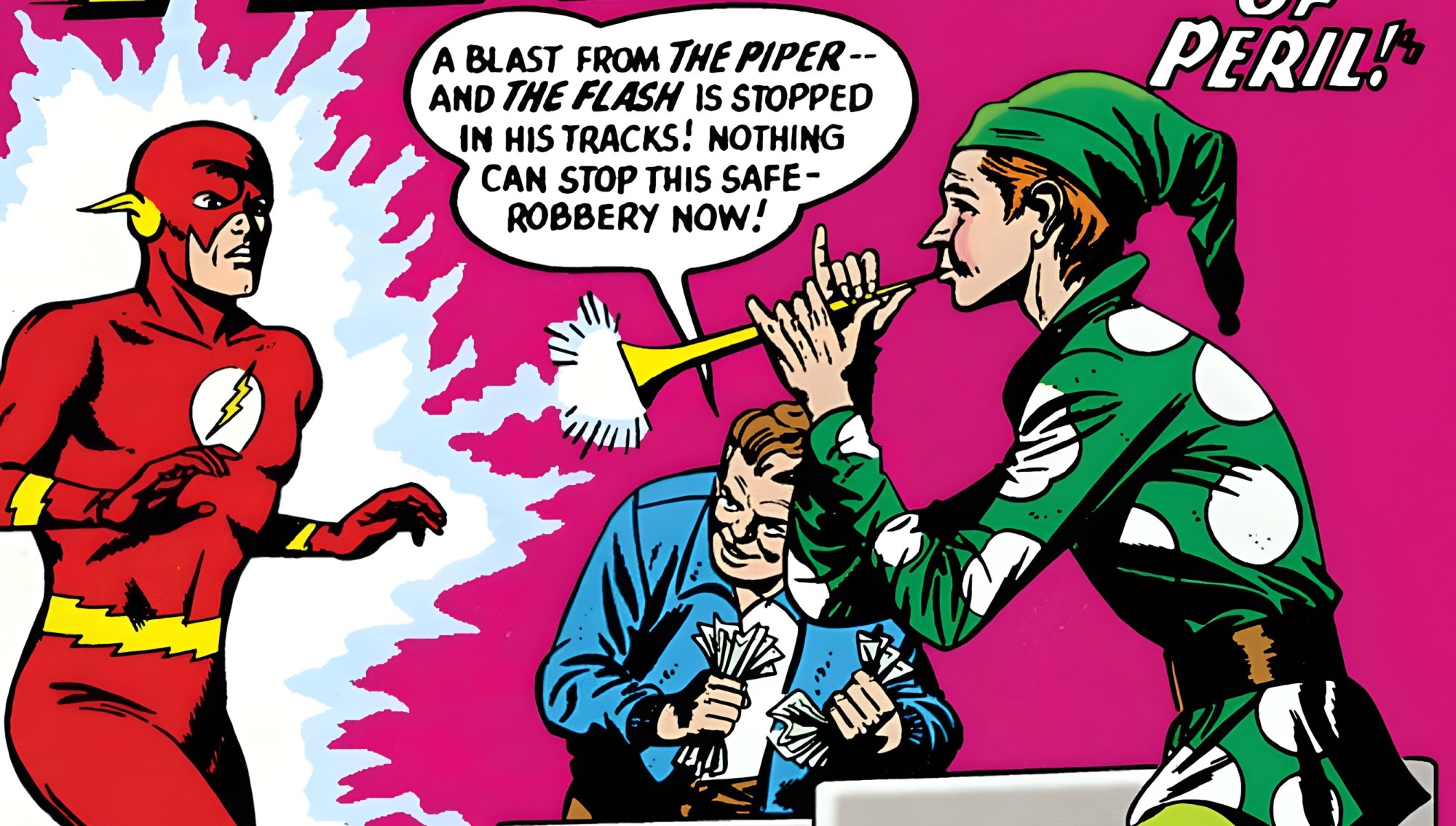
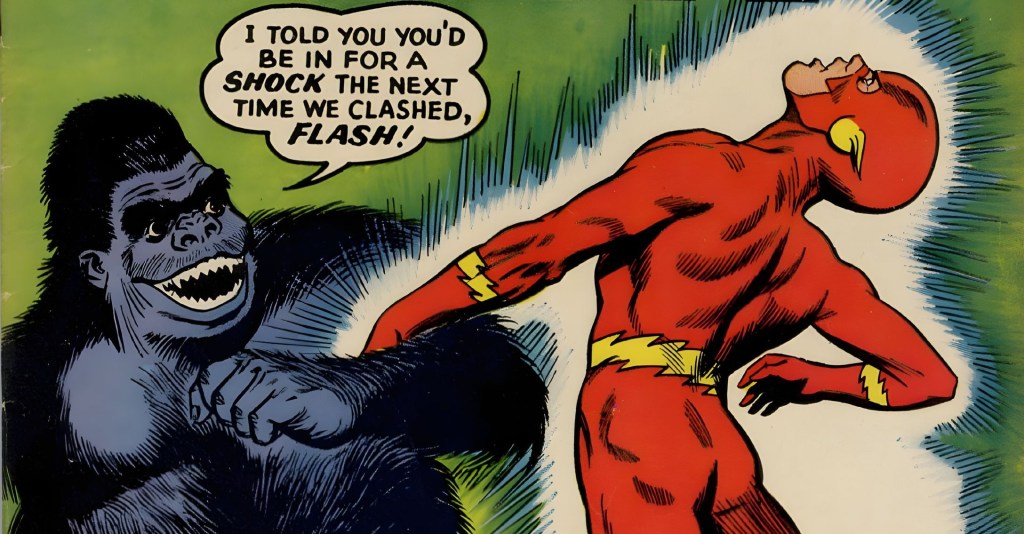
Throughout the initial three-part arc, the Flash forged an alliance with Solovar, the noble king of Gorilla City, to thwart Grodd’s ambitions. Grodd demonstrated formidable intellect and formidable psychic prowess, escaping captivity twice and even exerting mental domination over a subterranean race of bird-men residing within the Earth’s crust. Despite these grand designs, Grodd’s initial appearances were sporadic. Throughout the remainder of the Silver Age, he returned to challenge the Scarlet Speedster in only a handful of issues, including #127, #155, and #172. Writers of the era frequently favored the Flash’s grounded, blue-collar rogues’ gallery over Grodd’s grand schemes of global conquest. By the early Bronze Age, Grodd’s ambitions expanded outward, pitting him against Superman on multiple occasions, notably as a founding member of the "Anti-Justice League" orchestrated by Queen Bee.
The Transition to Multimedia Iconography and the Legion of Doom
While Grodd’s appearances in monthly comic book titles during the 1960s and 1970s were relatively infrequent, his transition into animation fundamentally cemented his legacy in pop culture. In the late 1970s, Grodd achieved mainstream notoriety as a charter member of the Legion of Doom—the legendary anti-justice coalition featured in Hanna-Barbera’s widely syndicated animated series, Super Friends. This exposure introduced an entire generation of young viewers to the character as a primary antagonist of the DC Universe.
Concurrently, writer Gerry Conway integrated Grodd into the comic series Secret Society of Super-Villains, bridging the gap between traditional print media and serialized adaptation. This foundation heavily influenced later masterworks of animation, notably Justice League and Justice League Unlimited. Voiced with chilling authority by actor Powers Boothe, Grodd served as the intellectual architect behind the animated Legion of Doom, cementing his status as a genuinely menacing existential threat to the world’s greatest heroes.
Further adaptations followed, including a lighter, self-aware portrayal in Batman: The Brave and the Bold, where Grodd partnered with Monsieur Mallah and the Gorilla Boss to form "G.A.S.P." (Gorillas and Apes Seizing Power). Eventually crossing over into live-action media via the CW’s Arrowverse—culminating in memorable, campy appearances including a time-traveling excursion—Grodd proved remarkably versatile, adapting seamlessly to diverse narrative tones without losing his core identity.
Market Implications, Rare Collectibles, and Future Adaptations
The enduring cultural footprint of Gorilla Grodd has profound implications for contemporary comic book collecting and media valuation. As HBO Max prepares to launch the upcoming satirical-leaning mini-series The People v. Gorilla Grodd—a project that has generated significant buzz, internet speculation, and anticipation among hardcore fans following early promotional glimpses of the character riding a motor scooter—attention has naturally turned back to the character’s origins.
Ahead of the television debut, collectors have turned their sights toward the scarce surviving copies of The Flash #106. Auction houses, including Hakes, have seen heightened activity surrounding certified copies of the issue. A recent copy bearing a modest Certified Guarantee Company (CGC) grade of 3.5 (VG-) highlights the extreme scarcity of the book in any condition. Industry analysts note that because Grodd’s debut issue was printed during a period when comics were widely discarded or read to destruction, high-grade or even mid-grade surviving copies command intense competition among dedicated investors and Golden/Silver Age completionists.
The impending release of The People v. Gorilla Grodd is expected to drive market values upward, creating a ripple effect across Silver Age Flash back-issues. Market watchers point out that characters originating from editorial eccentricities—such as Julius Schwartz’s gorilla mandate—often transition into long-term blue-chip assets precisely because they embody the unbridled imagination and creative freedom of the era.
Broader Cultural Impact of Silver Age Maximalism
The evolution of Gorilla Grodd from an arbitrary editorial requirement designed to boost newsstand sales into a globally recognized multi-media antagonist underscores a fascinating chapter in comic book history. It illustrates how creators could take inherently absurd, high-concept premises and inject them with genuine narrative depth, balancing self-aware camp with compelling science-fiction stakes.
As the DC Universe continues to expand across streaming platforms and theatrical releases, the impending arrival of The People v. Gorilla Grodd signals that the industry is more than willing to lean into its eccentric history. For collectors investing in vintage issues like The Flash #106, and for fans engaging through community forums and digital platforms, Grodd remains a definitive symbol of comic books at their most imaginative, enduringly entertaining, and unapologetically bold.