Why the Upcoming Marvel Project Zodiac Could Finally Bring Agents of SHIELD Back into Mainstream MCU Canon

The landscape of the Marvel Cinematic Universe has undergone a dramatic transformation since its inception in 2008 with Iron Man. What began as a tightly controlled cinematic experiment has expanded into a sprawling multimedia empire spanning feature-length films and high-budget streaming series. Yet, as the franchise has grown, its internal continuity has faced significant challenges. While theatrical releases and marquee Disney+ productions form a linear and mostly straightforward historical record, peripheral television projects have frequently occupied a precarious space in the official canon. Among these, ABC’s Agents of SHIELD remains one of the most complex, beloved, and structurally estranged chapters in Marvel history.
Main Facts and the Continuity Conundrum
Agents of SHIELD premiered on ABC in September 2013 under the heavy marketing banner of "It’s all connected." Designed to bridge the gap between Marvel Studios’ theatrical output, the series initially adhered strictly to the timeline established by the films. Early episodes featured explicit narrative crossovers, including guest appearances by high-ranking intelligence operatives and Asgardians like Lady Sif, as well as a monumental structural shift tied directly to the events of 2014’s Captain America: The Winter Soldier. When HYDRA was revealed to have infiltrated SHIELD from within, the television series mirrored that devastation, forcing its core cast of characters to operate underground as rogue agents.
However, as the years progressed, the relationship between Marvel Studios’ feature-film division and Marvel Television—then overseen by a separate corporate structure—began to fray. Agents of SHIELD gradually drifted away from direct synchronization with the cinematic universe. While other television initiatives, such as Netflix’s Daredevil and Jessica Jones, or standalone projects like Cloak & Dagger and The Runaways, existed in varying degrees of narrative isolation, Agents of SHIELD pushed the boundaries of the timeline further through intricate plotlines involving extraterrestrial incursions, time travel, and alternate realities.
The division culminated in notable narrative omissions. Most prominently, the devastating events of Avengers: Infinity War and Avengers: Endgame—specifically the universal decimation caused by Thanos and the subsequent five-year Blip—went largely unaddressed within the final seasons of Agents of SHIELD. Despite featuring characters capable of traversing time and space, the series chose to focus on localized cosmic threats, leaving fans to theorize whether the show had branched off into an alternate timeline altogether.
Chronology of the Series and the Rise of Daisy Johnson
To understand the enduring appeal of Agents of SHIELD and why its characters continue to command fervent fan loyalty, one must examine the show’s seven-season run from 2013 to 2020. Across 136 episodes, the series evolved from a standard monster-of-the-week spy thriller into a sprawling science-fiction epic.

Initially, the narrative anchor was Clark Gregg’s Phil Coulson, whose apparent death in 2012’s The Avengers was retconned via a secretive government initiative known as Project T.A.H.I.T.I. Yet, as the series developed, the emotional and narrative core shifted toward an orphaned computer hacker known initially as Skye, portrayed by Chloe Bennet.
Skye’s journey formed the emotional backbone of the series. In the second season, she discovered her true heritage as Daisy Johnson, a member of the Inhumans—a genetically altered sub-species activated by exposure to Terrigen crystals. Awakening seismic abilities that allowed her to manipulate vibrations and generate massive earthquakes, she eventually adopted the moniker Quake.
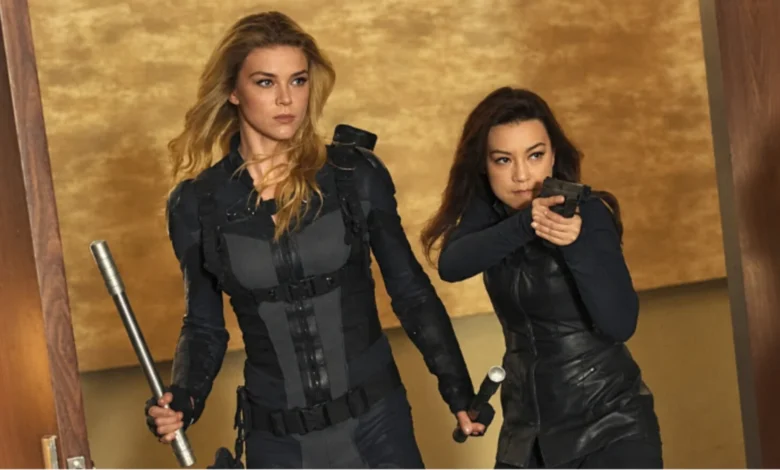
Over the course of the series, Daisy’s arc evolved from a distrustful, anti-establishment hacktivist into a seasoned tactical leader. Her development was marked by organic character growth: she navigated the psychological trauma of loss, opposed tyrannical regimes, stood up for the civil rights of marginalized Inhumans, and temporarily left the team to forge her own path before returning to guide the next generation of operatives. Characters such as Elena "Yo-Yo" Rodriguez (Natalia Cordova-Buckley) and Lincoln Campbell (Luke Mitchell) frequently looked to her for leadership. Her confrontations with supernatural entities like Ghost Rider (Gabriel Luna) and synthetic lifeforms known as Life Model Decoys cemented her status as one of the most dynamic heroes in Marvel’s television catalog.
Supporting Data and the Shift in Marvel’s Canon Policy

In recent years, Marvel Studios has systematically worked to consolidate its sprawling media history into a single, cohesive canon. The clearest indicator of this policy shift is the integration of former Netflix properties. The revival of characters through projects like Daredevil: Born Again has officially validated the Netflix television era within the sacred timeline. Furthermore, cinematic milestones such as Deadpool & Wolverine and upcoming crossover events like Avengers: Doomsday demonstrate Marvel’s willingness to embrace historical non-MCU intellectual property, drawing characters from 20th Century Fox’s X-Men and Fantastic Four franchises into the fold.
Despite these inclusive maneuvers, Agents of SHIELD has remained conspicuously absent from Marvel Studios’ official reintegration initiatives. This exclusion has been a persistent point of contention for both the audience and the creative talent involved. Chloe Bennet and other members of the ensemble cast have occasionally voiced frustration regarding the lack of acknowledgment from the broader cinematic universe, noting that the cast invested seven years into building a foundational audience for Marvel’s television aspirations.
The case for canonizing Agents of SHIELD extends beyond mere nostalgia. The series introduced critical lore elements, most notably the concept of Inhumans, years before characters like Black Bolt appeared in Doctor Strange in the Multiverse of Madness. Reintroducing characters such as Daisy Johnson, Melinda May (Ming-Na Wen), Leo Fitz (Iain De Caestecker), Jemma Simmons (Elizabeth Henstridge), and Phil Coulson would inject established, battle-tested operatives into a modern MCU that frequently deals with high-level espionage and cosmic threats.
Official Responses and the Implications of Project Zodiac

While Marvel Studios has not made any official announcements regarding the revival of the Agents of SHIELD cast, recent industry developments have sparked renewed speculation. The announcement of an upcoming secret project under the working title or designation of Zodiac has caught the attention of sharp-eyed fans and industry analysts alike.
Although plot details for Zodiac remain tightly under wraps, early promotional materials and industry leaks indicate that the series will center on an elite espionage unit tasked with tracking individuals possessing anomalous, special abilities. Most notably, eagle-eyed observers pointed out subtle visual cues in the project’s preliminary branding, including iconography bearing a striking resemblance to classic high-level intelligence and security emblems historically associated with the agency.
The thematic alignment between a espionage-heavy, power-tracking narrative and the core premise of Agents of SHIELD is difficult to ignore. If Marvel Studios intends to expand its grounded intelligence framework—particularly following the events of projects like The Falcon and the Winter Soldier and Secret Invasion—the introduction of a veteran operative like Daisy Johnson would serve as a logical bridge.
Broader Impact and Future Outlook

Reintegrating Agents of SHIELD into the primary MCU timeline carries significant strategic implications for The Walt Disney Company and Marvel Studios. From a streaming perspective, officially recognizing the series as prime canon would undoubtedly drive substantial viewership back to Disney+, introducing one of Marvel’s longest-running and most critically lauded television achievements to a new generation of subscribers.
Moreover, validating the series would repair lingering friction between Marvel’s television wing and its theatrical division, signaling to fans that no contribution to the overarching mythos is truly forgotten. Whether Zodiac ultimately serves as the vehicle for Daisy Johnson’s triumphant return to the screen remains to be seen. However, as the Multiverse Saga accelerates toward its conclusion, the demand for narrative unity ensures that the legacy of Agents of SHIELD will continue to loom large over the future of the Marvel Cinematic Universe.