Rockstar Games Addresses Longstanding Criticisms by Redesigning Mission Freedom for Grand Theft Auto 6

Rockstar Games is preparing for one of the most significant product launches in the history of the interactive entertainment industry with the upcoming release of Grand Theft Auto 6. Scheduled to arrive on November 19 for the PlayStation 5 and Xbox Series X/S hardware ecosystems, the title carries immense expectations from both consumers and financial analysts alike. As the direct successor to Grand Theft Auto V—which stands as one of the most lucrative entertainment properties ever created, generating billions of dollars in revenue across three console generations—GTA 6 faces the monumental task of redefining modern open-world design.
In the lead-up to this release, promotional material and developer interviews have revealed critical structural shifts within the studio’s design philosophy. Most notably, a key producer at Rockstar Games has confirmed that the studio has intentionally reworked its mission architecture to address some of the most persistent criticisms levied against its previous masterpiece, Red Dead Redemption 2. While the 2018 Western epic received widespread critical acclaim for its narrative depth, detailed open-world ecosystem, and atmospheric storytelling, it simultaneously drew pointed critique from players and industry critics regarding its rigid, highly scripted mission design. By granting players greater autonomy during missions, Rockstar aims to bridge the long-standing gap between cinematic storytelling and open-world player agency.
The Evolution of Rockstar’s Design Philosophy
For decades, Rockstar Games has established a reputation for crafting cinematic, story-driven experiences that rival Hollywood feature films in terms of production value, voice acting, and scriptwriting. However, achieving this level of narrative control historically required a rigid approach to mission design. In past titles such as Grand Theft Auto V, Red Dead Redemption, and Red Dead Redemption 2, players were frequently funneled down strictly predetermined pathways to ensure that specific narrative beats occurred in a precise sequence.
Under this traditional framework, deviating even slightly from the developer’s intended route—such as taking an alternate street during a pursuit, using an unintended weapon, or advancing too quickly into a restricted area—would frequently trigger a mission failure screen. Players were then forced to restart from the most recent automated checkpoint, effectively breaking the immersion of the open world. While this method successfully protected the narrative integrity of the studio’s stories, it often created a jarring dissonance between the absolute freedom allowed during free-roam exploration and the restrictive linearity imposed during structured story sequences.
The Paradigm Shift in Grand Theft Auto 6
In an extensive interview with IGN, Rockstar producer Rob Nelson shed light on how the development team has reevaluated this balance for Grand Theft Auto 6. Nelson acknowledged the inherent tension between player freedom and scripted storytelling, noting that while narrative progression often necessitates a degree of guidance, the studio has made a concerted effort to eliminate unnecessary constraints.
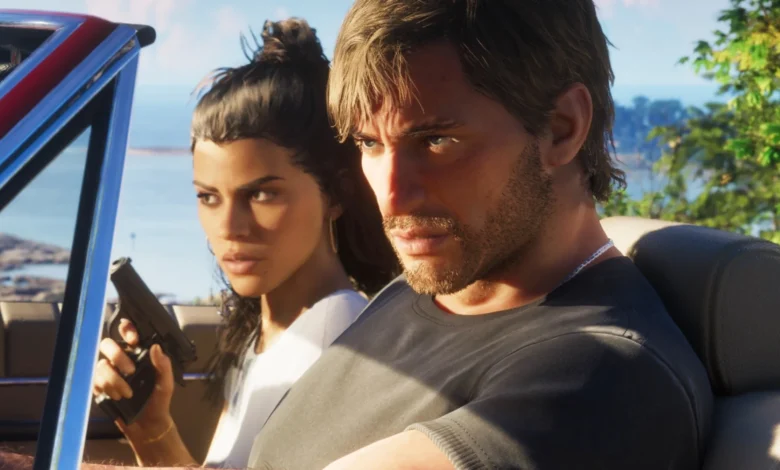
Nelson pointed to specific examples from the upcoming game to illustrate this philosophical shift. During early sequences showcased in promotional previews—such as a tense escape from a multi-story tower block—players will have access to multiple physical routes to navigate their way out. Similarly, in driving and pursuit scenarios, such as an encounter involving a character named Raul, players may be funneled into an initial scripted phase while managing dynamic shooting mechanics, but the encounter quickly transitions into an open-ended police chase. If the player chooses to deviate from the optimal suggested route, the mission does not automatically fail; instead, the game leverages its sophisticated systemic wanted level and robbery mechanics to allow players to improvise their escape.
By integrating core open-world systems directly into mission parameters, Rockstar is striving to create a seamless transition between structured storytelling and emergent gameplay, ensuring that missions do not feel artificially restricted compared to the broader sandbox environment.
The Critical Context: The NakeyJakey Critique and Fan Discourse
The decision by Rockstar Games to overhaul its mission structure does not occur in a vacuum. Following the October 2018 release of Red Dead Redemption 2, the gaming community engaged in a robust discourse regarding the aging aspects of the studio’s game design. A focal point of this discussion was a viral video essay created by prominent YouTuber and developer NakeyJakey, titled Rockstar’s Game Design is Outdated.
Released shortly after Red Dead Redemption 2, the video accumulated over 11 million views and sparked widespread debate across gaming forums, media outlets, and developer circles. The critique highlighted a fundamental contradiction within Rockstar’s design model: while the studio constructed some of the most technologically advanced, reactive open worlds in gaming history, the actual missions regularly forced players into narrow corridors, penalizing experimentation and punishing any deviation from the script with immediate failure states. The video resonated deeply with a large segment of the player base that felt the studio’s mechanical framework had failed to evolve at the same pace as its graphical fidelity and narrative ambitions.

Although Rockstar Games rarely responds directly to public criticism or content creators, the convergence of fan feedback and the studio’s internal design iterations for Grand Theft Auto 6 strongly suggests that leadership took note of the broader industry conversation. The implementation of systemic, multi-route mission designs directly targets the exact pain points articulated in the post-RDR2 discourse.
Background Context: The Long Road to GTA 6
The anticipation surrounding Grand Theft Auto 6 is unprecedented, fueled in part by the immense length of time between releases. When Grand Theft Auto V launched in September 2013, it debuted on the seventh-generation platforms of the PlayStation 3 and Xbox 360. The title was subsequently re-released on the PlayStation 4 and Xbox One, followed by yet another iteration for the PlayStation 5 and Xbox Series X/S. This longevity allowed GTA Online to remain a dominant financial engine for publisher Take-Two Interactive for over a decade.
During this extended development cycle, Rockstar released only one major new intellectual property: Red Dead Redemption 2 in 2018. While RDR2 pushed technical boundaries and set new standards for environmental detail and character animation, its development cycle also brought intense scrutiny regarding workplace practices and the sheer logistical scale required to produce games of this magnitude.
The official announcement trailer for Grand Theft Auto 6, released by Rockstar Games in December 2023, shattered digital viewing records within hours of publication. The trailer confirmed a return to the fictional state of Leonida—inspired by modern-day Florida—and introduced the series’ first dual protagonists in its modern era, Jason and Lucia. Subsequent media drops and previews have continued to elevate public interest, cementing the title as the undisputed anchor of the current console generation’s commercial landscape.
Implications for the Gaming Industry and Future Development
The technical and design implications of Rockstar’s shift in mission structure extend far beyond a single franchise. As one of the premier AAA development studios in the world, Rockstar frequently sets industry trends that competing developers observe and emulate.
For years, open-world game design has struggled with the "ludonarrative dissonance" inherent in trying to tell linear, cinematic stories within non-linear, player-driven spaces. Studios such as Ubisoft, Sony Interactive Entertainment’s first-party developers, and Bethesda Softworks have all grappled with this balance, often leaning heavily either toward absolute player freedom at the expense of narrative pacing, or strict cinematic linearity at the expense of agency.
By successfully merging systemic open-world mechanics—such as dynamic police AI, emergent traffic patterns, and flexible navigation routes—with structured narrative milestones, Rockstar could establish a new benchmark for open-world game design. If players are permitted to solve mission objectives through improvisation, creativity, and systemic experimentation without facing arbitrary failure states, the overall replayability and immersion of AAA narrative games could increase dramatically.
Furthermore, this design shift addresses long-standing accessibility and frustration barriers. By reducing the frequency of hard fail states and frustrating checkpoint loops, the game becomes more welcoming to a broader audience without sacrificing the challenge inherent in its high-stakes criminal scenarios.
Looking Ahead to November 19
As the November 19 launch date rapidly approaches, the gaming community continues to dissect every piece of information released by Rockstar Games. The confirmation that Grand Theft Auto 6 will offer greater player freedom during missions serves as a reassuring sign that the studio is actively listening to constructive criticism from its dedicated fanbase.
While the true effectiveness of these new design systems will only be determined once millions of players get their hands on the final software, the philosophical pivot marks a mature and self-aware approach from a developer at the pinnacle of its craft. Grand Theft Auto 6 is positioned not merely as a graphical showcase or a massive commercial event, but as a deliberate evolution of open-world mechanics designed to carry the medium into its next generation.