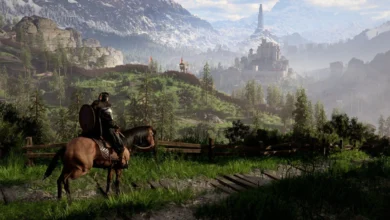
The Blood of Dawnwalker developers consider abandoning controversial time mechanics for future sequels.


The release of the highly anticipated role-playing game The Blood of Dawnwalker by studio Rebel Wolves has sparked a significant debate within the gaming community regarding the implementation of a restrictive time-management system. While the title has garnered praise for its narrative depth and world-building, a core mechanic that forces players to navigate a ticking clock has become a polarizing point of contention. As Rebel Wolves looks toward the future of the franchise, studio leadership is actively reevaluating how such systems align with player agency and long-term engagement.
The Anatomy of the Controversy
At the center of the discourse is the game’s primary time-pressure mechanic, which limits the actions available to the protagonist, Coen. Unlike traditional RPGs that offer players the freedom to explore at their own pace—often referred to as "completionist" play—The Blood of Dawnwalker forces prioritization. Players are frequently required to choose which side quests to pursue and which narrative threads to abandon, as the passage of in-game time dictates the progression of critical events.
This design choice was intended to instill a palpable sense of urgency, mirroring the high-stakes narrative themes of the game. However, a segment of the player base has found this restriction detrimental to the traditional RPG experience. Critics of the system argue that it prevents them from engaging with the "lived-in" nature of the world, such as collecting resources or interacting with optional side content, which many players view as essential to the genre’s appeal.
Community Backlash and the "Better Story Timer" Phenomenon
The intensity of the negative reception was immediate. Shortly after the game’s commercial launch, the community-driven platform Nexus Mods saw the release of a modification titled "Better Story Timer." This utility essentially neutralized the time-pressure mechanic, allowing players to traverse the game world without the looming threat of narrative deadlines.
The rapid adoption of this mod serves as a clear indicator of player sentiment. It quickly ascended to become the most downloaded modification for The Blood of Dawnwalker, signaling that a substantial portion of the audience preferred a sandbox-style experience over the developer’s intended high-pressure design. In the gaming industry, such immediate reliance on third-party modifications to alter core gameplay loops is often viewed as a "canary in the coal mine" for game design, highlighting a significant misalignment between developer vision and user expectations.
Official Response from Rebel Wolves
Konrad Tomaszkiewicz, CEO and game director at Rebel Wolves, has addressed the criticism head-on. In a recent interview, he provided insight into the studio’s design philosophy and their willingness to adapt. Tomaszkiewicz noted that while the team remains proud of the system, they are not dogmatic about its inclusion in future installments of the Dawnwalker saga.
"We will play with it," Tomaszkiewicz stated regarding the potential for future iterations. "If we have parts of the story, or the whole story, to which it fits, then we will use it. If we have stories where it does not fit, we will not force it."
This acknowledgment suggests that Rebel Wolves is moving toward a more nuanced, modular approach to game design. Rather than applying a blanket time-pressure system to every title, the studio intends to use such mechanics as a narrative tool—a mechanism to heighten tension during specific, high-stakes events—rather than a constant, overbearing constraint.
The "Completionist" Fallacy in RPG Design
A significant portion of the debate centers on the desire of many RPG fans to experience 100% of a game’s content in a single playthrough. Tomaszkiewicz challenged this perspective, noting that it is fundamentally at odds with the modern design of choice-driven RPGs. He drew parallels to established industry benchmarks, such as CD Projekt Red’s The Witcher series.
"The argument of, ‘I want to see everything in one playthrough,’ I understand, but it’s false to begin with," Tomaszkiewicz argued. "Even in games like The Witcher, you cannot see everything in one playthrough because you have choices and consequences."
This sentiment is echoed by many industry analysts who point to titles like Obsidian Entertainment’s Pentiment. In that game, time is a finite resource that is baked into the DNA of the mystery-solving mechanics. Players are explicitly forced to choose which leads to investigate and which mysteries to leave unsolved. The critical success of Pentiment demonstrates that when a time-based mechanic is tightly integrated into the narrative, it can enhance, rather than detract from, the player’s emotional investment in the outcome.
Evolving Player Sentiment
Rebel Wolves has observed a shifting trend in player feedback as the game’s lifecycle has progressed. According to internal observations shared by the studio, complaints regarding the time mechanic have decreased as more players complete their initial playthroughs.
This trend suggests a "learning curve" effect: once players reach the conclusion of the story and reflect on their journey, they often realize that the actual impact of the time constraint was less severe than they initially feared. Many players discovered that they were able to engage with approximately 80% of the game’s content, a figure that satisfies most design targets for a sprawling RPG. As the community moves past the initial frustration, the dialogue has shifted from a demand for total removal to a more balanced critique of how the system is communicated to the user early on.
Broader Industry Implications
The experience of The Blood of Dawnwalker highlights a perennial challenge in game design: how to reconcile "emergent gameplay" with "authored narrative." Developers often seek to create a cohesive, urgent story, while players often seek a sandbox environment that respects their time and desire for exploration.
The success of the "Better Story Timer" mod, combined with the developer’s willingness to listen to feedback, serves as a case study for modern game development. It underscores the importance of accessibility and player choice. By acknowledging the validity of both the "hardcore" time-pressured experience and the "relaxed" completionist experience, Rebel Wolves is positioning itself as a developer that values player autonomy.
Future Outlook and Recruitment
Looking ahead, the studio is already looking to expand the franchise. With the announcement that they are actively seeking a lead writer for the next chapter of the Dawnwalker saga, the industry is watching closely to see how the lessons learned from the first game will inform the second.
The challenge for the writing team will be to maintain the "urgency" that defined the first game’s narrative identity while providing more flexibility for players who prefer to engage with the world at their own pace. If Rebel Wolves can strike a balance between narrative-driven time pressures and player-driven exploration, the sequel could potentially refine the formula into a benchmark for the genre.
For now, the status of the Dawnwalker series remains one of the most interesting case studies in modern RPG design. It serves as a reminder that even the most well-intentioned gameplay mechanics can become a barrier if they conflict with the core desires of the player base. The studio’s commitment to "playing with the system" rather than abandoning it entirely suggests that the next iteration of the series will be a more refined, perhaps more modular, experience that respects the player’s agency as much as the narrative’s tension.
Related posts: