Kevin Feige and Ryan Coogler reflect on the profound legacy of Chadwick Boseman and the human cost of the Marvel Cinematic Universe


The unexpected death of Chadwick Boseman on August 28, 2020, sent shockwaves through the global entertainment industry, fundamentally altering the trajectory of one of the most successful film franchises in history. Boseman, whose portrayal of T’Challa in Marvel Studios’ 2018 blockbuster Black Panther became a cultural phenomenon, had been privately battling colon cancer since 2016. His passing, occurring amidst the isolation of the global pandemic, left not only his fans in mourning but also forced his closest creative collaborators—specifically Marvel Studios President Kevin Feige and director Ryan Coogler—to confront the limitations of their professional relationships in the face of sudden, irreparable loss.
During a recent appearance at the University of Southern California, Kevin Feige and Ryan Coogler engaged in a candid retrospective regarding their shared history, the weight of their collaborative success, and the sobering reality of the industry’s "always-next-time" mentality. The conversation offered a rare, unscripted glimpse into the personal dynamics that exist behind the polished facade of the Marvel machine, highlighting a moment of profound vulnerability that occurred during a time of immense public and private grief.
A Chronology of Grief and Transition
The timeline of Black Panther and its subsequent legacy is marked by high-water marks of artistic achievement followed by deep, sudden sorrow. In 2018, Black Panther became the first superhero film to receive an Academy Award nomination for Best Picture, grossing over $1.3 billion worldwide and cementing its place in cinema history as a cornerstone of representation.
When news of Boseman’s passing broke in late August 2020, production on the sequel, Black Panther: Wakanda Forever, was in its earliest conceptual stages. The sudden loss necessitated a complete creative pivot. Rather than recasting the role of T’Challa—a decision that was met with both praise and controversy among fans—Coogler and his co-writer, Joe Robert Cole, opted to weave the real-life grief of the cast and crew into the narrative of the film. Wakanda Forever, released in 2022, focused on the mourning of Wakanda for its lost king, mirroring the actual loss felt by the production team.
The process was not merely a creative challenge; it was a psychological one. As the industry moved through the post-pandemic recovery, both Feige and Coogler were forced to reconcile their roles as stewards of a massive corporate intellectual property with their roles as friends who had lost a central figure in their professional lives.
The Illusion of Tomorrow: Kevin Feige’s Reflection
Kevin Feige’s reflection at the University of Southern California struck a chord with many in the industry, as it touched upon the occupational hazard of prioritizing schedules and production deadlines over personal connection. "We will be back in there, that was always my expectation," Feige remarked. "So the need to set a dinner or a lunch to say hi, I just never do. Because we’re busy and because we’re going to have a next time. And that hit me like a ton of bricks when I realized that there wasn’t going to be a next time."
This sentiment underscores a pervasive issue in high-stakes creative industries: the assumption of continuity. For Feige, who manages the intricate, multi-year interlocking narratives of the Marvel Cinematic Universe, the "next time" is often a tangible date on a production calendar. Boseman’s death disrupted this logic, serving as a stark reminder that the human beings behind the characters are not assets that can be scheduled or re-contracted. This realization has reportedly informed how Feige approaches his leadership style, fostering a greater emphasis on the mental well-being of his talent rather than solely focusing on the output of the studio.
Beyond the Corporate Facade: The Human Element
Ryan Coogler’s perspective provided a crucial counterbalance to Feige’s institutional reflection. The director detailed the immediate aftermath of the tragedy, highlighting the interventions made by leadership at both Marvel and The Walt Disney Company. According to Coogler, the primary concern of Kevin Feige and Disney CEO Bob Iger was not the status of the Black Panther franchise, but the immediate welfare of the creative team.
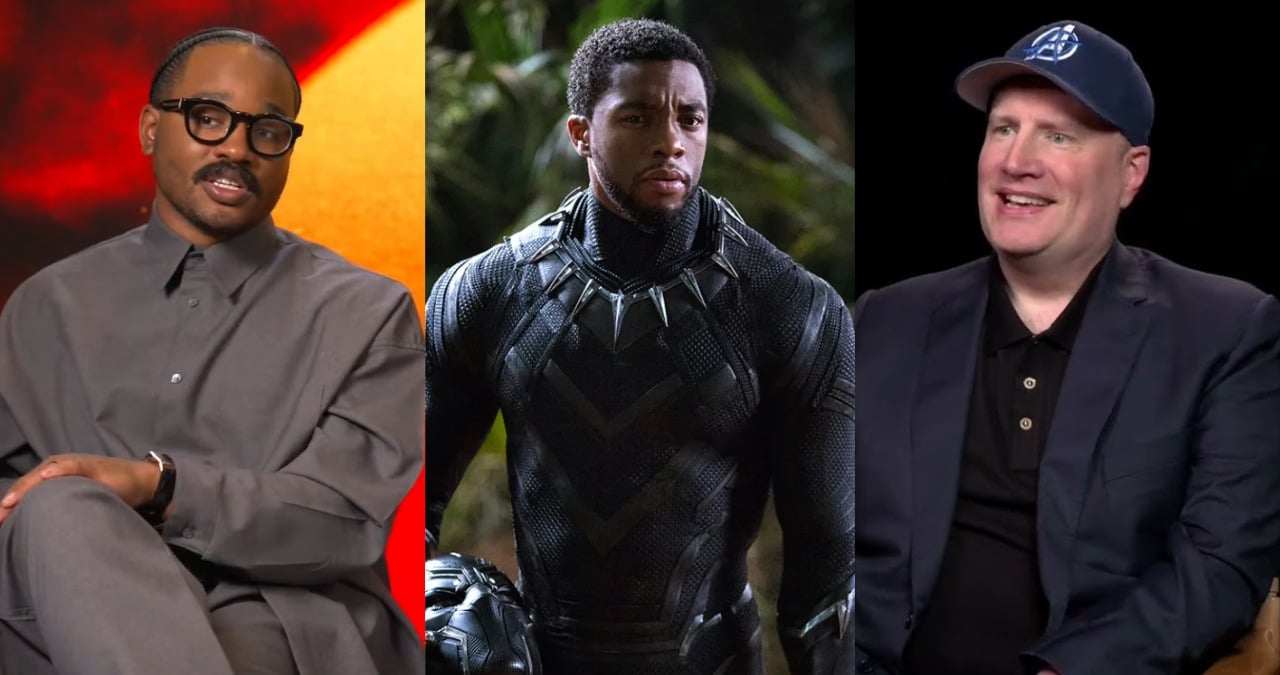
"They came to our apartment in lockdown… and we walked around the Richmond Arena and just talked," Coogler shared. "And that was the first real check-in. And it wasn’t ‘Hey, what are we going to do about this franchise?’ It was about, ‘Hey, are you OK? How are you taking it?’ It was a real moment where you see the humanity beyond the corporate things and the financial responsibilities."
This interaction represents a departure from the traditional narrative of major studio operations, where financial obligations often dictate the immediate response to a star’s unavailability. By prioritizing the emotional state of the director, Feige and Iger were able to preserve the integrity of the relationship that would eventually produce Wakanda Forever, a film that maintained the emotional resonance required to honor Boseman’s legacy.
The Implications for the Future of Black Panther
As Marvel Studios looks toward the future, the shadow of Chadwick Boseman remains a defining element of the Black Panther series. With Black Panther 3 currently in development, the question of how to proceed with the mantle of the titular hero remains a topic of significant discourse.
The industry is currently analyzing the long-term impact of the Multiverse Saga’s conclusion. While rumors persist regarding a potential recasting or a shift in the mantle of the Black Panther, the success of the franchise remains intrinsically linked to the foundation established by Boseman. The challenge for Coogler in the third installment will be to expand the world of Wakanda while acknowledging the absence of its most iconic figure.
Historically, major franchises that have lost their leads have struggled to maintain the same level of cultural relevance. However, the Black Panther franchise occupies a unique space, as the character itself—the protector of Wakanda—is a mantle that can be passed down within the fictional lore. Whether or not Marvel decides to explore a new iteration of T’Challa or continue with the evolution of the mantle established in Wakanda Forever, the decision will be viewed through the lens of Boseman’s legacy.
Analysis of Franchise Sustainability
The "Boseman factor" provides a case study in crisis management for intellectual property. In the era of the cinematic universe, characters are often treated as permanent fixtures. The loss of an actor of Boseman’s caliber forces a studio to decide between rebooting, recasting, or evolving the story to incorporate the loss. By choosing to evolve, Coogler and Feige maintained the authenticity of the franchise, which resulted in significant box office success and critical acclaim for Wakanda Forever.
However, the psychological cost to the creators cannot be ignored. The "ton of bricks" realization described by Feige speaks to a broader shift in how major studios are beginning to view the sustainability of their talent. As the MCU enters a new phase, the focus appears to be shifting toward more sustainable production cycles that allow for the "check-ins" that were missing during the height of the Infinity Saga.
Conclusion: A Legacy Defined
The legacy of Chadwick Boseman extends far beyond the box office revenue of the films he headlined. He established a standard for performance and dedication that challenged the industry to reconsider the importance of diversity and authentic representation. The reflections provided by Ryan Coogler and Kevin Feige serve as a historical record of a pivotal moment in film history—a moment where the commercial imperatives of a multi-billion dollar entity were paused, if only briefly, to honor the humanity of a colleague.
As Black Panther 3 moves forward, it does so with the weight of that history. The collaboration between Coogler and Feige remains one of the most successful pairings in modern cinema, and their shared commitment to navigating the complexities of grief suggests that the future of the franchise will remain grounded in the same spirit of respect and integrity that defined their work with Boseman. Whether through the lens of a new narrative arc or the continued exploration of the world they built together, the influence of the original Black Panther remains a guiding force for all involved.
Related posts: