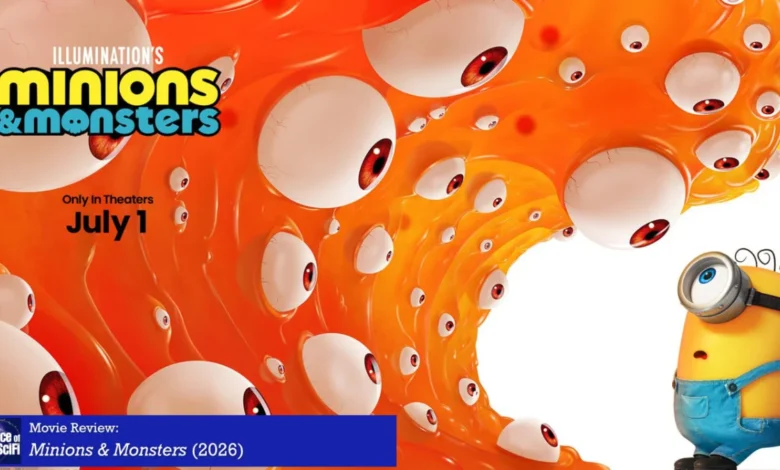
The intersection of classic cinema history and family-oriented animation has yielded a new cinematic entry with the release of Minions & Monsters. Directed by Pierre Coffin and written by Brian Lynch alongside Coffin, the PG-rated feature transports the gibberish-speaking yellow henchmen into the vibrant, tumultuous landscape of 1920s Hollywood. Blending historical filmmaking milestones with slapstick comedy, the 90-minute runtime is designed to appeal simultaneously to young audiences and adult film enthusiasts through layered visual gags, historical homages, and fast-paced narrative progression.
Main Facts and Narrative Framework
Minions & Monsters establishes its premise through a contemporary framing device set within a motion-picture museum. Visitors encounter iconic cinematic artifacts, including the bicycle from E.T. the Extra-Terrestrial featuring Elliott and a trapped George Lucas enclosed in a transparent tube. When the modern-day tourists admit ignorance regarding the historical impact of central characters James and Henry on the motion picture industry, a tour guide—voiced by Alison Janney—initiates the primary historical narrative.
Long before their association with the villain Gru, the Minions—with all vocal performances provided by director Pierre Coffin—are depicted on a perpetual quest to locate and serve the ultimate master of evil. The narrative centers on James, a Minion with a penchant for sketching stories, whose creative output is supported only by fellow Minion Henry. Their early efforts to serve various masters, including a Cyclops, a pirate, a king, and a spell-casting wizard, routinely conclude in accidental disaster due to James’s well-intentioned meddling. Notably, a stolen spell book retrieved from the wizard serves as a central prop driving future complications.
Chronology of Events in the Golden Age of Cinema
The historical trajectory of the Minions shifts during a journey across the American desert under the guidance of a leader named Dick. Pursuing an escaping horseback bandit, the group inadvertently crashes a live film set, triggering a chaotic sequence of stunts heavily inspired by silent film pioneers such as Buster Keaton and Harold Lloyd.
The disruption initially angers director Max—voiced by Christoph Waltz—who is reviewing his ruined dailies alongside studio executives, the Bright brothers (both voiced by Jeff Bridges). Recognizing the unique commercial potential of the Minions’ frantic physical comedy, the studio heads integrate them into the burgeoning silent film ecosystem. This sudden pivot results in overnight celebrity, culminating in opulent mansions and a signature denim wardrobe.
The introduction of synchronized sound, commonly known as "talkies," abruptly halts their silent film careers. Incapable of being understood, the Minions are swiftly dismissed from the studio system. Undeterred, they resume their search for a villainous employer. They encounter Dort—voiced by Jesse Eisenberg—a character bearing a distinct resemblance to the robot Gort from the 1951 science fiction classic The Day the Earth Stood Still.
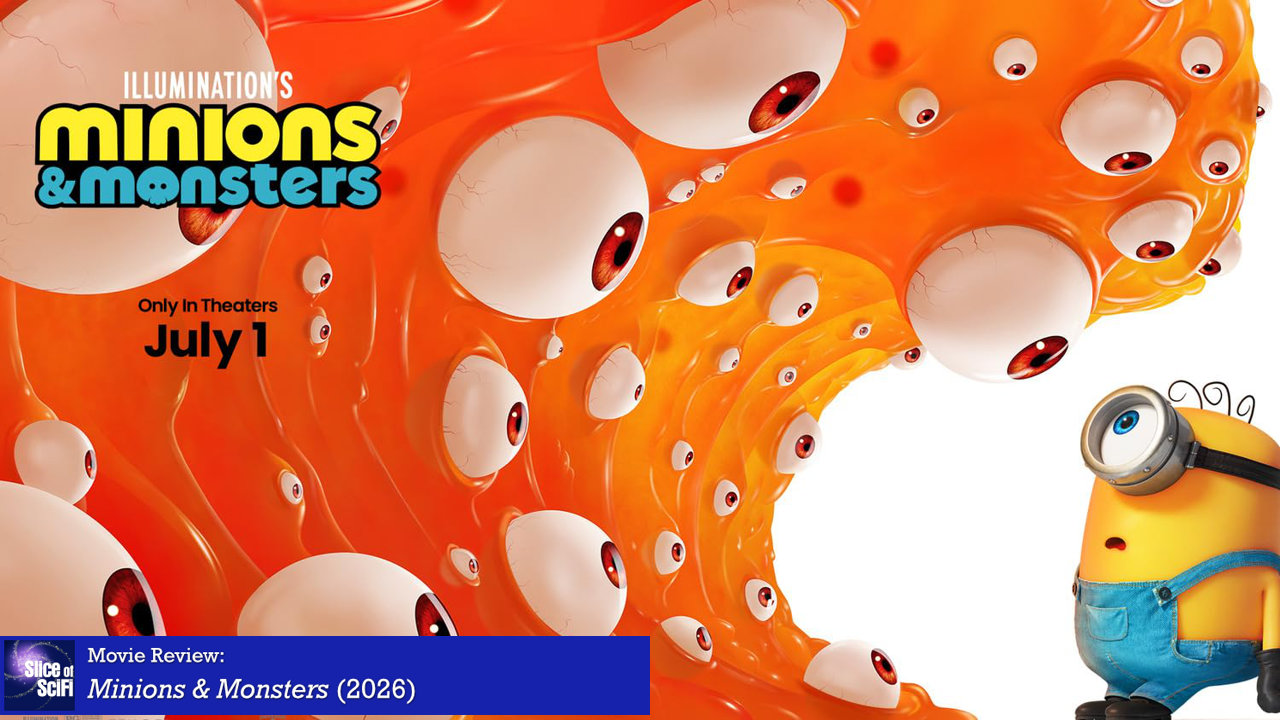
Concurrently, James reconnects with director Max, presenting his original storyboards. Max provides James with his historical first camera, facilitating the production of their own independent project, the film titled Minions and Monsters. Complications escalate when James uses the recovered spell book to summon a monster named Goomi—voiced by Trey Parker—who pledges assistance to the production while harboring ambiguous motivations. Alongside Goomi, the film’s roster of supernatural entities includes an amorphous, consuming blob named Irene and various eccentric henchmen.
Supporting Data and Production Details
Minions & Monsters operates with a precise 90-minute duration, a standardized length for family and children’s media intended to maintain viewer engagement without triggering fatigue. The production incorporates meticulous animation techniques to recreate the architectural and technological aesthetics of late-1920s Hollywood, utilizing period-accurate maps to trace the Minions’ geographic progression.
The voice cast features notable industry veterans and performers:
- Alison Janney as the Museum Tour Guide
- Christoph Waltz as Director Max
- Jeff Bridges as the Bright Brothers (Studio Executives)
- Jesse Eisenberg as Dort
- Trey Parker as Goomi
- Pierre Coffin as the Minions
- Additional voice work by Zoey Deutch, Bobby Moynihan, and Phil LaMarr.
The screenplay was co-authored by Brian Lynch and Pierre Coffin, building upon the established cinematic universe of the Despicable Me franchise while shifting the temporal setting backward by a century.
Official Responses and Critical Reception
Early critical consensus highlights the film’s dual-layer appeal. Reviewers have noted that while children will naturally gravitate toward the vibrant color palette, grotesque yet approachable monster designs, and physical pratfalls, adult viewers and film buffs will recognize the sophisticated homages to early cinema history.
The integration of animated caricatures representing Charlie Chaplin, Harold Lloyd, and Buster Keaton anchors the narrative within a specific historiographical tradition of physical comedy. Furthermore, industry analysts have pointed out minor anachronisms within the 1920s setting—such as prominent suffragette demonstrations advocating for voting rights—as deliberate creative choices that lean into an alternate-history framework rather than strict historical documentary realism.
Broader Impact and Implications
The release of Minions & Monsters underscores the ongoing viability of legacy animation franchises expanding into thematic prequels and historical pastiche. By anchoring a commercially dominant property like the Minions to the foundational era of American cinema, the filmmakers bridge generational gaps in media consumption.
From an economic and distribution standpoint, the feature is positioned as an optimal release for digital streaming ecosystems. Its episodic pacing, characterized by rapid successions of comedic bits and low-stakes conflicts, aligns with modern consumption habits for family audiences. The film avoids prolonged exposition, ensuring that younger demographics remain engaged while offering cinephiles a dense tapestry of visual references to the silent-to-sound transition era of Hollywood. Through this synthesis of broad slapstick and motion picture history, Minions & Monsters expands the thematic boundaries of contemporary studio animation.