Spend another five hours moving three spaces in the new Talisman board game from the studio behind Betrayal at House on the Hill

The Historical Evolution of a Fantasy Icon
To understand the significance of the fifth edition, one must examine the four-decade history of the title. Originally designed by Robert Harris and published by Games Workshop in 1983, Talisman: The Magical Quest Game was born during the initial boom of fantasy role-playing. While Dungeons & Dragons offered a complex, narrative-driven experience, Talisman provided a board game alternative that captured the essence of a "hero’s journey" in a more structured, competitive format.
The first and second editions of the game established the core loop that remains today: players choose a character, roll dice to move around a three-tiered board, and gradually increase their Strength and Craft statistics to survive the more dangerous inner regions. The third edition, released in the 1990s, attempted to modernize the aesthetic and mechanics but met with mixed reviews from purists. However, it was the fourth edition—specifically the "Revised Fourth Edition" published by Fantasy Flight Games in 2008—that became the definitive version for the modern era. Under Fantasy Flight, the game saw over a dozen expansions, including new regions like the Highlands and the Dungeon, which transformed the base game into a sprawling, multi-hour epic.
The transition of the license to Avalon Hill represents a significant shift. Avalon Hill, known for its work on Betrayal at House on the Hill and the recent remake of HeroQuest, has demonstrated a penchant for taking classic "Ameritrash" games—titles characterized by high luck, strong themes, and high-quality miniatures—and refining them for contemporary sensibilities.
Core Gameplay Mechanics and the Quest for the Crown
The fundamental objective of Talisman remains unchanged in the fifth edition. Between two and six players take on the roles of various fantasy archetypes, embarking on a perilous trek to reach the center of the board. The ultimate goal is to seize the Crown of Command, a powerful artifact that allows its wielder to cast a "Command Spell," gradually eliminating all other rivals from the game.
The board is divided into three concentric regions: the Outer Region, the Middle Region, and the Inner Region. Players begin in the Outer Region, where the threats are relatively minor, such as wild animals or low-level bandits. As they gain experience and equipment, they must find a way to cross the Sentinel Bridge or use a raft to reach the Middle Region. The final hurdle is the Portal of Power, which requires either a high attribute score or a specific "Talisman" item to pass.
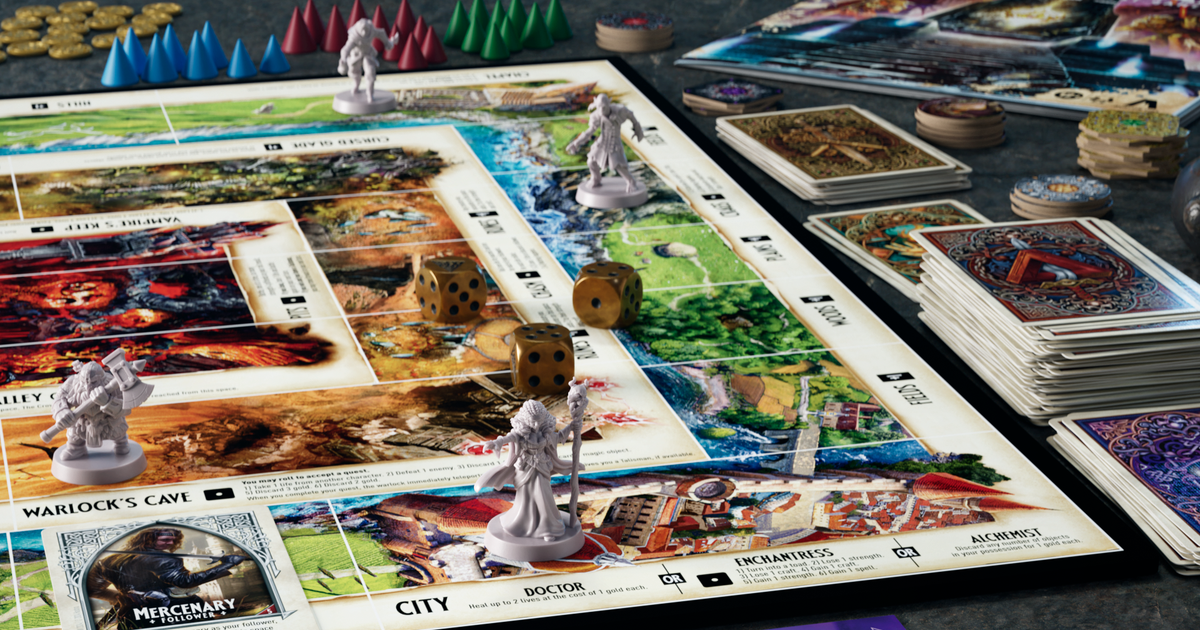
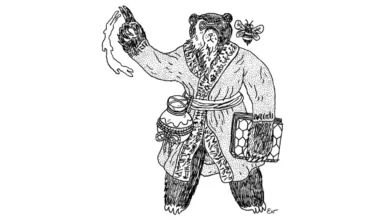
In the fifth edition, Avalon Hill has confirmed a starting roster of 12 playable characters. These include the Warrior, Priest, Prophetess, Troll, and Monk, alongside more specialized roles like the Ghoul and the Sorceress. Each character possesses unique special abilities and starting statistics in Strength (physical prowess) and Craft (magical and mental acuity). The interaction between these stats and the game’s deck of 100 Adventure Cards forms the heart of the experience. These cards can represent anything from helpful followers and powerful magical items to devastating events and monstrous foes.
Modernizing a Classic: The "Streamlining" Initiative
One of the most frequent criticisms leveled against previous editions of Talisman was its playtime. Because the game relies heavily on "roll-and-move" mechanics and random card draws, a single session could easily stretch beyond four or five hours, particularly with more than four players. Avalon Hill has emphasized that the fifth edition features "streamlined" gameplay designed to make the experience more accessible and faster-paced.
While specific rule changes have been kept under wraps during the initial reveal, industry analysts suggest that the streamlining likely involves the endgame mechanics. In older editions, the "Crown of Command" phase could become a tedious slog if multiple players reached the center simultaneously or if the leader failed their Command Spell rolls. Modifications to movement, such as providing more ways to mitigate bad dice rolls, or accelerating the rate of character progression, are also expected.
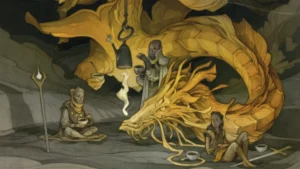
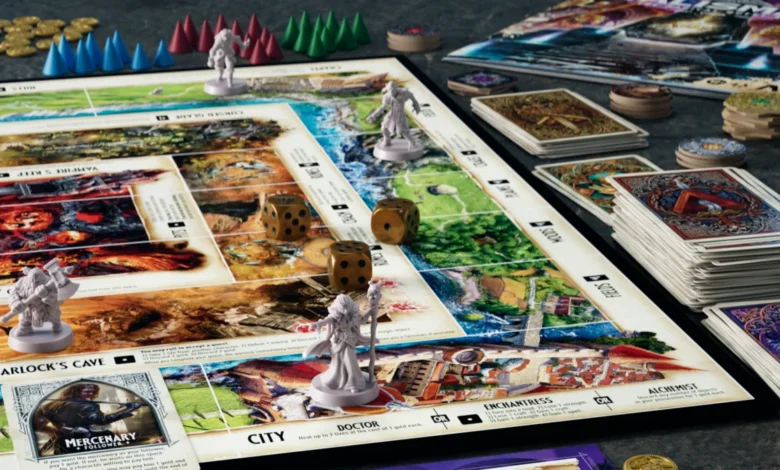
Furthermore, the components have received a total overhaul. The fifth edition features brand-new artwork that moves away from the grimdark aesthetic of the Games Workshop era and the detailed but dense style of the Fantasy Flight era, opting instead for a vibrant, high-contrast look that emphasizes the "magical quest" theme. The miniatures, a staple of the series, are expected to meet the high production standards set by Avalon Hill’s recent HeroQuest relaunch, providing players with highly detailed, pre-assembled figures.
Strategic Context and Market Implications
The release of Talisman 5th Edition is not an isolated event but part of a broader strategy by Hasbro and Wizards of the Coast to capitalize on their deep vault of gaming history. In recent years, the tabletop industry has seen a massive resurgence in "legacy" titles. By bringing Talisman back to market, Hasbro is positioning the game as a flagship title alongside HeroQuest and Dungeons & Dragons, creating a tiered entry system for fantasy gaming.
Market data indicates that the "adventure board game" category has grown significantly, fueled by the popularity of digital adaptations and the rise of "board game cafes." Talisman, which has a successful digital version developed by Nomad Games, already possesses a built-in digital audience that may be inclined to purchase a physical copy of the new edition.

The $60 price point is particularly noteworthy. In an era where "boutique" board games on platforms like Kickstarter often retail for $100 to $200, a $60 price tag for a high-production-value box from a major publisher suggests a push for mass-market penetration. This allows the game to be stocked not just in specialized hobby shops, but also in major retail chains, potentially introducing a new generation of players to the franchise.
Community and Industry Reactions
The reaction from the board gaming community has been a mixture of excitement and cautious optimism. Long-time fans of the series, often referred to as "Talismaniacs," have expressed concern that "streamlining" might remove the chaotic, unpredictable elements that give the game its charm. Part of the traditional Talisman experience is the "story" that emerges from random misfortune—such as a powerful warrior being turned into a toad at the eleventh hour.
Conversely, newer players and critics have welcomed the news of a more efficient rulebook. The consensus among tabletop influencers is that for Talisman to survive in a market dominated by tight, Euro-style designs and fast-paced card games, it must shed some of its more archaic 1980s design philosophies while retaining its thematic identity.
Retailers have also responded positively. The reliability of the Avalon Hill brand, combined with the name recognition of Talisman, makes the fifth edition a low-risk inventory addition. Pre-order numbers are expected to be high, especially given the gap in time since the fourth edition went out of print following the conclusion of the partnership between Games Workshop and Fantasy Flight Games.
Conclusion and Future Outlook
As the August 1 release date approaches, the fifth edition of Talisman stands as a testament to the enduring appeal of high-fantasy adventure. By updating the components, refreshing the art, and refining the rules, Avalon Hill is attempting to ensure that the "Magical Quest" continues for another forty years.
The success of the fifth edition will likely be measured by its ability to satisfy two distinct audiences: the veterans who remember the thrill of the 1983 original and the newcomers who are looking for an epic adventure that fits within a modern evening’s schedule. If Avalon Hill successfully balances these needs, Talisman 5th Edition could reclaim its throne as the quintessential fantasy board game. Beyond the base game, the industry is already looking toward the horizon; given the history of the franchise, a successful launch of the core box will almost certainly lead to a new cycle of expansions, further broadening the land of Talisman for years to come.