Nostalgic Call of Duty Ambience App Recreates the Chaotic Atmosphere of Xbox 360 Era Multiplayer Lobbies

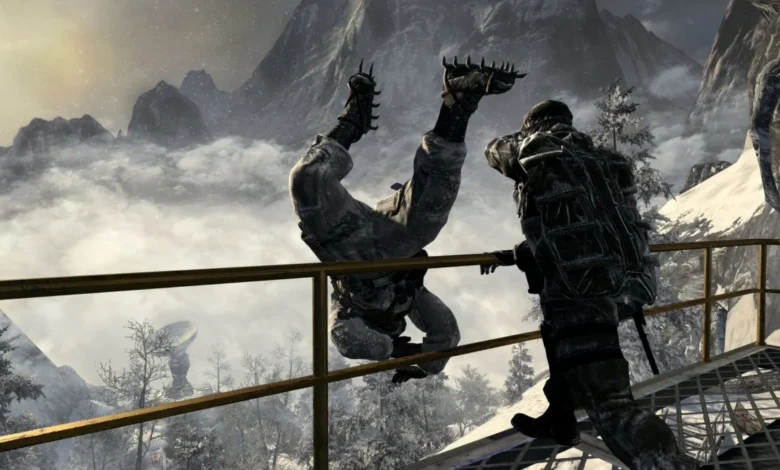
The landscape of digital relaxation and sleep aids has traditionally been dominated by the gentle sounds of rainfall, rolling thunderstorms, or the steady hum of white noise. However, a new entry into the niche world of ambient soundscapes is challenging the definition of "calm" by tapping into a specific vein of Millennial and Gen Z nostalgia. Developer Mike Wing has introduced a unique web application titled "Call of Duty Ambience," designed to simulate the cacophonous and often confrontational environment of online multiplayer lobbies from the late 2000s and early 2010s. Hosted on the developer platform AppDrop, the application serves as a digital time capsule of what many enthusiasts consider the "Golden Era" of first-person shooters.
The application allows users to immerse themselves in the distinct audio environment of pre-game lobbies from iconic titles such as Call of Duty: Modern Warfare 2 (2009), Call of Duty: Black Ops (2010), and Call of Duty: Black Ops II (2012). Rather than focusing on the gameplay itself, the app highlights the social—and often anti-social—interactions that occurred between matches. Users are greeted with a dashboard that meticulously recreates the Xbox 360 user interface, complete with the era-appropriate navigation pings and sound effects. Within this interface, players can cycle through various recordings of "lobby chatter," which include a mixture of heated arguments, colorful insults, background household noises, and the distorted audio typical of the low-fidelity microphones used during the Seventh Generation of consoles.
The Vision of Developer Mike Wing
Mike Wing is no stranger to creating applications that lean heavily into internet subcultures and digital nostalgia. His portfolio on AppDrop includes several projects that serve as satirical or sentimental homages to the gaming industry’s history. Previous works include the "Steam Sale Simulator," which recreates the frantic experience of navigating Valve’s digital storefront during major discount events, and the "Xbox 360 Messenger," which pays tribute to the early days of console-based social networking.
With "Call of Duty Ambience," Wing addresses a paradoxical trend in the gaming community: the fondness for an era of gaming that was objectively more "toxic" than today’s moderated environments. In the app’s description, Wing notes, "Most people fall asleep to white noise… I fall asleep to grown men arguing in CoD lobbies." This sentiment reflects a broader cultural phenomenon where the chaotic energy of early Xbox Live is viewed not just as a period of hostility, but as a period of raw, unvarnished human connection that modern gaming lacks.
Historical Context: The Golden Era of Call of Duty
To understand the appeal of a "lobby noise" simulator, one must examine the specific historical context of the games it replicates. Between 2007 and 2012, the Call of Duty franchise underwent a period of unprecedented growth, transitioning from a successful military shooter to a global cultural juggernaut.
- Call of Duty: Modern Warfare 2 (2009): This title is often cited as the peak of lobby volatility. It introduced a highly customizable multiplayer experience and a fast-paced gameplay loop that rewarded aggressive play, which in turn fueled high-intensity social interactions.
- Call of Duty: Black Ops (2010): Developed by Treyarch, this game leaned into the Cold War aesthetic and refined the multiplayer formula, maintaining the "persistent lobby" system that allowed players to remain in the same group for hours.
- Call of Duty: Black Ops II (2012): This entry introduced more sophisticated competitive features but remained rooted in the social architecture of its predecessors.
During this five-year span, the Xbox 360 was the primary platform for competitive shooters. The "one-ear" wired headset that came bundled with many Xbox consoles became a symbol of the era. These headsets were notorious for picking up significant background noise—ranging from barking dogs to loud music and domestic vacuuming—all of which are faithfully represented in the "Call of Duty Ambience" recordings.
The Role of Persistent Lobbies in Social Dynamics
A critical technical feature of early Call of Duty titles was the "persistent lobby." In these games, once a match ended, the players were not immediately returned to a general matchmaking pool. Instead, they remained in the same virtual "room" while the next map was voted upon. This allowed for the development of temporary communities, rivalries, and alliances.
In modern Call of Duty titles, including the most recent releases like Black Ops 6 and the divisive Black Ops 7, the matchmaking system frequently utilizes "disbanding lobbies." To optimize for Skill-Based Matchmaking (SBMM) and player retention, the game often reshuffles players into entirely new groups after every single match. While this system is designed to ensure fair play and balanced competition, critics argue it has sanitized the social experience. The "Call of Duty Ambience" app serves as a reminder of a time when you could spend an entire evening competing against—and arguing with—the same group of strangers, creating a sense of continuity that many veterans of the series feel is now missing.
Technical Analysis of the Experience
From a technical perspective, the "Call of Duty Ambience" app is a study in UI/UX recreation. The developer has gone beyond simple audio playback by building a functional mimicry of the Xbox 360 blades or the later "NXE" (New Xbox Experience) dashboard elements.
The audio files themselves are long-form loops of authentic recordings. Based on user testing, the app features multiple distinct "scenarios" for each game. These recordings capture the specific "lo-fi" aesthetic of 2010-era voice communication. At the time, voice data was heavily compressed to save bandwidth, resulting in a "tinny" or "crunchy" sound profile. This specific audio texture is a key component of the nostalgia being sold; for many, it is the sound of their adolescence.
The recordings also highlight the "Wild West" nature of early online interactions. Before the advent of sophisticated AI-driven moderation tools, lobby chat was largely unpoliced. While this led to an environment rife with slurs and harassment—elements that modern gaming companies like Activision are working aggressively to eliminate—it also fostered a unique form of "trash talk" that some players remember as a rite of passage.
Evolution of Moderation and Community Standards
The release of this ambience app comes at a time when Activision Blizzard has significantly overhauled its approach to community management. In recent years, the company has implemented "ToxMod," an AI-powered voice moderation system that monitors in-game chat in real-time to identify and penalize hate speech and harassment.
According to data released by Activision, the implementation of these tools has led to a measurable decrease in toxic interactions in newer titles. However, this shift toward a more "policed" environment has also led to a quieter one. In modern lobbies, many players opt to stay in private "Party Chats" with friends or remain muted entirely to avoid potential bans or confrontations. The "Call of Duty Ambience" app captures the exact opposite: a period where the "Global Chat" was the default, and everyone’s microphone was live.

Market Reception and the Trend of "Digital Decay"
The popularity of projects like Wing’s reflects a growing interest in "digital decay" and the preservation of "ugly" or "authentic" internet history. Much like how lo-fi hip-hop radio stations use the crackle of vinyl to create atmosphere, "Call of Duty Ambience" uses the "crackle" of a poorly calibrated 2009 microphone to create a sense of place.
The app has gained traction on social media platforms like TikTok and X (formerly Twitter), where users share clips of the app as a "trigger" for memories of late-night gaming sessions. For these users, the sounds of a heated argument over a "no-tube" or a "quickscope" are as evocative as a favorite song.
Implications for Future Game Design
The existence and popularity of this app provide valuable feedback for game developers and publishers. While Activision is unlikely to return to the unmoderated chaos of 2009, there has been a push from the community to bring back persistent lobbies. Black Ops 7 (referred to in recent reports as the latest iteration) has made strides in this direction by partially reintroducing the ability for players to stay together between matches.
Industry analysts suggest that the "nostalgia market" for the Seventh Generation of consoles is just beginning to peak. As the players who grew up with the original Modern Warfare 2 enter their 30s, the demand for "classic" experiences—both in gameplay and social atmosphere—is expected to rise. This is evidenced by the recent "so-so" ports of Black Ops 1 and 2 to PlayStation 4 and 5, which, despite technical flaws and "hacked" lobbies, saw a significant surge in player activity upon release.
Conclusion
"Call of Duty Ambience" is more than a simple prank or a joke application; it is a specialized tool for historical immersion. By isolating the audio-social component of the world’s largest first-person shooter franchise, Mike Wing has highlighted exactly what was lost in the transition to the modern, streamlined, and moderated era of online gaming. While few would argue for a return to the widespread hostility of the old lobbies, the app successfully captures the raw, unfiltered community spirit that defined a generation of gamers. As the industry moves forward with AI moderation and hyper-optimized matchmaking, these digital echoes of "grown men arguing" serve as a gritty, noisy, and strangely comforting reminder of gaming’s more rebellious past.