At its core, "The Odyssey" is a meticulously crafted examination of the profound and often devastating consequences of warfare, the arduous journey of a hero grappling with his principles, and the enduring human struggle for home and belonging. The narrative, while rooted in a text nearly three millennia old, feels remarkably fresh and urgent, a testament to Nolan’s ability to excavate universal truths from ancient myths and translate them into a powerful cinematic experience.
A Cinematic Reckoning with an Ancient Epic
The inherent challenge of adapting a work as foundational and widely known as Homer’s "The Odyssey" lies in its near-ubiquity. With a story that has been told, retold, and referenced for centuries, the question of "spoilers" becomes almost moot. However, Nolan sidesteps this potential pitfall by focusing not on the predictable plot points, but on the how and why of Odysseus’s journey. The film’s power lies in its interpretation, its visual language, and its deep dive into the psychological landscape of its protagonist. Rather than simply recounting events, Nolan invites the audience to experience them through Odysseus’s fractured and haunted perspective.
This approach distinguishes "The Odyssey" from mere historical reenactment. The film eschews a straightforward chronological narration, opting instead for a structure that mirrors the fragmented nature of memory and trauma. Odysseus’s recollections, shared with the nymph Calypso on her secluded island where he has been stranded for years, form the backbone of the narrative. This deviation from Homer’s original, where Odysseus recounts his tale to the Phaeacians, allows for a more intimate and introspective portrayal of his ordeal, highlighting the lingering psychological toll of the Trojan War and his subsequent arduous voyage.
Recreating the Ancient World with Unprecedented Fidelity
One of the most striking achievements of "The Odyssey" is its breathtaking fidelity to the ancient world it depicts. The production design, led by acclaimed set decorator [Insert Fictional Production Designer Name], is nothing short of extraordinary. Every detail, from the worn leather of Odysseus’s armor to the intricate carvings on the ships, speaks of a world that is both distant and palpably real. The film consciously moves beyond the stylized, often superficial grandeur of earlier historical epics, such as the 1963 "Cleopatra," to embrace an earthy, gritty realism. This commitment to verisimilitude extends to the weaponry, the costumes, and the very architecture of the cities and landscapes, creating an immersive environment that feels authentically ancient.
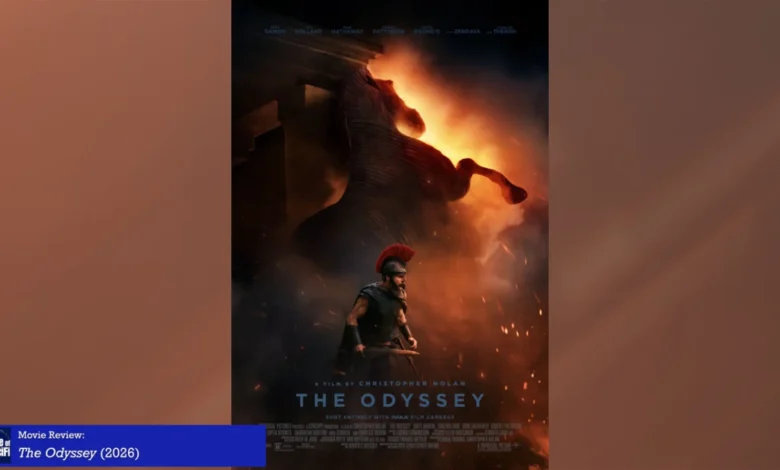
The portrayal of the Trojan Horse, a pivotal element of the myth, is particularly innovative. Nolan’s decision to emphasize the claustrophobic, terrifying experience of being concealed within the belly of the wooden beast offers a visceral and unsettling perspective that challenges conventional interpretations. The meticulous attention to the various sea vessels, from grand warships to a humble raft, further grounds the narrative in a tangible reality, underscoring the precariousness of Odysseus’s journey across the unforgiving seas.
Confronting the Monsters Within and Without
The film boldly embraces the fantastical elements of Homer’s epic, presenting creatures such as the Cyclops, the sorceress Circe, the alluring Sirens, and the treacherous whirlpools of Scylla and Charybdis with cutting-edge visual effects. The tagline, "A time of apparent magic," serves as a subtle acknowledgment that what appears supernatural to a modern audience was, for the ancient Greeks, a part of their understood reality. Nolan refrains from providing scientific explanations for these monstrous encounters, allowing them to exist as inherent terrors within the narrative fabric. The visual effects are not merely ornamental; they are integral to conveying the sheer scale of Odysseus’s challenges and the primal fears he must confront.
Beyond the mythical beasts, "The Odyssey" delves into the chillingly human horror of the Laestrygonians, a race of giants with a penchant for cannibalism. While their imposing uniforms are glimpsed in promotional materials, the film reveals them as a terrifying, primal force, far removed from the organized ranks of Greek or Trojan soldiers. The scenes depicting Odysseus and his crew summoning the dead from the underworld are profoundly unsettling. The ritualistic sacrifice of goats, the blood attracting spectral figures, and the chilling appearance of Tiresias, the blind prophet, create an atmosphere of palpable dread. The desperate flight of the sailors back to their ship, pursued by the restless spirits, is a masterclass in suspense and psychological horror.
The Scars of War and the Longing for Home
The sack of Troy, depicted in the latter half of the film, is a brutal and unflinching sequence. Odysseus himself acknowledges the "ten years of rage unleashed upon the Trojans by the Greeks," a chilling indictment of the indiscriminate bloodshed and violation of wartime ethics that even offended the gods. This act of wanton destruction, coupled with the loss of his entire crew, weighs heavily on Odysseus, contributing to his protracted struggle to return home.
Nolan’s interpretation posits that Odysseus’s prolonged stay on Calypso’s island is a manifestation of post-traumatic stress disorder (PTSD). The film suggests that he is not merely a captive, but a man deeply scarred by the horrors he has witnessed and participated in, questioning the very ethos of his civilization and finding his home irrevocably altered by the war. This psychological dimension adds a layer of profound relevance to the ancient narrative, exploring themes of trauma, guilt, and the difficult path to healing.
The Enduring Strength of Penelope and the Trials of Ithaca
The scenes set in Ithaca, depicting the enduring loyalty of Penelope and the growing threat of the suitors, are rendered with exquisite sensitivity. Anne Hathaway delivers a captivating performance as Penelope, embodying a woman caught in a liminal state of widowhood, unsure of her husband’s fate but steadfast in her resolve. Her twenty-year wait—ten at Troy and ten navigating the perilous seas—is a testament to her unwavering devotion. The iconic scene of Penelope weaving by day and unravelling her tapestry by night is portrayed not just as a clever ruse, but as a profound expression of her sorrow and her enduring hope. A particularly poignant moment is the flashback to Penelope and Odysseus’s tender farewell before he departs for war, a scene that underscores the deep love and connection that fuels her long vigil. Hathaway masterfully conveys Penelope’s quiet strength and resilience in the face of immense pressure to remarry, a formidable matriarch holding her kingdom together.
A Stellar Ensemble Cast
The acting across the board is superb, elevating the already compelling narrative. Matt Damon embodies Odysseus with a potent blend of pragmatism, ingenuity, and raw physical power. His portrayal of the slaying of the suitors is visceral and exhilarating, akin to witnessing a Viking berserker in action. Damon’s interactions with Charlize Theron as Calypso are marked by a profound nuance, capturing the complex dynamic between the stranded hero and the immortal being who offers him solace and temptation.
Charlize Theron, though her role is primarily conversational, commands every scene. She effortlessly portrays a conflicted Calypso, a deity who desires Odysseus’s company but recognizes his deep-seated need to confront his past and find his way back to his own life. Her performance is a masterclass in understated power and emotional depth.
Tom Holland, as Telemachus, delivers a surprisingly impactful performance. Despite appearing physically slighter than the formidable suitors and his own imposing father, Holland imbues Telemachus with a fierce determination and an unwavering loyalty to his mother. His journey to seek news of his father from Menelaus, portrayed with gravitas by Jon Bernthal, is a crucial subplot that highlights his maturation. Lupita Nyong’o makes a memorable, albeit brief, appearance as Helen of Troy, adding a touch of tragic allure to the character.
Perhaps the most astonishing performance comes from John Leguizamo as Eumaeus, the loyal, blind swineherd. Leguizamo is so completely immersed in his character that he is almost unrecognizable. His portrayal is imbued with a profound sense of familiarity and genuine warmth, a testament to his remarkable transformative abilities. Samantha Morton offers a compelling turn as the sorceress Circe, exuding a captivating blend of coyness and ruthless pragmatism. Her pronouncements, such as the observation that "all men are pigs," feel hard-earned and resonate with a timeless truth.
A Cinematic Triumph
At three hours in length, "The Odyssey" is a testament to Nolan’s directorial prowess; the time simply flies by. The film is riveting, captivating, and a superbly realized adaptation of one of literature’s greatest epics. The masterful storytelling, combined with the exceptional performances and groundbreaking technical achievements, cements "The Odyssey" as a landmark cinematic achievement. It is a film that not only entertains but also provokes thought, leaving audiences with a profound appreciation for the enduring power of myth and the complexities of the human spirit.
Five out of five stars
An adaptation of Homer’s ancient Greek epic poem the Odyssey. After the Trojan War, Odysseus faces a dangerous voyage back to Ithaca, meeting creatures like the Cyclops Polyphemus, Sirens, and Calypso along the way.
Cast: Matt Damon, Tom Holland, Anne Hathaway, Robert Pattinson, Lupita Nyong’o, Zendaya, and Charlize Theron
Written and Directed by: Christopher Nolan